Tag: climate

  • Climate, Psychology, and Change: Reimagining Psychotherapy in an Era of Global Disruption and Climate Anxiety 

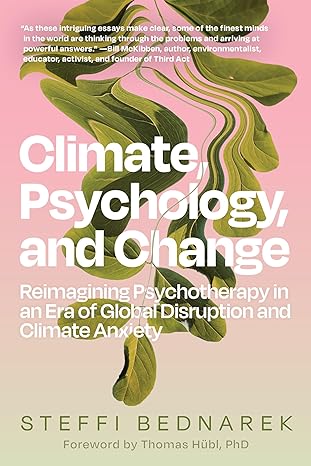
    Climate, Psychology, and Change: Reimagining Psychotherapy in an Era of Global Disruption and Climate Anxiety 

    Climate, Psychology and Change is a series of articles from a range of professionals working within the fields of Psychology, Psychotherapy and Counselling, written to encourage conversations at all levels about the effect Climate Change is having on the wider population.

    Having noted in their independent professional capacity the slow change within their patients regarding the reasons for seeking their services, they began to wonder how wide spread this change was; was it insular to an area or was there a global spread of the concern noted in regard to the effect of Climate Change.  

    People were not as concerned on the deeply personal levels as they had been previously and were becoming more distressed and anxious in regard to what is now a recognised, as well as a visual fact, that of a changing climate, a changing world.

    There was also a growing concern within the profession that many of the ‘Counsellors’ were not prepared to talk with their patients about their deep concerns, their stress, distress and anxiety in regard to what now has been named a Climate and Ecological Emergency or CEE.

    How to go about rectifying this situation and reaching out to support individuals in need, was of massive interest. A discussion group was formulated to discuss in an open forum, the topic of ‘the role of psychotherapy in a time when the familiar is dying’. This produced an open discussion, which in turn led to the creation of this ‘ground breaking’ book, Climate, Psychology and Change.

    The topics for conversation and deliberation are wide spread, make fascinating reading and most definitely give rise to further discussion. Each piece also opens the door into how we as humans, deliberate on things that cause change; how we as a species have a thread that connects us to ancient times, which then causes change to be disturbing.

    Each of the dialogues are best read individually rather than in continuum, to absorb the throughs and finding of the twenty-eight contributors whom collectively, offer deep insights into the way forward with gentle but firm insight and direction.
  • Clearing A Way

    Clearing A Way

    Unveiling the mental tricks that hide reality

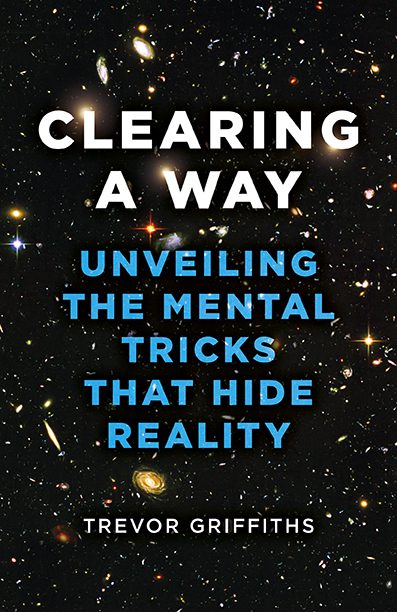
    The title Clearing A Way; Unveiling the mental tricks that hide reality is intriguing, as in todays world we, the seekers, are all wondering what is considered as reality.

    So much information is available on what so many consider as reality, it is somewhat difficult, if not completely confusing, to discover a pathway through the myriad of words, to form any considered opinion about reality.

    In Clearing A Way, Trevor Griffith takes a detailed look at how the mind works, why it creates an ‘alternate universe’ and what can be done to discover, if that is what you so desire, the real reality.

    Comprehensive and detailed this is no easy work to read, more of a detailed course to begin with in Neuroanatomy, followed by Mind Consciousness, then what he considers ‘Informenery’, eventually moving onto consideration of a Quantum Gravity which in itself is seriously alternate thinking.

    Griffith considers the old framework of thinking, the structure of societies and so much more that is almost obligatory, and has been for centuries, is beginning to crumble. The way forward is to change thinking, change thought patterns and allow fresh consciousness to renew and restore life.

    Philosophers have over the century’s posited theories of something similar, but in Clearing A Way, Griffith takes this one step further, by establishing a framework which journeymen can use to disperse emotions that are damaging, leaving the mind open to receive Divine Love, from ‘The One Who Cares’ which will commence the healing the World so desperately requires.

    Alternate, controversial and very detailed, perhaps written more for Academia than the everyday man, Clearing A Way is well worth taking the time to read as when you consider what is on offer for the future, a differing thought pattern on living life in today’s world is long overdue. 

  • Ultrawild

    Ultrawild

    An Audacious Plan for Rewilding Every City on Earth

    Wow! This is an extraordinary and brilliant way to pass on information through the method of putting explosive ideas into a large picture book. Ultrawild is quite inspirational and from the beginning the reader is drawn into the questions.

    The first question is “COULD WE CRUSH CLIMATE CHANGE BY TRANSFORMING EVERY CITY ON EARTH INTO A JUNGLE?” With the aid of small cartoon captions and images, the author explains that “Thinking about ridiculous ideas can be incredibly sensible.”  He feels we should push creative thinking to the limit to solve our problems.

    “THE POWER OF POO,” is the heading for the next chapter and begins by saying that bones of hippopotamus, lions and elephants have been found underground in London. All that beautiful compost has been lost. Then the composition of poo is examined and the benefits it brings to our soil. One idea is to blow up all our toilets and replace them with compost making machines……

    Chapter 4 asks the question, “COULD WE TRANSFORM ALL THE LAMPOSTS IN THE WORLD INTO ARMOURED LUXURY HOTELS FOR NATIVE ANIMALS?” To do this we would need to use 3D printers to copy the features of trees onto lampposts. And so, the questions flow on.

    Ultrawild is a visually stimulating and awesome book to browse. It contains a huge amount of information broken down into small, humorous, and interesting parts. After many examples, the author asks the readers to send him what they have invented. This is followed by a Glossary of Terms and then an Index to reference all the subjects covered. This could be a wonderful class project to present and discuss for solutions for our planet.

  • The Year Without a Summer

    The Year Without a Summer

    Environmental issues, immigrations, teenage angst and courage have all come together in this inspiring and timely work from Arlene Mark, The Year Without A Summer, which while written for the teen market is an excellent read for a wide range of ages.

    Jaime Fulton is ecstatic. Snow in the middle of summer due to a volcanic eruption on the other side of the world. As a very keen snowboarder it is almost a dream come true; no summer!

    Claire Montalvo has recently survived a hurricane in her home country of Puerto Ricco and is learning to settle to a new life. In Science class their teacher uses the volcanic eruption of Mt Tambora in 1815, which killed in excess of 50,000 people and bought a year without a summer to the world, as an investigate project, which sees both Claire and Jamie at complete opposite perspectives.

    Claire is a top level student whereas Jamie is struggling to maintain his grades. The disruption to class caused by these two arguing the merits is bought to a head when the teacher advises them to either debate the issue or loose the grades.

    Both teens are struggling with issues in the family which is adding extra stress; Claire’s father has returned to Puerto Ricco to search of missing relatives, while Jamie’s brother has returned home after serving in Afghanistan injured and mentally scared, which just adds another level to what is beginning to move on past the conflicting ideas and become a friendship.

    Both Claire and Jamie begin to understand that what has happened in the past and more recently, has a wider effect on the environment and realise that the way forward is to recruit their school mates, use the resources available and begin to empower their community by taking a stand on Climate Change.

    The Year Without A Summer is a well-crafted, well balanced story, combining with real skill the many issues facing the young people of today, the delicate balance of teen friendship and how, by sharing what is going on in their own lives, somehow the burden is lighter.

    A very timely book aimed at the market that can, and will, and should, be able to make serious changes to the world in which they live on an environmental basis.

  • Instructions for a Teenage Armageddon: 30+ kick-ass women on how to take over the world

    Instructions for a Teenage Armageddon: 30+ kick-ass women on how to take over the world

    WOW! What a powerhouse of information and advice Instructions for a Teenage Armageddon is for young girls. It should be compulsory reading for all young women (and it’s pretty good for older ones too.) There have been many books for teenage girls on self-esteem, issues around anxiety and peer related concerns, but this book covers so many aspects of those in- between years, that there really is something for everyone. Because so many women have contributed short passages, the directions are as varied and individual as the women themselves.

    Many of the women who have contributed to this book are English, and often they have written a letter to themselves as a teenager, giving reassurance and encouragement that all will be well.

    Such is the diversity of this book that there is an article from a woman about teenagers and autism, and how she nearly didn’t survive. There are also tips on being your own cheerleader, best friends and how to keep them, bullying, by a woman who regrets her part in this, peer pressure and building the kindness habit.

    For the physical information, there are notes by a Doctor on skin disorders, mental health matters and periods. There are also interesting facts that are relayed. What makes this so readable is the humour that pervades the book. Gemma Styles had a plan for her life which was quite simple. “Finish school, go to university, get a degree, secure a job in her degree field.” Easy really. In fact, nothing at all prepared her for major Depression, dropping out, unemployment and child minding. Actor Nell Hudson’s advice is given in dot points.” Don’t use spray on tan. Don’t use black eyebrow pencil, Try Yoga, do your homework, and Dump him!” Quite succinct really!

    From self-help to changing the world and taking an active part in saving the planet, Instructions for a Teenage Armageddon is a must for every young girl to have on her shelf.

  • OUR WORLD OUT OF BALANCE:

    OUR WORLD OUT OF BALANCE:

    UNDERSTANDING CLIMATE CHANGE AND WHAT WE CAN DO

    Our World Out of Balance hard backed picture book contains a large amount of information, stated clearly, about our planet. The issues are put forward, (Global warming, rising sea levels, etc) and explanations are given to promote understanding. Double page spreads with clear diagrams and small parcels of text are used. With each problem there is a section which says, “How you can help, and How people are helping.”

    The layout on double pages allows a clear explanation and diagrams to be shown together. With,” Plastic in Our Ocean,” the illustration shows how our oceans were before plastic and how they look now. Then facts are given, such as “Every year nearly 9 million tons of plastic waste are dumped into the sea.

    Under the heading, “How does it happen?” we are told that much of the plastic is dumped directly or indirectly (by storm drains) or is blown by the wind. We can help minimise this by not buying single use plastic and being careful about disposing of it. There are people attempting to remove huge amounts of plastic from the oceans, but this won’t make a difference if we keep purchasing plastic and disposing of it.

    The issues addressed are current and topical. The idea that each of us can help in a small way such as, planting something and caring for our fragile beach environments, or recording weather details and saving water, is positive. For younger readers it is encouraging to think that they can have some control and relevance.

    Andrea Minoglio and Laura Fanelli have covered many topics in the book and given much information for children and adults to consider.

  • Beyond Climate Grief: A journey of love, snow, fire and an enchanted beer can

    Beyond Climate Grief: A journey of love, snow, fire and an enchanted beer can

    Climate Grief is a very real condition and one that we as citizens on this earth are simply not aware of, other than to accept that the state of the world’s climate and the surrounding controversy, create a sense of impending doom, depression and in many instances, an overwhelming fear leading to a sense of disconnect.

     It was the simply love of snow that saw award winning science reporter Jonica Newby plunge into  a deep sense of despair; despair so deep it was emotionally crippling. Having been a science reporter for the ABC’s Catalyst program for more than twenty years, she had become almost inured to reporting on Climate Change, but it was not until she witnessed the lack of snow falling on her beloved Snowy Mountains several years in succession, and the damage this was doing to her friends and the environment, she really began to fear for her beloved snow country.

    Eventually she saw the way forward was to use her skills and knowledge to discover how other people were coping with the same or similar issues and what she found was not just illuminating, but cathartic, then healing, creating once again a sense of hope for the future.

    Seeking input from the everyday heroes, the people who had been badly affected by bushfires earlier in the year, Climate Change Kids, Missy Higgins, Craig Reucassel , Charlie Pickering, leading scientists, psychologists, businessman Mike Cannon- Brookes and many more, Jonia Newby began to see a way forward to a future being led by many very determined young people still at school.

    Just when things were beginning to return to something like the new normal, Newby’s family and friends were swept up in the devastating fires of the summer of 2019-2020. The results of this devastation although tragic, bought about a deeper understanding of resilience, thankfulness and sense of community, underlining much Newby had already researched.

    Written with a dry wit, a deep love of country and a genuine desire to seek out and discover what it is that helps people cope with the unthinkable, the  unimaginable and gives them strength to begin again, Beyond Climate Grief reminds us all, that by our own actions we have the strength and ability to create change.

    Her words, research and the collective wisdom of everyone who has taken part in creating Beyond Climate Grief has offered hope and understanding about the emotional effects of Climate Grief; information that is invaluable as Australia moves towards a better , more comprehensive understanding and acceptance of the very real damage caused by Climate Change.

  • This One is Ours

    This One is Ours

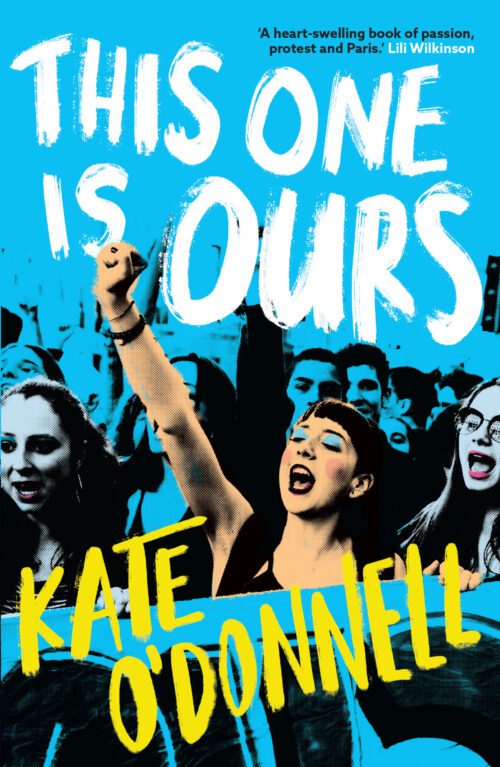
    In her acknowledgements, Kate O’Donnell sums up This One Is Ours by saying,” Lets ’make noise, make art, and make change.” She has written a truly inspirational story in a style that reflects a sixteen-year-old girl and her moment in time. The style of writing is compelling, immediate and gentle. Narrated by Sofie, the short sentences and understated language, place us alongside her. We feel her uncertainty, her desire to fulfill her dreams and what it is like to be sixteen.

    A passionate artist, Sofie’s dream has always been to go to Paris. She has studied French and is committed to her art. Her family support her, but financially can’t afford to let her study overseas. Hana, Sophie’s older sister, has saved money and surprises the family by having found a student exchange for Sophie in Paris.

    To get there, Sofie must also save some money. A year later, she is ready to go overseas to Paris, to her host family. A dreamer, Sofie has spent much time walking and observing. This is how she begins to learn about Paris. She draws maps of where she has been, and what she has seen.

    At first, she is exhilarated, then tired and jet lagged, then homesick. As time passes, she begins to find many of her dreams being realised; the art galleries, the monuments, and the French boy, who is thoughtful. But Sofie’s horizons are also being expanded by her host sister with Climate change a very powerful issue for the young men and women of Paris. Eventually a rally is held, in which they both take part.

    The girls feel sadness for the future, but come to realise that their time is now, in the present; heir role for the planet is to lead by example and be active in planning for the future.

  • How to Talk About Climate Change in a Way That Makes a Difference

    How to Talk About Climate Change in a Way That Makes a Difference

    Climate change has been being discussed by communities, scientist and politicians since 1970 with the result that many people have become overwhelmed with climate anxiety or the notion we are heading for a massive climate disaster when global warming reaches tipping point.

    There have been the deniers, the corrupt scientists, blatant disbelief, politicians who are more concerned with their next election results and climate activists all touting their platform, which has had the effect of people turning a deaf ear to the very real truth; that climate change is here to stay and that something real and serious needs to be undertaken by the Governments and people of the world to effect change.

    Over the summer of 2019 to 2020 Australia burned in some of the most terrifying bush fires ever to occur in modern or recorded times; swaths of bush were burned to irreparable levels, flora and fauna gone forever, with so few species surviving the carnage. The world looked on in horror as did the people of Australia.

    Climate change became something that could no longer be denied. The rallies across Australia became something that could not easily be dismissed; when the students, young and old took to the streets it became a serious ah-ha moment for many. Rebecca Huntley was one of these people who took stock of her lifestyle choices, but took her new perspective into the workplace to try and understand the real issues behind climate change and the resultant anxiety that has all but caused everyday people to become detached.

    As she followed the thread of the past thirty years she came to the conclusion that the best way to create an antidote to climate anxiety was through change; change of the psychology in the way we go about talking about climate change, presenting the facts without the drama and how best to reach those who have simply turned off, are doing a little but could do more or are simply confused buy all the hyper babble.

    Some surprising information came to light, in her year of looking closely at climate change, resulting in the belief that the best way to work through the fear and inertia was by talking about climate change. Climate change scientist Katherine Heyhoe considered talking the most important thing to fight climate change. Greta Thunberg talked and then walked her talk right into the United Nations. Young women, still in high school spoke with passion at rallies across Australia and the world, and people listened.

    How to talk about climate change in a way that makes a difference, tells a story that makes a massive difference leading to a better understanding of where we as a society stand, how best to manage anxiety relating to climate change, offering acceptance that it is real and happening now, not in some time in the future and what we, the everyday person can do to make a difference.

    How to talk about climate change in a way that makes a difference should be consider as essential reading for anyone who is interested in or wanting to further understand climate change and how they can make a difference by beginning a conversation that leads to real climate change and a renewed hope for the future.


  • Mammoth

    Mammoth

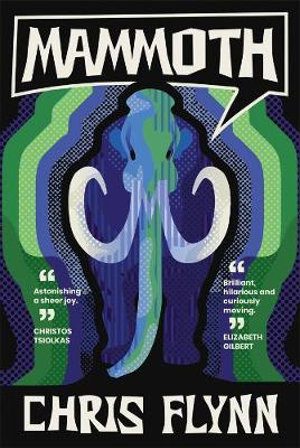
    Reading Mammoth from Chris Flynn was a fantastic way to keep the isolation blues at bay. The narrator’s voice is one I have not heard before. The language used to tell the story was brilliant, witty, intelligent, and revealing. The story will excite anyone who loves history, animals, and snippets of little-known facts about famous people. In fact, you could say this was an autobiography of a Mammoth. As an extra, we see social changes and conditions along his journey.

    The tale begins with the narrator speaking from a glass display cabinet in New York. He is awaiting an auction where he and many other fossils will be sold to the highest bidder. In the case with him is a dinosaur, who listens (not always politely) to the reminiscing’s.

    They exchange stories, although it is the Mammoth’s life story we follow. The climate changes and the presence of humans who are a threat to his herd, convince Mammoth that it is time to take them further north to colder regions. This leads to the death of the Mammoths.

    The dinosaur then interrupts by telling of his discovery in the Gobi Desert, and “What a shit hole it was.” The fossils exchange stories for some time and reveal current political and historical facts, Theodore Roosevelt shot a reputed 11,000 creatures, quite an amazing feat, according to Mammoth. Later the addition of Queen Hatshepsut’s hand, and a penguin who is rather coarse, join the pair in the cabinet. They both have stories to add.

    The research gathered to make this such an authentic story (apart from the animal viewpoints), is immense. The author had used technical terms where possible, but in context, for ease of understanding. The humour, both in the situation, the characters and their stories compel the reader to laugh out loud. While statements by the Mammoth “Ownership is a unique human notion”, are deeply thoughtful.

    Mammoth is such an unusual look at our planet, its inhabitants, and their thoughts, that it is a must read for all.