Tag: classics

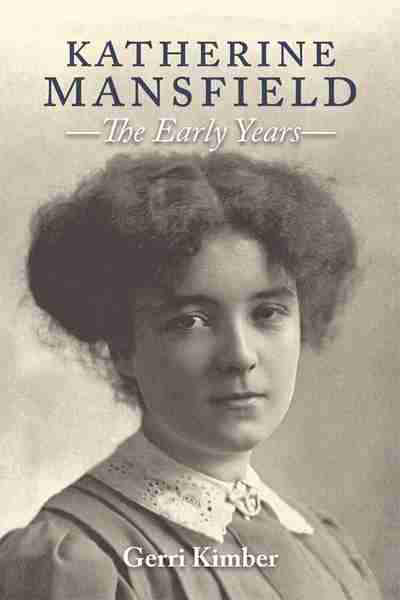
  • Katherine Mansfield – The Early Years

    Katherine Mansfield – The Early Years

    When the patron of the Katherine Mansfield Society compliments an author for her meticulous research, you know the biography of Miss Mansfield will be reliable and detailed. Indeed, Gerri Kimber has covered every aspect of Katherine’s early years with great incite understanding. 

    The references at the back show this clearly. Not only was Katherine an exceptional author, but also a musician of some renown. She led a full life, although the early years were rather difficult, and Gerri has shown how these formative years helped to develop Katherine into the wonderful author we read today.

     The author gives us a thorough background into Katherine’s ancestors, and how they came to the wealth and social standing that allowed them to travel and finally finish up in New Zealand. This is where Katherine spent most of her childhood years. She was a plain and chubby child who developed, in spite of her mother, who was frail, and rather acerbic with her children. After a long absence abroad, her mother greeted Katherine at the port by saying “Still fat I see”.  At school, Katherine wrote some short stories, and already showed a great insight into language and description.

     In her later years, Katherine was sent to Queen’s College in London, to further her studies. This was a most unusual educational establishment, as it gave the students a great deal of freedom and autonomy in their choices of subjects and studies. Katherine flourished here although she found friendships difficult to maintain. When she finished at college, Katherine returned to New Zealand to rejoin her family. She was lost and turned to her music and dreams of lovers to sustain her all the while desperately wanting to return to London.

     There are excerpts of Katherine’s prose, and similarities are drawn with the works of Oscar Wilde. Although published in the local papers, Kathrine still yearns to go to London and join the literary set. Her father is not convinced about the wisdom of this, and delays her departure, but eventually she proceeds to London, to the home of a relative, with an allowance of one hundred pounds a year, allocated by her father.

     The details and research covered by Gerri, make the character of Katherine come alive. Just reading the many snippets that are contained in this book will certainly promote an interest in Katherine Mansfield, and place her name among those great writers in history. There are many fascinating photos of Katherine’s family, and New Zealand, to add interest to her story. Hopefully the name Katherine Mansfield will take a more prominent position in our readings.

  • Turner Classic Movies: The Essentials: 52 Must-See Movies and Why They Matter

    Turner Classic Movies: The Essentials: 52 Must-See Movies and Why They Matter

    What a fantastic coffee table book this is. For all movie buffs and anyone who wonders why a movie is classed as a classic, this is the ultimate guide. One’s first thought about this book is, “How do you define what is an essential movie?” This is addressed in the beginning pages.  One of the answers is ….“Their fluid mix of comedy, drama, romance, and suspense – so satisfying for audiences because it engages multiple corners of their brain- is one of the most difficult results for film makers to achieve.”

     The list of films presented in this book, begins with “Metropolis” (1927)  and goes through to “This is Spinal Tap” (1984). Many of the films are widely known, such as “Gone with the Wind” and “Citizen Kane,” but some are not so well known, such as “The Bicycle Thief”. Each film has a page outlining the Directors, Producers, Screenplay Persons, and the Leading Characters. A short synopsis of the story is given, and then there is a half-page discussion about why this film is essential viewing. 

    In the film King Kong, Fay Wray “had to react convincingly to what in the reality of the film set, was nothing.” Her screams were convincing, and the musical score was magnificent. This was the first time distinct themes had been used for different characters. “King Kong laid the groundwork for all monster and disaster movies to follow.”

     After this information about each film, there is a segment called “What to look for.”  King Kong opened in an era where there was no production code. There are some graphic and suggestive scenes, which certainly would not be allowed today under the current rating systems.

     The Essential looks at the Western movies, and in particular, “Winchester 73.”  This is where the career of James Stewart began, and “incorporated a dark, psychological intensity that impacted the genre forever.”  Messages that” violence by the hero was not necessarily heroic …paved the way for later westerns.” The Director of this movie, Anthony Mann, was one of the first to make sure the audience was clear in its spatial understanding of where the hero and villain were during the final shoot out.

     Singing in The Rain is another movie discussed and explained, with Gene Kelly shown to have experimented with dance numbers to give them as much dimension as possible. He used “innovative choreography, camera placement, lighting and colour to imbue depth and dimension.”

     Each film examined is given thoughtful and precise reasons for being selected in this list of excellence. It is fascinating to read the little tit bits about actors and photography, and directors’ tricks. In films such as “Red Shoes,” camera speeds were changed to make newspaper spin and turn into a newspaper man.

      There are some  films that you may not have seen, but as winter approaches, sitting down with this book in hand and the film on the screen, could not but lead to a satisfying few hours. There are fifty two movies lovingly discussed and unwrapped for the curious reader.