Tag: Chinese

  • Our Family Dragon: A Lunar New Year Story

    Our Family Dragon: A Lunar New Year Story

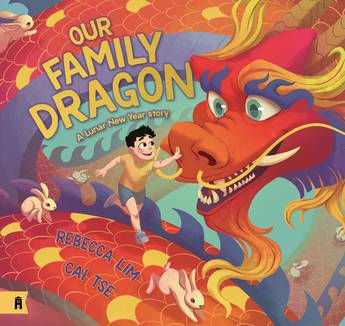
    Our Family Dragon is a great way to explain Chinese New Year customs to children. Beautifully coloured, this picture book tells the of excitement and planning that the family experience and exactly what they do. The young boy who tells the story is filled with anticipation and delight as he prepares to welcome in the Dragon!

    As the reader turns the pages, we see that the family have hung red lanterns and decorations, to bring plenty into the house. They have cleaned the house and thrown out rubbish to get rid of bad luck. So much food is cooked, spring rolls, noodles, dumplings, rice, and vegetable dishes.

    All the family get together and sing songs and stay up to see the New Year in. There are fifteen days of celebrations, with new clothes. Red packets of money are given by the elders. The group go to Chinatown to see the colourful dragon that dances down the lanes.

    Every page is filled with joy and delight, which the illustrations reflect cleverly. All the customs and traditions are explained for young and old to appreciate. 2024 is the Year of the Dragon and this clever story will ensure that children understand the importance of this year for Chinese people.

  • Mulan: The Story of the Legendary Warrior

    Mulan: The Story of the Legendary Warrior

    Mulan, created as a paperback picture book is a retelling of the folk song from China’s Northern Dynasty (439-589), about a remarkable girl. She was taught to read and write by her father and mastered many disciplines such as weaving, horse riding, using a sword and bow and arrows. One day the Emperor sent a messenger to summon Mulan’s father to fight in a war. He was incredibly old, and Mulan’s brother was too young to take his place. Mulan decided that she would go to represent the family.

    For twelve years Mulan fought with the army, her gender never discovered. Her skills were so advanced that she fought in the front lines. When at last the war was over the Emperor wanted to reward his bravest heroes, and it was then that Mulan revealed her gender. She was offered rewards but asked for a fast horse to take her home to her family.

    The legend is beautifully presented in this book. The paint wash pictures are pastel and give a gentle feel to the story. The text is written in English followed by simplified Chinese characters, which makes it quite interesting to follow. The text is easy to read except for the two pages where it is written over the paint wash.

    For people looking for a non-European legend, or to introduce Chinese characters to young children, Mulan is a good example. It is also important to look at strong female characters in these tales. The loving family model is authentic and satisfying.

    Mulan is told in both Chinese and English.

  • Stone Sky Gold Mountain

    Stone Sky Gold Mountain

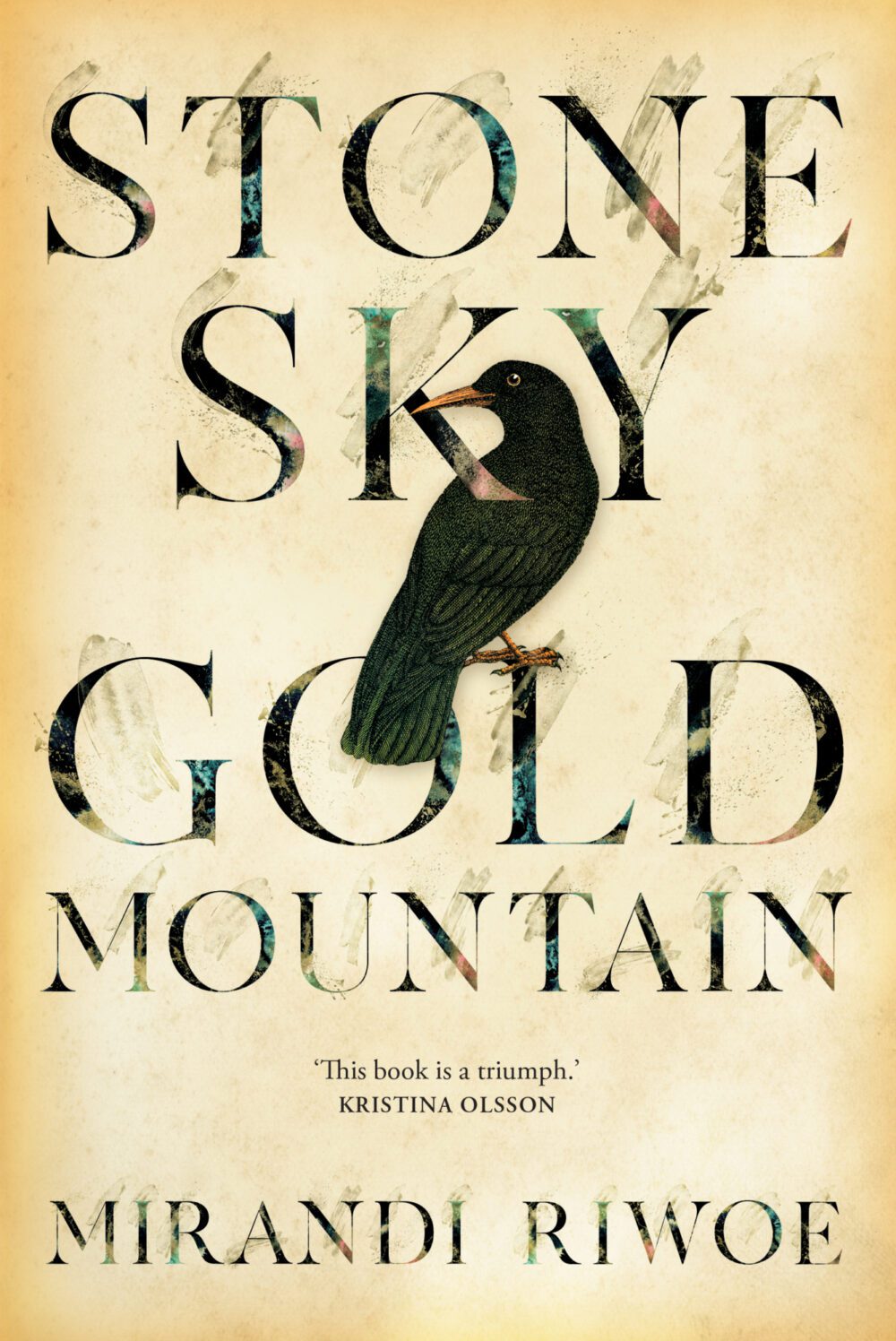
    The tone of Stone Sky Gold Mountain is sombre as the author Mirandi Riwoe looks back at Australian History in 1877. The Palmer River in Queensland is the setting for little known stories of Chinese immigrants who came to work on the goldfields in that tropical area. The clashes of cultures, involving the Chinese, Aboriginal people and the English in this tough climate, is predictable. The poverty and the desperation lead people to behave with little scruples or morals.

    The initial thoughts of a Chinese brother and sister (who is disguised as a boy) show us that they left a life of desperation in China. Their father had gambled all their possessions, including younger siblings. Lae Yue, and his sister Ying, have travelled to Australia to regain their wealth on the Gold Fields in Northern Queensland.

    When they leave that area, they move to a small town where prejudice and violence is rife. Sophie, is a prostitute who lives with her maid Meriem, living on the outskirts of the town. Theirs is a hard life but made easier by the earnings and protection that Sophie brings to the house. A silent friendship builds between Lae Yue and the English household and they benefit by helping each other.

    A situation arises, which makes it no longer safe for the Chinese brother and sister to stay. This is a story of great hope and resilience, the brother and sister experience many life-threatening situations, but never lose sight of their goal which is to restore their siblings to the family home.

    This is an area of History that has not been widely exposed. Unlike the Chinese on the Victorian Goldfields, this story has remained largely untold.

  • Bruny

    Bruny

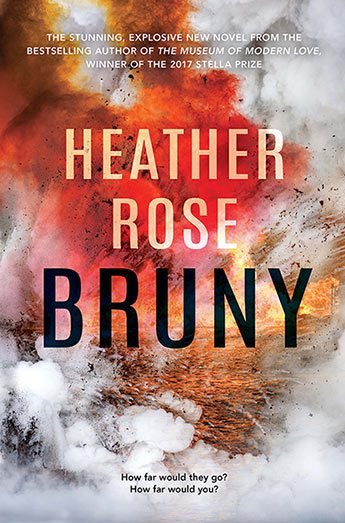
    Bruny is Heather Rose’s eighth book, her fifth adult novel: her last book, The Museum of Modern Love, which took eleven years to write, won her several awards; the Stella Prize and the Christina Stead Prize awarded in 2017.

    Returning to her native Tasmania, Rose writes, with a deep passion and love for Tasmania, her home /heartland, is evident in this enthralling novel. Bruny took me on a little visit to Tasmania courtesy of a storyline I could not putdown. She says it’s a political satire wrapped around the current and on-going global political situation, as well as the increasing concerns about the rise of power the Chinese Communist Party in Australia, however in the chaotic world of today, I hope she is not prophetic.

    Bruny is narrated by Astrid Coleman, or Ace, who is a renowned conflict resolution expert working for the UN based in New York. After years of absence she returns to Tasmania to help her brother, the Premier, who has sanctioned a huge suspension bridge between Tasmania and Bruny Island causing much dissention among the people of Tasmania and Bruny.

    When the bridge is blown up only three months from completion with the culprit or culprits remaining unknown, Ace finds she is facing issues within her own family and as she is there for the specific purpose of pouring oil on troubled waters, once she finds out the true motive for the bridge, she is left facing a life changing decision.

    Part political intrigue, Bruny explores family dynamics, concerns about the expanding Chinese presence in Tasmania, the New World Order while weaving a love story around the beauty that is Tasmania and Bruny.

    A really great read. Now I am off to find The Museum of Modern Love.


  • The Crow Eaters: A journey through South Australia

    The Crow Eaters: A journey through South Australia

    All South Australians should read this book which is a big call, but the author has done what the best travel writers do, and that is, looked at familiar places, with different perspectives. He had no intention of writing a book but was inspired by a man who wrote about his bedroom. He found the most remote details and tiny observations to describe. Ben has done more than that.

    In an interesting style, he has looked at local places. He has included geology (South East), Aboriginal perspectives, and inciteful assumptions from his conversations. His intent was to cover only certain parts of the state, but, in depth.

    Some of the places he writes about are Coober Pedy, Maralinga, Mount Gambier, Port Lincoln and Kangaroo Island. In each place he visits, we are given a brief history of the interesting facts, and past times.

    On the way to Mount Gambier, Ben comes across Chinaman’s Well. It was here that thousands of Chinese landed to avoid the tax that the Victorian Government placed on those migrants wishing to work the goldfields. The number of Chinese passing through the town was staggering and there is really no acknowledgement of this massive migration.

    When Ben first moved into his house at Littlehampton in the Adelaide Hills, he found shards of clay in his garden. It was from a time when there was a brick works operating alongside Littlehampton bricks. This was another reason he felt that he had to unearth more stories of South Australia and give his stories in return.

    With his broad approach to a district, the writer would often refer to another author, so we find stories of Mark Twain visiting Goolwa. Yes, it’s true. The American had invested unwisely and so he travelled the colonies on a speaking tour to recoup his losses.

    After visiting many places on the South Australian map, the author decides that a suitable end for his book would be a closer look at the city of Adelaide and how the Kaurna people fitted into the history. He begins his trail at Victoria Drive where a memorial is built to honour those who served.

    In the first world War, 1000 Indigenous people enlisted. Only 1 received access to soldier settlement land later. He follows the trail and discovers art works and a visual history painted on tiles from the Kaurna people. Along the Torrens River bank there are also acknowledgements to the first people here and their lifestyle.

    This is terrific reading as a local and as a tourist or visitor each chapter could guide you to an intimate understanding of a region.
     

  • Stranger Country

    Stranger Country

    Monica Tan is an ABC, (Australian Born Chinese) woman who grew up in a comfortable and loving family in a Sydney suburb. When she left university, she was employed as a journalist for The Guardian, interviewing and meeting many interesting people. Being raised in a middleclass community, she was sheltered from the worst aspects of racism, although she always felt she looked not quite Australian.

    Leaving her job, Monica decided to travel to China to meet her overseas family. She embraced their culture and traditions, as they still lived away from the big cities and worshipped the way they had for generations. After a year Monica arrived back in Australia – her country – and realised that she knew very little about the history of the Indigenous people, their land, traditions and customs. It was as though Australian History began with the white settlers and the land had no story to tell.

    With this thought in mind, Monica bought a 4-wheel drive and planned a 30,000 kilometre trip around Australia. She had a few contacts from her journalism days but hoped to learn and meet people as she travelled and camped in the outback. She had some issues regarding her Chinese/Australian background and wanted to see where she fitted into her country. Monica hoped that by understanding the History, cultures and stories of the outback she would gain a sense of identity more clearly.

    As she began her trip, it became apparent that the Indigenous people she sought were friendly and happy to share some of their belief systems. She walked the tourist trail and spent time in the North with a family. They fished and ate traditional food and included Monica in their stories. Beginning from Sydney the journalist travelled to Mildura on to Adelaide then to Alice Springs. From there she went to Pt Headland, Broome Darwin, Mt Isa, Cairns then back down the east coast of the continent. As she travelled, she showed great respect for people’s privacy and informed them she was writing a book and they were welcome to change or delete anything they wished.

    Among the many fascinating pieces of history that Monica confronted, were the Chinese/Indigenous people in the North West of the country. The Chinese had come for the Gold Rush and the pearling. They had intermarried and become market gardeners and merchants. She met some Indigenous people with Chinese names who told her many stories of hardship and death in a harsh land. These people were well settled by the time that Politicians decided Chinese and Asian people had too much influence in the country. It was at this time that the White Australia Policy was formed.

    By confronting the true History of the land and the people, Monica found her place in Australia and the belonging that she had always sought.