Tag: china

  • Oblivion

    Oblivion

    He lives in the nebulous world of the Diplomat. His base is China, his world of operation is Asia, Thailand and Vietnam and on occasion wherever he is sent finalise agreements for land purchase, mineral rights or whatever the Governments of the world see fit to acquire, change or bend to a purpose.

    Oblivion the latest work of fiction from Patrick Holland is one where a sparsity of words is used to create an enthralling world around the endless, hopeless seeking of oblivion. The nameless man is forever seeking the intangible; one night here, one night there, always a beautiful girl to keep him company, to share his bed to offer warmth and comfort if only for a fleeting moment. With the help of a little of this and that he seeks nightly peace for his distress.

    But as with all things, he is asked by a different department to carry out what seems to be a simple task; to hand over a passport and credit card to a man who needs to be extracted. He reluctantly agrees to this as he needs the money to achieve his dream; that of owning his own apartment high in the sky; a place of solitude, beauty. This causes conflict and danger in his carefully controlled world.

    The love of a woman who is beautiful, a sought after Courtesan, is something he desires but she is unattainable. In their short, but gently powerful time together, she teaches him much about desire, wanting and the space called lonely.

    He is everyman and no man; he is the seeker, the dreamer, the man who lives inside us all, often alone, often wondering.

    Oblivion is a deeply introspective work which in its sparse simplicity and yet complex prose, resonates, remains and demands of the journeyman, contemplation.
  • The Moon Gate

    The Moon Gate

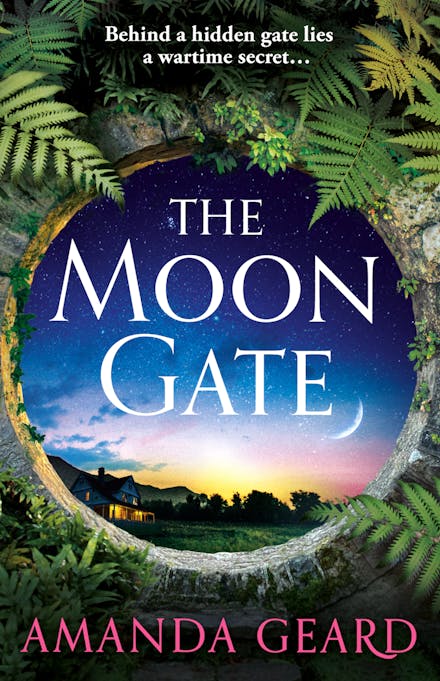
    Moon gates which originated in China, symbolize birth and renewal; they are the inviting entrances to the gardens of the upper class. Author Amanda Geard’s compelling atmospheric novel, ‘The Moon Gate’ has created a wonderful story of a family, which across three time lines and three main locations, takes the reader through the moon gate on a journey of their rebirth.

    The contents of a satchel belonging to her father Ben, who died in 1975 before Libby Andrew was born, is all she has to unravel her heritage. The documents and photos tucked inside lead her on a journey from pre WWII London to the wild western remote coast of the mid 1970s Tasmania and finally to Ireland. She begins to unravel the secrets and mysteries, which surround not only the old house on Tasmania’s west coast, which had been anonymously bequeathed to her parents, but also the identity of the mysterious body found on its ground. 

    The author has seamlessly merged historical facts with this beautifully written secret filled story. The exquisite details contained in her descriptions of the landscapes complement the richness of her characters. 

    I highly recommend this engrossing book with its many twists, turns and satisfying ending.  Readers with a love of Banjo Paterson’s poetry will enjoy re-acquainting themselves with his poetry.

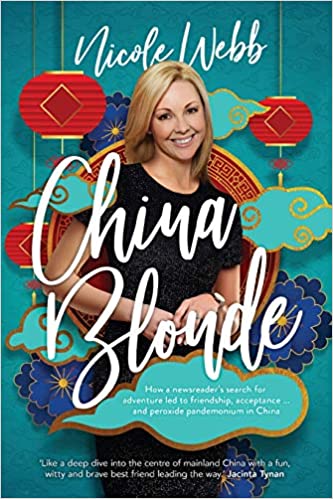
  • CHINA BLONDE

    CHINA BLONDE

    As a Newsreader with Sky News, Nicole Webb believed she had her life pretty well organised. She had worked hard over the years to attain this position. She was also the proud owner of a lovely little Mini Cooper convertible. Life was very good and she was enjoying every moment.

    Turning thirty-five saw change begin to happen when she decided to do something very different; volunteer at an orphanage in Africa for six weeks, a decision that was to have a massive influence on what happened next.

    Meeting James, a hotelier, on a ‘blind date’ proved to be the next momentous event in her life, an event that saw her getting married and at the age of 38 years, falling pregnant with their child; two events Nicole never thought would be a part of her life.

    Along with being pregnant, they accepted a opportunity to move to Hong Kong. Four years later they were again offered a chance to move to China, a decision that was to be far more challenging than either of them expected, but one that was to enrich their lives in ways neither of them ever anticipated.

    Once the decision was made to move, Nicole realised what she was giving up in her lovely, expat lifestyle in Hong Kong. China was far from anything she or James had ever imagined: Their beautiful, charming and cheeky blond haired daughter was the centre of attraction each time they stepped outside the door of their home for the next two years, The Westin Xi’an.

    With a large dose of humour and good dollop of being able to laugh at herself, she shares her life as an expat wife of a Hotelier in China, the Middle Kingdom, a world that was vastly different to anything she had ever experienced or was even prepared for, learning how to do just about everything from the beginning.

    Her journey to the hairdressers becomes a mission in its own right, finding a suitable school for Ava, a massive undertaking, trying to discover other Mums that made up the expat community proved challenging and that was without trying to learn the language, cope with the dense smog, the noise, traffic and immense amount of people everywhere.

    Nicole Webb has offered a refreshing and honest peek through the window that people who travel for work and their families have to learn to accept as a part of their life. She has also presented a wonderful look at life in a vastly different culture, the love and insight that is gained by taking on  a challenge and the understanding that no matter what the culture or the background, people are all connected by the same ‘common thread of humanity’.

    More than a memoir and much more than a travel guide to China, China Blonde is a refreshing, enjoyable journalist’s eye-view into a world that has to be experienced to be understood and one that will definitely resonate with anyone who has ever lived or is living a similar lifestyle.

  • Descendant of the Crane

    Descendant of the Crane

    Within the realms of fantastical literature, particularly the young adult variety, it is becoming more common that a lot of entries read very similar to one another. From the release of Tolkien’s Lord of the Rings trilogy, much fantasy thereon has set to the mould left by its footprint.

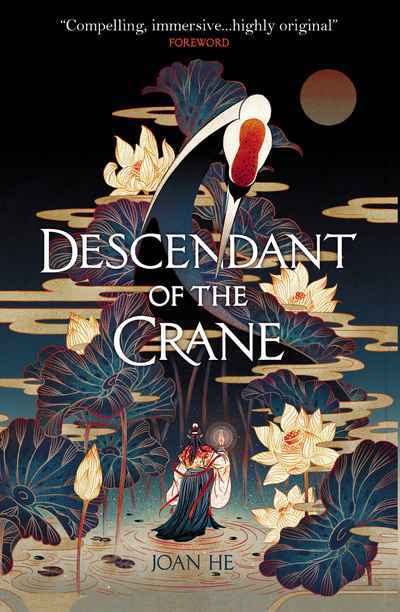
    Joan He’s Descendant of the Crane, set itself apart from its brethren and becomes a remarkable read. Yan’s Queen, Hesina; formerly Princess, cannot sit with the unease caused by the circumstances around her father’s death… the King’s death. This unease she spurs her into action to, pursue avenues to the secrets and truths she covets. Many of these paths are illegal, but all of them pose danger to someone of her stature. What follows is an unravelling of much she did not know about her own Yan, and a further insight into the long-outlawed magic and its history.

    It is here where the charm and awe of the Descendant of the Crane lies. Though not ground-breaking in terms of plot, its setting, and universe are packed with excitement and discovery. It is a book where I felt a little more learned and cultured with each read, which I believe is due to its heavy Chinese influences; I now know what death from a thousand cuts is.

    Overall, this story is driven by a pursuit for the truth, and the unravelling of a conspiracy, both of which it pays in full. Despite being a standalone (debut) entry, the author has admitted that there is room for a twin novel, perhaps somewhere in the future. Fans of high-fantasy and well-structured worlds will love this book, others will appreciate the tight storyline and pursuit for truth.

  • Billy Sing

    Billy Sing

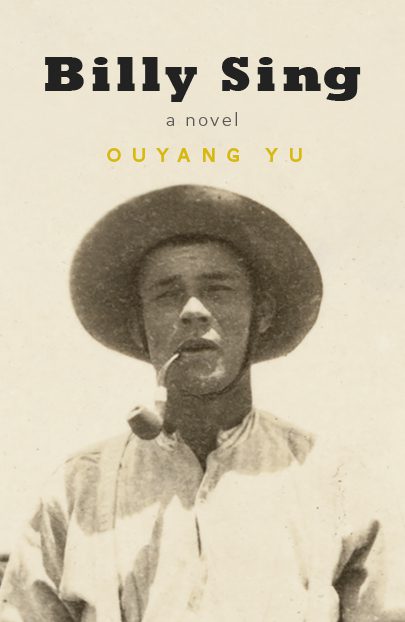
    William, or “Billy” Sing, was an Australian born and raised in rural Queensland, in 1886.  He was to achieve greatness, but little is known of him today. His father was Chinese, and his mother was English, so from his earliest days he knew ostracism and racism. He falls into that awkward category of a hero who was known as “The Assassin”, and greatly decorated as a soldier in World War one.

     Billy was a loner; he had no choice really, but went to school, and was a good student. His family had a small farm, but his father would go off droving for months at a time. As he grew he became interested in firing guns, and as a solitary sport, he enjoyed growing success. Billy signed up when war broke out and completed his training. He was sent to Gallipoli, and it was here that he really made his reputation as a sniper. He was highly decorated by both the Australian Government, and also the Belgian Government after serving time on the Western Front.

     After the war, Billy married a Scottish woman he met while recuperating from a gunshot wound. The marriage was not to last though, and there are various accounts of the reasons why his wife Fenella left. After that Billy lived in obscurity and poverty. He was indeed a man of the land.

     The unusual and interesting aspect of this short novel, is that it has been written by a Chinese author who migrated to Australia in 1991. Ouyang Yu gives Billy a voice that does his Chinese ancestry justice. He makes sense of the thoughts and actions of this young man as he grows up.

      Billy’s father’s advice, to learn to ignore people, helped him as a lad. It seems his Chinese resilience coupled with Australian knowledge of the outback ensured his independent lifestyle. Ouyang has cleverly shown this is an authentic style.

  • The Moon in the Palace

    The Moon in the Palace

    This Chinese Historical Fiction tale is wonderfully encapsulated by language that immediately brings the reader into the time, place and mind of the main character Mei. The author has written this as the first volume of a duology, “The Empress of Bright Moon.”


    Weina Dai Randel is passionate about Chinese History retelling it as an exciting, fascinating period, based on researched characters, using recorded occurrences, and people. A few characters have been added and some facts assumed, but the story is that of Empress Wu, the only woman to rule China.

     The story begins in the “Tang Dynasty, AD 631, the fifth year of Emperor Taizang’s  Reign of Peaceful Prospect.” A young Mei lives with her father, who was Governor of the region, and her wise and loving Mother. They were caring parents who were educated, and delighted to educate and enlighten a very curious Mei. She is given many books to read, among them, the famous, ancient, Chinese book, “The art of war” by Sun Tzu. This book is read today, and certainly Mei’ remembered the principles, using them to stay alive when she was chosen to go to the Emperor’s Palace.

     Mei’s family had fallen on hard times, and at age thirteen, she and fourteen other girls were chosen to live in the Emperor’s Palace to serve him. When the Emperor, or “Most Adored”, had his birthday, everyone wished to give him a memorable gift, and Mei also wanted to bring herself to his attention. She had little money, but devised a clever riddle, and wrote it herself.

     The Emperor heard his men discussing the poem and Mei was brought before him, and included in the inner sanctum. Now the real battle for survival began, as the various women and men in the Court fought for status and to promote their children. The Emperor’s displeasure was easily gained and punishment was instant and deadly.  Through patience, intelligent sifting of information, loyalty, and love, Mei maintains her sought after position in the inner circle; she also falls in love with one of the Emperor’s sons.

     A bloody coup ensued and Mei and her lover survive to prosper.

     It was the intent of the author to write about successful Chinese women who took control of their destinies, and Empress Wu, or Mei , was certainly that woman. The clever and readable way this story is woven is reminiscent of the silkworm’s cocoon, a delicate balance of fine thread, making a powerful shelter.

     Weina Dei Randel has produced a stunning first novel. Her subtle use of language and gentle reflection of characters do not detract from the courage they have or the dangers they will face.