Tag: Charles

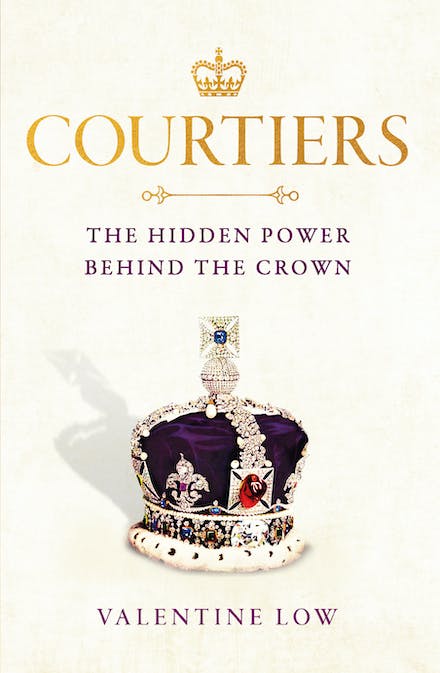
  • Courtiers: The Hidden Power Behind The Crown

    Courtiers: The Hidden Power Behind The Crown

    After Queen Elizabeth’s remarkable 70 plus years of service, the British Commonwealth now has a new monarch, King Charles III. The courtiers, who are entrusted to guide him have a complex time ahead of them; Prince Andrew’s future role and Harry’s pending release of his tell all book will challenge them.   

    For a balanced authorative summary of the life and roles of courtiers, go no further than ‘Courtiers The Hidden Power Behind the Crown’ written by Valentine Low, who has been reporting on the Royal Family for over 25 years. Although this book is his first on the British monarchy, as Royal correspondent, for The Times, he has spent many years closely studying them and the influence wielded by people behind the scenes.

    Throughout history, the British monarchy has relied on courtiers, who are the trusted advisers of the monarch. In this well researched book on the inner workings of the monarchy, the author provides a very detailed description, not only of the advisory personnel in royal household but also of the requirements of their roles. Palace protocol and politics are explored from the courtiers’ point of view. Low’s insightful discussion of the roles of courtiers, who have served the Royal family in both current times and historically, will provide a clearer understanding of the competitive nature of the three Royal households.

    Readers will enjoy obtaining a greater insight into the complexities of funding issues, ‘Megsit’, and the charitable endeavours of members of the Royal family. Unlike the magazines, which flood the market with sensational stories about the Royal Family, this informative book deals with facts.

    The author has included a comprehensive list of footnotes to identify the sources used.
  • Charles Darwin (Little People, Big Dreams)

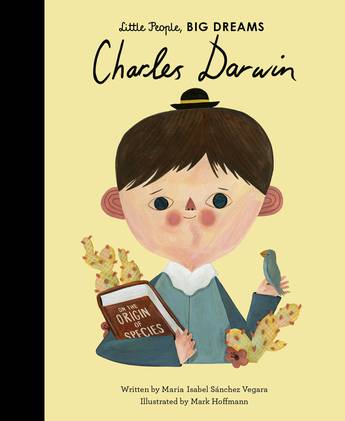
    Charles Darwin (Little People, Big Dreams)

    Charles Darwin was a little boy with a massive curiosity who went on to become very famous, having places named after him, Darwin in Australia, but more importantly, discovered that after studying a particular species of bird on the Galapagos islands he realised they all had a common ancestor, even though they has vastly different habits and had adapted to eat whatever food was available. Of course this did not go down well in Victorian England as it challenged the religious beliefs of the day.

    But how did a little boy from Shrewsbury who wondered about worms and why they crawled out of the earth, and had they always done this, go on to become such a famous person. He was curious and was convinced that what his teachers told him might not be right, which was also pretty radical for that time, as children were supposed to do and think what they were told to do by adults.

    Charles was very lucky to be born into a family of scientists who believed in curiosity and asking questions, something he did all of his life. When he was still young he joined an expedition to Africa, South America and Australia on the HMS Beagle and there he discovered so much about birds, animals and reptiles and their habits and habitat.

    He also began to realise that animal species were not all fixed as everyone thought, that they changed and adapted to their conditions. This made him even more curious and lead to him writing On the Origin of the Species which is still considered as the most important book ever written.

    His legacy to the world was his curiosity which lead him to discover amazing things and his work then is still offering insights into diversity of life on this earth, which by the way includes humans.

    The series Little People Big Dreams brings to life so many of the people who do amazing things in their lives, many coming from very humble beginnings and all of them going on to make a big difference to the world in which they lived, as well as the world of today.

    Bright colours, an excellent choice of words and end notes presenting a brief description of Charles Darwin make the book suitable for a wide audience.

  • The Dickens Boy

    The Dickens Boy

    What a joy it is to read the words of master storyteller Thomas Keneally. He has presented this Historical fiction, The Dickens Boy in such a way that it captures a variety of scenarios and blends them together. The Dickens family is explored and woven throughout the outback of Australian. The early station owners and their families, hard working and tough, can all name characters from Dickens novels, while learning about Aboriginal Culture and practices, and moving thousands of sheep.

    Edward Dickens, called Plorn by his father, is the tenth child of Charles. Raised in a happy family (although his mother left) by his father and Aunt, there was much unity, and companionship in the large household. However, Plorn had a dark secret. His father told him” You must apply yourself,” but academically he was not successful. Charles decided that Edward would have to try to achieve success in Australia and arranged for him to sail there at age sixteen, to find his place on a sheep station.

    Plorn was remarkably adaptable, and determined to work hard, to be a success, and make his father proud. So follows the fascinating story of this “Man with the famous father,” integrating into the heat, dust, flies, and vastness of the outback. He takes part in cricket matches, learns about bush rangers, droving sheep, and Australian girls.

    Thomas Keneally has researched the life of the Dickens family and Plorn. The way he has woven the maturing of this young man in an outback setting is seamless and realistic. Another fascinating aspect is the sign of the Australian culture gradually emerging from the English gentleman’s home. The Aboriginal storyline is also one to reflect upon. The friendships that emerge between the pastoralists and the Aboriginal people are warm and non-judgemental. However, this situation is changed by a Ranger from Adelaide. This part of Plorn’s life is delightful to follow in this harsh outback Queensland setting.


  • Charles Darwin Scientists Who Changed the World

    Charles Darwin Scientists Who Changed the World

    Charles Darwin was a man who believed in many things as a young man, entering University to study Sciences, becoming a naturalist, botanist and geologist who set the world alight, literally, when he published his confrontational book On The Origin Of Species in 1859 expanding on the theory of evolution. This was the first of several more books that were also considered as controversial.

    While today this may not seem like a particularly big deal, back in 1850 the Church set the tenants of society and believed that God created animals and mankind as they were and still are in many cases.

    As young man Darwin joined the expedition ship HMS Beagle which set sail from Plymouth in 1831. He had with him all the scientific equipment needed for a journey of two years, collecting flora and fauna, to map coastlines to strengthen the British Empire and to bring, what the English considered as civilisation, to the world! This voyage was to last five years.

    In 1936, he and the crew of the Beagle arrived in Australia and Darwin begins to begins to wonder about the terrible plight of the local indigenous people, and his theory of natural selection, as they were dying of simple illness, while the ‘European Australians’ survived. The City of Darwin was later named in his honour.

    Darwin’s theories established a chain of thought and scientific research which is still totally relevant today, and although Darwin struggled to find indisputable proof, modern science, the further discovery of fossils and a huge advance in scientific techniques and equipment, has proven his theories were correct.

    His story is fascinating, his work has gone on to inspire scientists over the past 100 years and more, his legacy to the modern world is outstanding. Anita Cray has presented his story in short form, which makes awe inspiring reading and will prove to be an inspiration to any young person who is, or has, a fascination with any of the sciences.

    Charles Darwin is the third book in the Scientists Who Changed the World series.