Tag: cambodia

  • Empowered: A new generation of leaders

    Empowered: A new generation of leaders

    The 14th century proverb ‘mighty oaks from little acorns grow’ is exemplified in Aviv Palti’s comprehensive leadership book “Empowered – a new generation of leaders”, which is the story of the establishment of the Cambodia Rural Students Trust (CRST) a non-government organisation (NGO) in Siem Reap, Cambodia.  The book explains how an educated 100 students, who have been drawn from the poorest of the poor in Cambodia, lead and manage a world-class organisation.

    In 2009 as a result of Aviv’s 14-year-old daughter Steph’s disappointment at missing out on joining her school’s Grade 9 volunteering trip to build houses in rural Cambodia, he and Steph undertook some research to organise their own trip to Cambodia. With four other family members they arrived in Cambodia to teach English. From this small beginning, over the years CRST has grown; overcoming the road blocks along the way.

    Today it continues to support 100 students and the NGO successfully operates many programs, which include Project B (Bicycles for Education), Project G (Empowering Girls) and Project Y (Frozen Yoghurt).   

    This easy-to-read inspirational book includes not only the graduates’ positive journeys of empowerment, but also the accounts of those who dropped out of the programme. By providing clear, helpful ‘Foundations of Leadership Takeaways’, which can be applied by the reader to successfully empower young leaders, he has provided a blue print for success. Aviv’s believes that empowered, this new generation of leaders is a legacy that will far outlive him.  

  • Angkor Wat

    Angkor Wat

    Mysterious, ancient and dominating the landscape is the Hindu-Buddhist temple complex of Angkor Wat in Cambodia; immense, intricate, a mecca for pilgrims for centuries and now tourists, with more than 2.5 million people coming to gaze on this sacred and revered site.

    Canadian flautist Ron Korb was invited to Cambodia by Human Rights Activist and musician Arn Chorn Pond to make some archive recordings. Over his time spent there he learned to play the bamboo woodwind flute known as the Pie Pook, an instrument made for him by craftsman and master flutist Yim Siang.

    Angkor Wat, his tribute song to this special time, is a most singular and hauntingly beautiful piece created for this instrument, which in the skilful hands of Ron Korb makes this elegant song a benediction to the reverence in which the Temple is held.

    Traditional, melodic and immensely calming, the music allows the mind to simply be in the moment, offering with its fluid notes a sense of timelessness found in so many of the sacred sites worldwide.

    A YouTube clip accompanying the music captures simple moments over the time spent in Cambodia during the 2000’s and previously 2016 which can be discovered at Angkor Wat – Ron Korb Flutist – Cambodian Pie Pook (youtube.com)

  • Photography in Cambodia: 1866 to the Present

    Photography in Cambodia: 1866 to the Present

    What a magnificent coffee table book Photography in Cambodia 1866 to the present is, whether you have been to Cambodia, and recognise many of the subjects, or have never been but have a curiosity about the place, this is fine reading. With over 340 photos from all over the world it documents the journey as the country emerges into the 21st century. This is Cambodia seen through the photographer’s eye.

    1860-1906 saw the reign of King Norodom, which was mainly brought about by the French. There are photos and stories to describe this time. These include Angkor Wat, the throne room of the new Palace commissioned by the French, processions, and photos of the remote and indigenous Cambodians.

    From 1906-1927 we follow the lives of the people, and changes to their country. This was the reign of King Sisowath, and closer ties with France were in place. A new museum was built in Phnom Penh which recognised the wealth of the material culture of Cambodia and the need to display historical artefacts.

    King Monivong’s reign took place during1927-1941. The French were still in control in Cambodia, and motor cars were popular, rubber plantations were in full production and tourism increased. The use of cameras was prolific as they became lighter and more affordable.

    The stories and photos continue to the present day. They serve to give a fully rounded picture of the developing country, its people, its politics, and its history.  As you browse through the book you can sense the cultural awareness and early struggles that are depicted in this wonderful compilation. There is a large list of photographers who have contributed to this volume with an index to complete the scholarly work.

  • BRIMSTONE

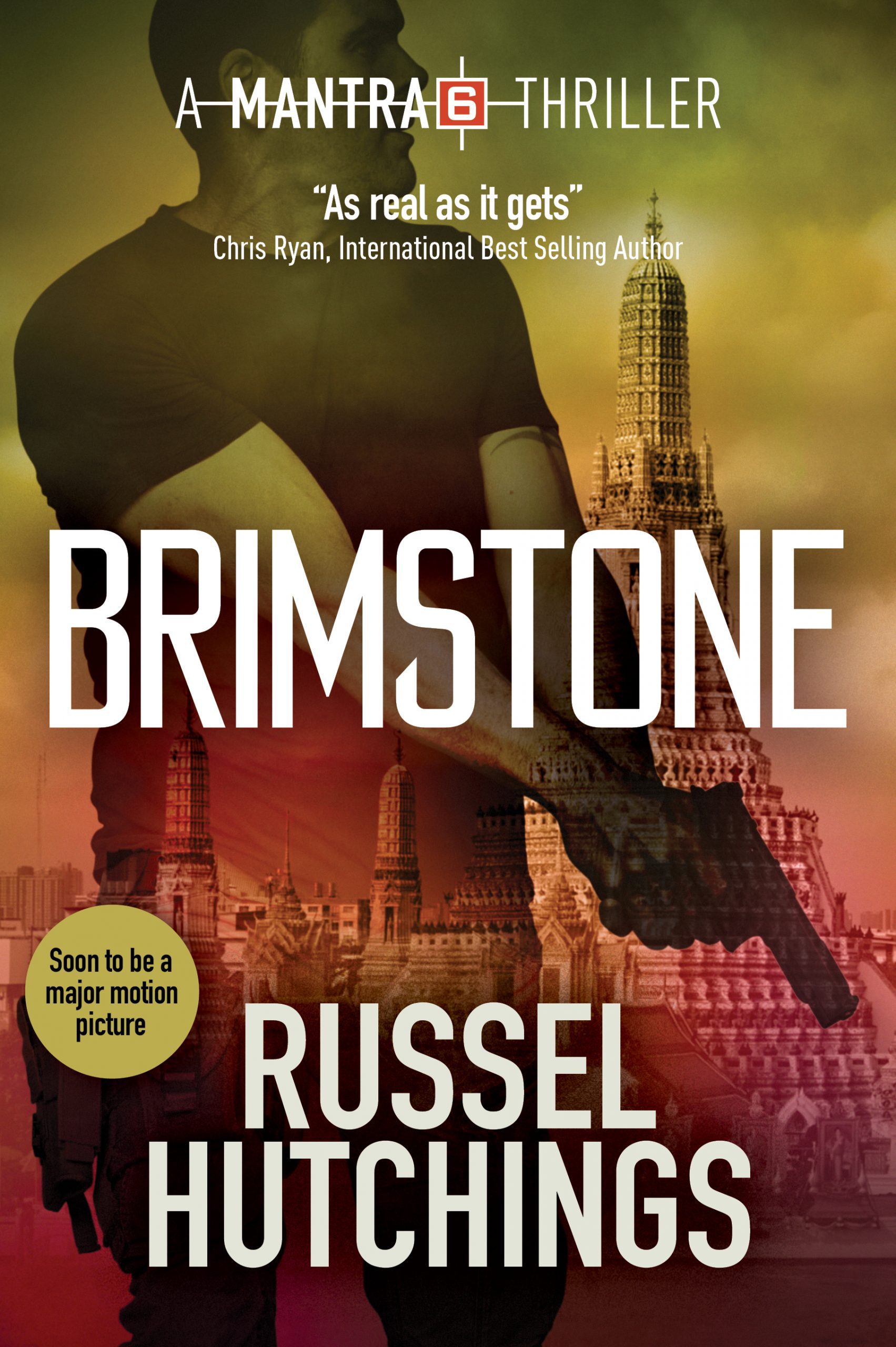
    BRIMSTONE

    A Mantra 6 Thriller

    James Bond was a series that saw Ian Fleming gain wide notoriety for his imaginative, fast paced spy thrillers. Russel Hutchings with Brimstone has just moved the genre of clandestine spy thrillers into the modern world, with a very realistic agent in John Devereaux, plucked from the ranks of the SAS to be sent on a clandestine mission into the dark heart of Cambodia.

    There is nothing to it, he is told by spymaster Magnus Webb, just parachute in and assassinate two of the high profile drugs lords and then leave! He will be operating on his own, and should things go wrong, he simply does not exist.

    From this fast paced beginning the mission broadens out to become a complex operation with the Cambodian aspect already set to over throw the old leaders and make room for the young’ Turks ‘to broaden the reach of their syndicate.  Devereaux simply did their job for them!

    As the capacity for the spread of this new syndicate become apparent Deveraux is asked to continue his new role, which eventually leads him into the shadowed world of drug distribution and a dark, powerful, deadly syndicate that will stop at nothing to build an ever growing empire.

    As Hutching was a long serving member of SAS he has drawn on his vast knowledge of the world of covert operations, where you have to be ready to move at a moment’s notice, venturing into dark and unforgiving terrain in pursuit of the ‘bad guys’ of this world.

    This ring of truth takes an almost standard story formulation into the reams of reality, presenting a side of the Australian Security forces seldom seen. As a character, Devereaux is fleshed out with the very real issues that face many men in his former profession; that of the beloved family having enough of the dangerous nature of their work, but this simply adds to the reality of the story. Devereaux is a real man, facing real evil.

    Hutching has also drawn on his first-hand knowledge of Cambodia, Sydney, France and Russia to the extent that, should you have ever graced the streets of these locations, they will be very real and if you have not, the descriptive phrasing will bring them to life.

    Fast paced and just long enough, Brimstone is the first in a six-part series, Mantra-6, following John Devereaux as he moves up into the secret organization known as MANTRA-6.

  • Cambodia Noir

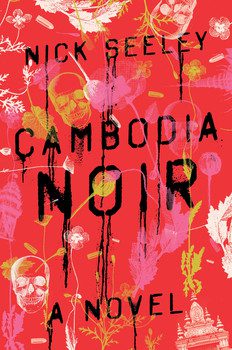
    Cambodia Noir

    Freelance Photographer and burnt out, former war photographer Will Keller has sunk to an all all-time low as he struggles to survive in the steamy, corrupt city of Phnom Penh.

    Coming out of a booze filled nightmare, he records a drug bust that shows the head of the Police Force somewhere he should not be, obviously in league with Drug Lords and Barons, leaving Will wondering why he bothered to wake up and take the pictures.

    June is a journo working in Cambodia who has gone missing. Her sister Kara Saito has come looking for her, convincing Will to help find her. The more Will looks at the problem of the missing woman, he realises she worked for the same paper he does and that he has somehow, sub-let her flat. Discovering her diaries he begins to put together something he would rather not be involved with but can’t resist. Is this going to be his salvation or will it be the death of him? That is something to be discovered and only time and life will tell the ending.

    Trouble is he begins to ask questions in the wrong places and discovers that Kara Saito also has another life, which places both of them in a situation that is far more dangerous and reckless than anything Will ever signed up for. But then he is not really sure why he agreed to get mixed up in this situation anyway.

    His journey deeper into darkness takes in the streets of Phnom Penh, dives, bars and dive bars, corruption, drug filled nights and booze filled a days, all interwoven with violence and murder.

    There are times when the script is less than plausible but is rescued by the intriguing and complex puzzle that creates the seething, ancient essence of Asia, the seediness of life in Cambodia’s cities and the duplicity of the human psyche.

    The story line is basically simple, the twist and turns that of a Machiavellian mind with an eye for immense detail and a penchant for violence, placing this novel in a stand out place of its own; one that will engage the reader, taking them on a fast paced journey into a tomorrow that may not end as you look through the eyes of Will; still lost, still searching, still trying to find a reality with which he can live.

    Noir literature is certainly not for the fainthearted, but if you can handle the underbelly of life, the rawness and powerful description of what lies under the surface of any city should you care to look, Cambodia Noir is right up there with the best of the genre.

  • How (Not) to Start an Orphanage … by a woman who did

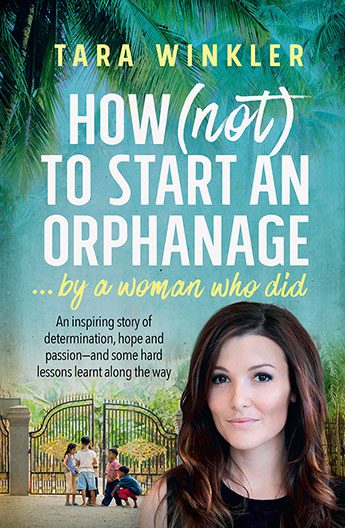
    How (Not) to Start an Orphanage … by a woman who did

    It was good to hear Tara Winkler recently on the ABC talking about her book and the Cambodian Children’s Trust. This is a story that is so important it should be given every bit of media coverage available, and should be passed on to friends and family. For all those people (including myself) who believed that donating money to orphanages in developing countries was a helpful thing, think again. Then STOP!

    Tara has told this story in the best way possible. From the beginning she has been open and honest about her thoughts and feelings and what motivated her to become involved.  She was on a holiday, backpacking around, when she arrived in Cambodia. She was immediately confronted by the plight of the children in orphanages, and wanted to help. She donated bags of books and toys, but felt she would like to do more. She became a volunteer in an orphanage and helped to teach the children English.

    As her involvement with the children, the country and the people grew, she wanted to do more. She came back to Australia, to raise funds and awareness for these orphans, returning determined to make a difference. The orphanage she went back to had changed. The children had to catch mice to prevent starvation. The corruption was massive, so Tara’s next move was to start her own orphanage. This way she could be sure that the orphans were receiving all they were entitled to as having no living relative was a terrible place for a child to begin life.

    During this process, Tara found out some facts that resonated with her, and she began to get a broader picture of what was happening. Firstly the” Orphanage Industry “was booming. It was an easy way for corrupt people to get money. Next she found out that MOST of the children in these places had family. Significantly she discovered that so many children who left these places, had severe mental illnesses, many related to being removed from their parents. The children just never had a “normal” family life.

    A solution had to be found. Together with a team of professionals, and assisted by the Cambodian Government, Tara now works tirelessly to keep these children in their homes. Programmes are set up to assist the family, whatever their problems, so they can all be together. She and the team are passionate advocates for family based care. Where it is not possible for a child to stay at home, another family member is sought.

    At the back of the book is an extensive list of the principals and policies that Family Based Care follow. There is also a section at the back which advises which questions you should ask if you wish to support an orphanage.

    Tara’s story has been told on ABC’s Australian Story. It was called “The House of Tara”. I admire this woman so much for writing this book, as it has come at a great personal cost. She is honest and forthright about her own mistakes and her sole intent is to inform others, so her children may have a reasonable life.