Tag: Britain

  • The Royal Librarian

    The Royal Librarian

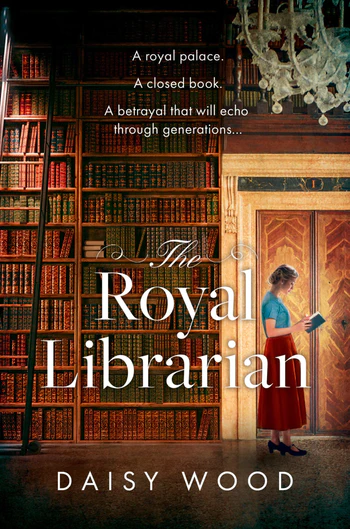
    Daisy Wood is without a doubt a fresh new voice in the genre of Historic Fiction with her third book, The Royal Librarian set between 1938 and 2021.

    Set in Windsor Castle in 1940 the protagonist Sophie Klein has been placed in the Royal Library in order to search out any documentation from members of the Royal family, namely the Duke and Duchess of Windsor, known Nazi sympathisers, seemingly supporting the Nazi regime and the rise of Fascism in Britain.

    Fast forward to 2021 in the days after COVID when Lacey Jones is facing her own personal crisis. She is summoned to a family gathering and dreads going, but while there inadvertently comes across a letter from Buckingham Palace and wonders what it is doing in her beloved Grandmothers desk.

    As a ghost-writer of biographs her interest in piqued, so much so that she eventually decides to go to London to see if she can discover more about her Grandmother’s past and family, little knowing that she will also be on a journey that will push her to the very limits of her emotion strength.

    Sophie Klein was, until the rise of Hitler and the surrender of Austria to the Germans in 1938, a happy young woman working with her father in the highly esteemed Austrian National Library. He was of Jewish decent, her mother a renowned pastry chef, was of British decent. 

    She had witnessed her father beaten to death at the local park, her mother arrested, her home given to someone else and her security gone forever, forced to rely on anyone brave enough offer shelter to both her and her young sister.

    A series of chance meetings sees her recruited for work in England, her sister sent to America for adoption and a new life beginning as she is admitted to work in the vast Libraries of Windsor Castle. 

    At first she finds the job overwhelming, the cold unbearable and the staff standoffish as she is Austrian, an unknown considered as a possible imposter, but as she makes friends and relaxes she forms a delicate friendship with the young Princesses Elizabeth and Margaret.

    Sent to Frogmore Cottage to catalogue crates of papers sent back to Britain by the Duke of Windsor, she realises that someone has tampered with one of the crates. This incident brings home like nothing else, that she really is engaged in dangerous work, work which will eventually see her arrested and imprisoned.

    The Royal Liberian is a well-constructed, well researched, fascinating return to a world of World War 2 intrigue involving people from all walks of life, but also captures a small microcosm of life inside the Royal household during the austerity of the War years. The historic content of the book presents another aspect of the early years of the ‘Anschluss in Vienna’, when brutally, destruction and hatred saw the beginning of rise of fascism throughout Europe.

    The Royal Librarian is highly recommended for both its fiction and historic content which is s salient reminder in today’s world of the lessons history can and should teach.

  • Love, Oil And The Fortunes Of War

    Love, Oil And The Fortunes Of War

    Love, Oil and the Fortunes of War presents an interesting, if somewhat usual hybrid of a story based in history, at a period of time when change was of monumental proportions within the United Kingdom, characters who shaped the future of the country where larger than life and the ever present threat of War was on the horizon.

    But, as it is billed as Historical Fiction therein lies the challenge. Paul Ashford Harris says it is constructed around the lives of three larger than life characters, William Knox D’Arcy, Gertrude Bell and Admiral ‘Jacky’ Fisher and their contributions to, not only the War efforts of Britain during the First World War, but the fact that Britain even survived the First World War.

    Stepping back though, the work begins in at the funeral of Queen Victoria held on Saturday 2 January 1901, where the three protagonists are introduced and a sense of European conflict is prevalent. Their background is then established in a somewhat haphazard style, which does eventually bring them into the beginning of the Twentieth century, to the point where the three are instrumental to the next chapter, that of Britain moving from the entrench ‘class system’ to a more flexible form of governance.

    D’Arcy came from a family of privilege. His parents emigrated to Australia, when he was 15 years old. His father, a disgraced lawyer in Britain, established a law from into which William entered, before being lured by the wealth to be found in Gold, at then then fledgling town of Rockhampton. Always the entrepreneur, William eventually found his way back to Britain to become instrumental in the development of oil fired engines for the British navy’s new fleets of warships. He was the founder of what is now British Petroleum (BP).

    Gertrude Bell was from a very privileged and wealthy family, was exceptionally bright, had a gift for languages and adventure, loved deeply and was equally at home in the Deserts of Mesopotamia as she was in London drawing rooms. Her knowledge if eastern culture and languages proved to be invaluable in the first British hunt for liquid gold, Oil.  She was given the title of Queen of the Desert; her legacy was immense to both the Ottoman empire, Persia now known as Iraq and Britain.

    Admiral John (Jacky) Arbuthnot Fisher, a man of small stature, a brilliant mind, with endless energy, made it his life’s mission to push, drag, pull and use any means possible to bring his beloved Navy into the modern world. Often scorned and ridiculed, his devotion to modernising the British Navy was one of the main components that did allow Britain to eventually survive the First World War onslaughts by the German and Italian Navies. He was a vocal and strong critic of the plans for the Gallipoli landing and the failure of his beloved battlecruisers at Jutland, did not endear him to the establishment.

    Such flamboyant people make Love, Oil and the Fortunes of War a very readable book, even though the narrative of the characters are fictitious, it softens the historic detail and adds a certain definite interest to a slice of history that is still resonating today.

  • Brexit Unmasked

    Brexit Unmasked

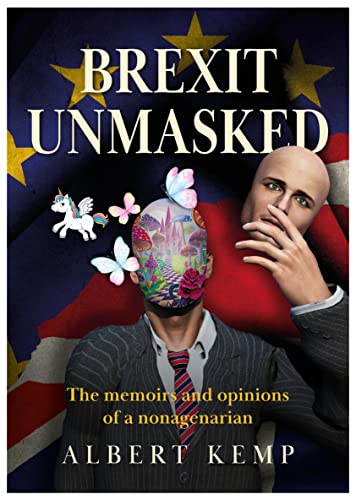
    Brexit Umasked, part memoir, part opinion, is a most fascinating read on modern British politics to be presented for some considerable time.

    Albert Kemp in his sheer disbelief that something as destructive as Brexit should ever have been born, or rather unleashed on an unsuspecting British public, has presented a well-researched and balanced opinion against the entire catastrophe; stating once again his hopes that Britain will see sense and eventually make the move back into the EU consortium of countries.

    Born in 1927, Kemp lead a somewhat challenging younger life. He was a very bright child, home-schooled for some of his life, due to a range of reasons, serving time in the British Army during the Second World War, before finding a career in the British Home Office.

    Commencing in 1956, when Britain refused to become one of the Founding Members of the   Economic Union when it was being formulated, before eventually joining some years later, on a lesser arrangement, saw the same inability by British leaders, to appreciate the changing nature of Britain post World War II, which has in Kemp opinion, lead to the ‘fantasy’ of Bexit to be touted, accepted and instigated.

    Over a six-year period, the World watched and waited to see what would happen, Brexit or No-Brexit. COVID appeared and derailed early attempts to see a way forward, the leaders of the EU countries argued forcibly against Britain leaving, slowly closing down trade routes, relocating business and using many other strategies to try and derail the runaway train of what was, and still is Brexit, to no avail.

    Due to a range of tactics, along with the British publics inability to disseminate the information being presented, poor leadership by the opposition parties, the definite stacking of the ‘cards’ leading into the Referendum and much more, Brexit was voted in and today, the true ramifications of such a seriously dangerous decision are being felt widely across the Nation.

    Can this change or be changed? Kemp believes it can, but it will take a mammoth effort, a shift in the British publics apathy and desire to believe whatever it is ‘fed’ by Politicians and the media alike, as well as a change to the style of Government, moving from the current outdated system to a more modern Democratic system.

    Brexit Unmasked certainly lifts the lid on a time in British Politics that has been inflammatory, out of date and now is proving to be seriously costly and detrimental to the economy and World standing of the country as a whole. Brexit Unmasked is an exceptionally good, entertaining read on modern world Politics and the things that do go wrong!

  • After Story

    After Story

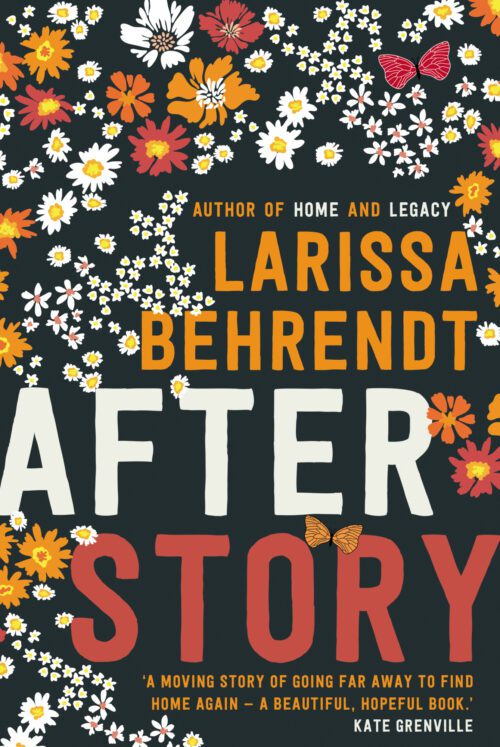
    After Story is truly an original and amazing story. It is wonderfully and seamlessly constructed, and riveting reading.

    Della is an Aboriginal woman who lives in a tiny town called Frog Hollow. She has had a catastrophic event in her life which she acknowledges she will never get over. Jasmine is her daughter, who has defied all odds and gone to university. Mother and daughter are not particularly close, so it came as a surprise when Jasmine invited her to come on a Literary Tour of England. They were to travel with a professor and a group, visiting homes of the Bronte sisters, Jane Austen, Shakespeare Virginia Wolf, and many more.

    Each day is written by Della and then by Jasmine, and it is here that the reader will be holding their breath. While Jasmine observes and looks after her mother, she also discusses the merits of the authors with the group. Della who has not read any of the authors listens carefully and has her own thoughts and observations. They are so powerful; they need re reading. For example, near Thomas Hardy’s home was an ancient Druid stone. “Most people don’t even know about the things Aboriginal people built, Della thought”. Many of them were destroyed when the British came. They would rather think of us as backward. It made it easier to take away our children.

    At Stratford-upon-Avon, the tour guide said, “No other culture produced a Shakespeare.” Della thought “Well, no other culture produced an Aunty Elaine, and I wondered why people had to make these comparisons.” Aunty Elaine was the storyteller, who passed on knowledge to the younger people. She always knew the appropriate story and the message it was meant to send.

    It is quite thrilling to read a chapter looking at the authors and literature from Jasmine, then to be privy to Della’s thoughts about the same experience.

    After Story from Larissa Behrendt is pure gold.

  • The Paris Secret

    The Paris Secret

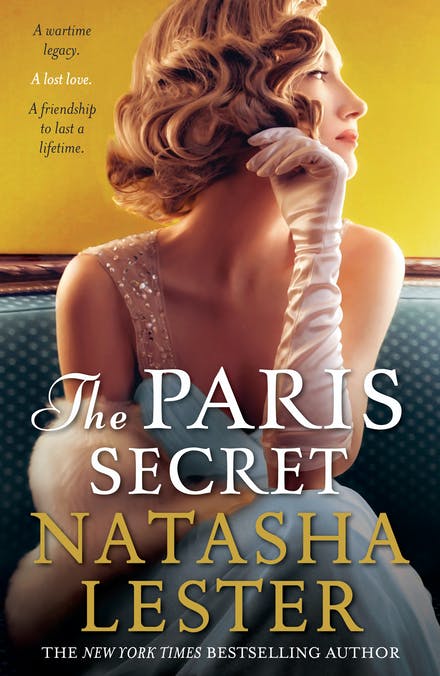
    The Paris Secret from Natasha Lester would have to be considered as one of the better historical fictions to date in 2020. The storyline is riveting, spaning the many years from 1939 to the present day effortlessly, as it portrays the lives of the Penrose family, a family with roots reaching deeply into the horrific times of World War II.

    Kat Jourdan, renown Australian fashion conservator is asked by her beloved grandmother to go to her cottage in Cornwall while she is in London on business. This come as a great surprise to Kat as she had no idea her grandmother owned anything at all in Cornwall, let alone a cottage.  On her return to Sydney, she has more questions than answers about what she discovered at the cottage; a rare and beautiful collection of Dior gowns, each labelled for the year of manufacture.

    Elliott Beaufort, historian and writer, is carrying out research on a Margaux Jourdan, a woman of mystery, a woman who could be her grandmother, a woman who had a very interesting and secret role in SOE, a division of British security during WWII. He contacts Kat in Australia and they arrange to meet when she in next in London, but in the meantime, Kat realises needs to ask her grandmother a few questions about her past.

    As Kat begins to ask her grandmother to explain some of the background to the Dior gowns and Cornwall, Margaux becomes very distressed refusing to tell her more than just a little about her life, mainly that of her settling in Australia after the War.

    Vanessa Penrose, mother of two daughters Skye and Liberty, is a bit of a bohemian type. Considered as a witch by the local villagers, she lives in a rather romantic Cornish cottage on the headlands. She also flew a tiger moth with aplomb, entertains lavishly, and is considered as bit of a fast woman.

    Skye meets Nicholas Crawford on her beloved beach when they are young children, and they develop a binding friendship. Liberty is a completely different character, clinging, demanding and highly temperamental.

    From this simple foundation a most compelling story evolves based around the history of the Air Transport Authority, a select group of female pilots who ferried aircraft about the skies of Britain during the War years without instruments or radio, unarmed and flying only on dead reckoning with visual navigation, often flying in appalling conditions.

    Many of the characters are based on real women, the female concentration camp at Ravenbruck, is an all to horrific reality, the French Resistance and the many brave British women who were sent in as agents is also factual,  as is the chauvinism the women pilots and many other female operatives   had to contend with throughout the war years. The Dior involvement is also based on fact, with a little poetic licence applied.

    Natasha Lester has created a story that captivates and one of which so many readers will be able to relate as so much of reality included in the storyline is an integral part of many, many family’s history.