Tag: bravery

  • The Legend of Childer’s Forest

    The Legend of Childer’s Forest

    Crazy Cream Adventures

    Captain Francis Childer, way back in the time of 1651, well before you were born, did a very brave and sacrificial thing. He and his men were with Charles Stuart, the man who was supposed to be the King, being hunted by Oliver Cromwell, and his New Model Army, who was now the most powerful and terrifying man in Politics in Britain at that time.

     In order to   make sure Charles Stuart stayed safe, he offered to be used as a decoy, to run into Childer’s Forest so Cromwell’s soldiers would follow him, not Charles Stuart.  While he was there he became lost, lived in the forest for a long time and was eventually rescued by a huge mysterious white Stag, known later as Legend.

    He also saw a wonderful warm angelic light that chased away the evil that was surrounding him at that time. And so the legend was born and forest considered to have magical properties.

    But moving on to now and two lovely dogs, Poppy and Devon who just love to have adventures. The field near their home is being destroyed by large machinery in order to build some more houses. They see the mess that is happening and are very, very unhappy.

    They are even more unhappy when they see all the rabbits that lived in the field have been killed and their homes destroyed forever. They go to find out what they can and discover three rabbits, terrified and alone, wondering where they can go with safety to build a new home.

    Devon and Poppy decide that is something they may be able to help them with and perhaps they can settle in Childers Forest, not all that far from where they live. On the way to the Forest, on one of their favourite walks, they notice their friend Guinevere the donkey is not in her paddock, the farm dogs are not to be seen and a very large Buzzard is circling overhead. This a real worry as Buzzards like to eat rabbit.

    Buzzard turns out to be a real friend in times of need and helps the rabbits find a home, until things begin to go wrong once again and Poppy, Devon, Buzzard and the rabbits find themselves in the fight of their lives, to not only protect each other, but also Jack, Poppy and Devons small human, who is camping out in Childer’s Forest on a night when evil is on the loose.

    Heart-warming and most enjoyable, The Legend of Childer’s Forest involves a little history, a huge amount to love and bravery, as well as a very nicely couched presentation of working together, learning to accept each other, whether you are a cat, dog or buzzard and also good succeeding over evil, which makes for one very good mid-range reader story to be enjoyed.
  • The Storm Keepers’ Battle

    The Storm Keepers’ Battle

    Storm Keeper Trilogy 3

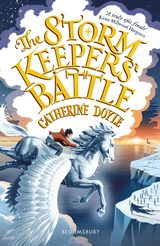
    The long awaited final book in the Storm Keeper series from Catherine Doyle has arrived and with it a massive finale that is guaranteed to keep you in a state of serious concern, as to the final outcome of the battle raging over Arranmore between the forces of Morrigan and Fionn as they push the very limits of power, magic and sorcery to win the game!

    Fionn is still struggling to understand the power he has and how best to use it while Morrigan seems to be going from strength to strength, as she gathers her army of dead souls to wage a further and final battle to get what she wants, Arranmore.

    As the storm begins to build, and the final two candles begin to burn, can Fionn managed to unite the people who once lived on Arranmore to defeat Morrigan, or will past hatreds still stand in the way is to be discovered. Light over darkness, bravery over bullying is the underlying message placed within the text.

    Bravery is required as the children band together to add their strengths to the battle Fionn has to win and once again dig far deeper than he ever thought. In doing he has to draw on his limited knowledge to understand what it is that will help drive the storm clouds away as the waters slowly recede from the Island of Arramore.

    Who will win the day is a closely guarded secret and it is not until the later part of the story, that there is any idea of whether good or evil will win the day, as the scales of time and knowledge are far from evenly balanced.

    One small point is that as the last book, the second in the series The Lost Tide Warriors was more than twelve months ago, picking up the threads of the linking information was slightly challenging. As The Storm Keepers Battle is not a stand-a-lone work, making the threads easy to follow could have been better.

    The Storm Keepers Battle is a cataclysmic ending to an excellent series. Fans of the Storm Keepers will not be disappointed.

  • Courageous Lucy

    Courageous Lucy

    The Girl Who Liked to Worry

    Some children are born worriers. Lucy was one of those children. She worried that her shadow would turn into a black hole and eat her; life seemed to be extremely dangerous. The beautiful illustrations from Cara King show her mother as calm and unaware of the horrors that Lucy faced each day.

    Many children do not overcome their fears until they mature and gain strength and confidence. However, Mrs Hunt, the teacher, had decided to put on a class musical. Lucy watched on as children volunteered their songs, their pirate costumes, their dances, and musical instruments.

    She would have love to be involved in the musical, but “How could she help?” Finally, with bravery she did not know she had; Lucy told the teacher that she wanted to be on the stage.

    That one brave statement changed Lucy’s understanding of being fearful and always worried. With a modified role planned by a clever teacher, the young girl was able to achieve her dream and act in a very well received performance.

    Courageous Lucy, the girl who liked to worry from Paul Russell captures with easy words and lovely pictures, Lucy facing up to her worries and understanding that even though she is still a worrier, being brave can bring rewards and joy.

  • Shadow Creepers

    Shadow Creepers

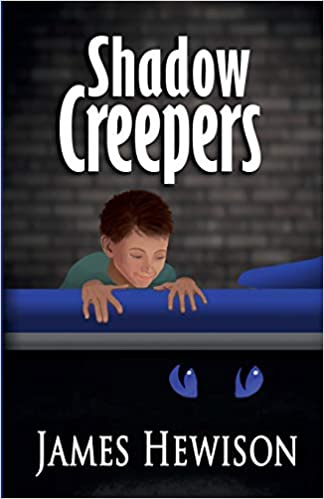
    Shadow Creepers has a storyline crafted around the worries little and not so little people often have about the creatures that live under their beds, seeming only to appear after dark.

    Now it is a true fact that many parents have denied that this is indeed a true thing, but it could also be said that sometimes Monsters do indeed live under the beds of those who also store their socks and underwear under there instead of in the washing basket!

    Lucas is convinced there are indeed Monsters under his bed and although he considers he is old enough to know better, and his parents say that he has an overactive imagination, Lucas is truly terrified.

    His best friend thinks he is a bit nutty about it but Martin, who is new to the school, believes him. Wow thinks Lucas; at least someone believes what he has to say.

    So he and Martin set out to try and trap one of these very illusive Monsters; they organise a sleepover at Martins house and that is when things begin to get interesting, very interesting indeed, because Martin and Lucas have stumbled upon a world which they only guessed existed.

    But, before they can do too much about what may be in another world, they find what they declare to be a Monster’s tail and a rather terrifying and awesome adventure begins in a world that may be real or may not.

    Shadow Creepers is all about facing your fears and discovering that sometimes, just sometimes, there is really nothing too much to be afraid of, least of all Monsters under the beds. Just sometime they may live under the bed but only to enjoy the odour of dirty socks, play with the scattered toys on the floor and depending on who is visiting, enjoy a stray bug or two, but always, mostly always, with the kindest of reasons!

  • For Valour: Australians Awarded the Victoria Cross

    For Valour: Australians Awarded the Victoria Cross

    War is a singularly messy business that pushes good men and women to their absolute limits and sometimes beyond, to places they had never been and never wish to return to, allowing them to commit incredible act of bravery on the battlefields.

    In 1856 Queen Victoria required a medal be struck to honour these men who committed such acts of bravery and so a cross was designed, bearing her name and the words ‘for valour’, to be struck from the bronze of a cannon captured by the British at Sebastopol. Today the medal is still struck from bronze.

    Over the many years since its inception only 100 Australian men out of the more than two million who have served in action, have been the recipients of this medal.

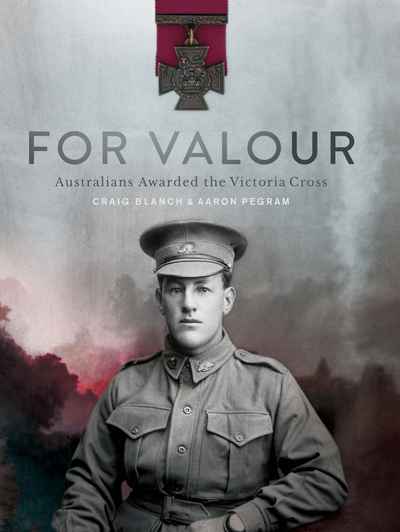
    In ‘For Valour’ Craig Blanch and Aaron Pegram present these men and their back stories; the stories of ordinary men who went to war, beginning with the Boer War and more recently Afghanistan, bringing these almost accidental heroes’ to the forefront once again.

    Many of the medals were awarded during the First Word War to men who considered they were simply doing what needed to be done; humble men who although they received the honour, considered it was not just them, as all around them were the rest of the team doing equally as challenging things, in times of immense difficulty and horror.

    The stories unfold commencing with Capt. Neville Reginald HOWSE a member of the New South Wales Medical Corps serving at Vredefort, Orange Free State in 1900. On the 24 July 1900 he went out under heavy crossfire and picked up a wounded man, and carried him to shelter. (London Gazette, 4 June 1901).

    A brief involvement in Russia in 1918-19 saw two Australians awarded the Victoria Cross; one for Sheika River and the other for Emtsa, in a conflict barely registering on the grand scale of the much larger Australian personnel commitments.

    The Second World War saw bravery awarded but not to the same degree as the previous wars, with more specific details provided, painting a stark picture of the conditions many worked in day after day. Their stories are fascinating, as once again they were young men carrying out orders which did not always make sense, operating in seemingly impossible locations and doing whatever was required to be done at the time.

    Vietnam, that very controversial war, is represented in stark simplicity with only four medals being awarded, two posthumously and latterly Afghanistan with four VC’s awarded, one posthumously, which was awarded to the final man in this edition, Crpl. Cameron Stewart BAIRD (Posthumous) 2nd Commando Regiment, Australian Army for conspicuous acts of valour, extreme devotion to duty and ultimate self-sacrifice at Ghawchak Village, Urusgan Province, Afghanistan on 22 June 2013.

    For Valour is the carefully revised version of They Dared Mightily written by Lionel Wigmore with Bruce Harding in 1963, recounting the actions of each of Australia’s Victoria Cross recipients to that time.

    With fresh new information, along with a collection of photographs made available from the Australian War Memorial collection, the original work, They Dared Mightily, has benefitted immensely with considerably more detail as to the men, their lives and the consequences of their bravery serving in such theatres, which remained with them for the rest of their days. For some it made them, for others it destroyed them, but for all of them, War had and has a lasting and lifelong effect.

    As a book on Australian history it is magnificent, as a research/reference book on Australians at War For Valour is long overdue. Many of the stories presented do not fit with legend of the ANZAC, but show in raw detail the horror and immense bravery of all who served and still serve on the front line. It is also a tribute to them and their families.

    In the words of official Australian War Correspondent Charles Bean when writing about the Somme Offensive in 1916 – ‘They are not heroes” he said: They do not intend to be thought or spoken of as heroes. They are ordinary Australians doing their particular work as their country would wish them to do. And pray God, Australians in days to come will be worthy of them.’

     Lest We Forget.


  • Angel: Through My Eyes – Natural Disaster Zones

    Angel: Through My Eyes – Natural Disaster Zones

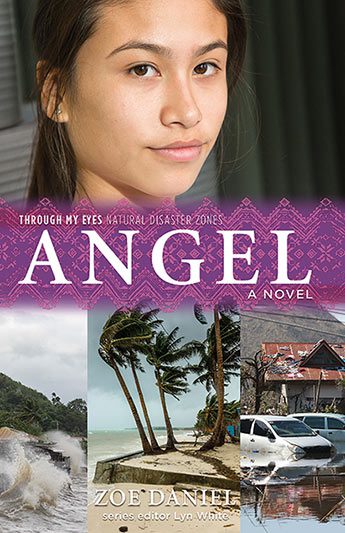
    Once again the series, “Through my eyes Natural disaster zones”, has achieved its goal. In an excellent production, this story for young people gives children an immediate and inside view of what exactly happens when there is a natural disaster. The story is told by a fourteen year old Philippine girl, Angel. The story has been checked carefully for authenticity, and dates and facts are accurate. Indeed, a Timeline at the back of the book verifies all the facts given.

    Angel is a very happy girl. It is her fourteenth birthday and the family will have a great celebration over dinner. However, there is a Government warning that a typhoon is about to approach her island. The people there have faced many such dangers and prepare themselves as best they can to withstand the huge winds and rain that is approaching. Because the typhoon is a seasonal occurrence, the families have their plans and tie down any moving thing and drag their boats away from the shore.

    Unfortunately, the typhoon develops into a Super Typhoon and is named Yolanda. The date is 8th November 2013 and when the wind slams into the city, the gusts are in excess of 298 km per hour with tidal surges measuring up to 5 metres. Tacloban City and coastal towns are flattened. It is here that we see, smell, and experience what Angel saw. She was lucky to be washed up to her roof when the surge came through and finished up clinging on to a telegraph pole with her neighbour. Her mother and brothers had gone to stay with the grandparents, but her father, who was home with her, was nowhere to be found.

    From now on Angel has to decide how to reunite with her family, how to navigate the rubble that was her town, and how to survive with no water or food. What she sees, thinks and does is explained clearly, although there are no graphic details about death. The issues that arise are dealt with, and looters are to be avoided. Her tenacity sees Angel overcome many difficulties and use rational thinking to solve many everyday problems.

    Beginning with the map at the start of the story, and the timeline at the end, we have a great sense of where this happened and how many people suffered.  Unfortunately, the timeline is still showing that in 2018 many people have not been relocated.


  • Crew    The story of the men who flew RAAF Lancaster J for Jig

    Crew The story of the men who flew RAAF Lancaster J for Jig

    Many went to war and many, many never came home. Who were they, who were their families and what made them take on sometimes unimaginable tasks in a war so far, from their homeland.

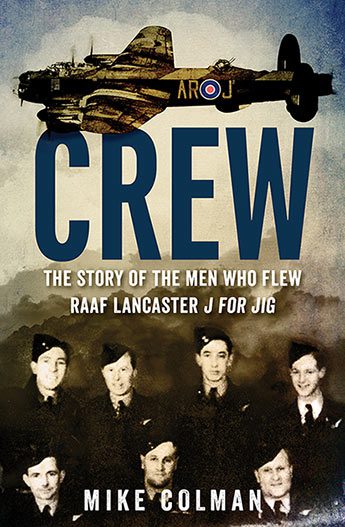
    In Crew, Mike Coleman tells the story of the men who made up the RAAF Lancaster bomber J for JIG crew, based in Lincolnshire. On the night of 11 November 1943, two Scots, and five Australians, all young men, set off on a mission to bomb factories in Schweinfurt, Germany but never made it, being shot down in the night skies over France.

    The words of Laurie Woods, Bomb aimer, RAAF 460 Squadron, when he said ‘You didn’t make friends because you didn’t know how long you, or they would be alive, but your crewmates were different. Your crew was everything, they were your life’, sums up succinctly the situation faced and lived by these men on a daily basis

    Your crew, pulled together from various places, were the men you grew to know intimately, as your very life often depended on their skill levels and reaction in crisis. All young, some with young families of their own, some on their first sortie, the good, the bad and the naïve came together, none expecting their life would be long, as they flying often daily, over dangerous enemy territory.

    Living on the edge bought with it a special mateship; getting the job done and returning safely to base bought with it a skill set second to none. Mike Coleman has carefully researched the history of this crew; John Dunlop, Ron Ferguson, Peter Mallon, Tony D’Arcey, Cliff Hopgood, Dave Baxter and Bill Martin bringing all seven men into focus once again.

    J for JIG was shot down over France, with four of men killed, Bill Martin severely injured and Baxter and D’Arcey finding themselves on the run, hidden by villagers, with all three men eventually ending up in POW camps, along with many others.

    Baxter and D’Arcey were repatriated after the war, eventually returning to Australia to make what they could out of their lives and experiences.

    In as much as this is the story of all the men who made up the crew of J for JIG, is it more their personal story of joining a war for what was a just and fair cause, evading capture, escape, chance and mateship which makes it poignant. A memorial tree proudly stands in the suburb of St Johns Woods in Brisbane dedicated to the memory of Cliff Hopwood and in many ways by default, all the men who went from that area to fight in World War 2.

    Fascinating, immensely readable and well written, Crew is far more than a history lesson, it is a work that travels from the heady and dangerous days of Lancaster Bombers and their crews based at Lancashire, England, to the bravery and compassion of the many who tried to help the survivors, to the modern days of Australia where the memories and letters from these men and their families creates another chapter in the archives of Australia and history.

    Lest we forget!

  • Safari Pug

    Safari Pug

    Pug is back in his third adventure, but it is one he really would rather not be having, because it means that he has to meet a Lion! And he is not very happy.

    Lady Miranda has had a bad dream, where she thought here were lions in the wardrobe, but of course there was not, but she scared not only herself, but Pug as well. He was sleeping soundly on the end of the bed as always, when her yelling woke him up.

    When the morning finally came, Lady Miranda decided that she and Pug, mostly Pug, needed to go and meet a Lion, at the Safari Park, of course, not in Africa. She called for a picnic hamper to be prepared, asked her Running Footmen Will and Liam to bring around the Sedan Chair and off they went.

    But when they got there the lady at the gate would not let them go in as the Sedan Chair was not a car and it was far too dangerous. While they were trying to figure out how they could get in to meet a Lion, a Very Important Person arrived and they went in with her.

    And that is where the adventure really begins because it turned out the Very Important Person was not very nice and was up to absolutely no good at all.

    Of course Pug and Lady Miranda become involved in the problem and somehow, in spite of finally getting to meet a real life-sized Lion, win the day.

    A fabulous fun read for early readers and a great adventure as well. The illustrations by the talented Eglantine Ceulemans simply add to the fun.

  • Lyla: Through My Eyes – Natural Disaster Zones

    Lyla: Through My Eyes – Natural Disaster Zones

    Through my eyes- natural disaster zones, is a wonderful series. It is a way of bringing real life happenings to our understanding, and especially for the younger reader. The story is told by a secondary school student, in her words, and about her life. Many of us remember the huge earthquake in Christchurch, New Zealand, but Lyla tells us exactly what she saw, felt and did, during those months following the main quake.

    For Lyla and her family, earth tremors were a regular occurrence, and a nuisance that you just tried to ignore. On the day of the major quake, Lyla was in town with some friends, when the earth “Shook itself to bits.” This wasn’t an aftershock, that occurred regularly, the shaking earth knocked the girls to the ground, and the earth kept” Bucking and buckling and heaving.” Fifteen seconds was all it took to bring chaos to the city. The girls’ first thoughts were that it was foggy, but that was the dust, and that many buildings had begun the process of falling down.

    They had always been taught to head for open spaces away from buildings, after a quake, but Lyla saw a heavily pregnant woman with a toddler, and an injured man, and helped them both. The group made their way home, aware of the devastation around them. Their school was destroyed, and so many houses were just a dusty pile of rubble. Lyla’s mother and father both worked in the support industry, and although the network was jammed, she texted them to say I’m OK.

    The pattern of her family’s life would change forever after this day. All the things taken for granted such as running water, electricity, and a safe house were gone. Luckily, although the floor sloped, and all the rooms were strewn with possessions, the house was still sound. So Lyla and her brother began to search for neighbours who were not so lucky. They pulled mattresses onto the floor, and welcomed people inside, who were wandering and dazed. The immediate danger was over, but so many after- shocks were felt the children became expert in gauging the measurement of the shock.

    After a time, things began to settle, but it was many days before basic services could be restored. The striking way this story is told, through the eyes of a teenager, brings to life the despair, the loss of life and familiar surrounds, and the loss of friends, whose families just couldn’t stay in that city. Many people were left with fears, quite a normal reaction. The fear of large buildings, and going up in lifts, were some of the things that scarred the people of Christchurch. The day to day monotony of loss and grief is poignantly shown here, and we view this tragedy with a great deal more understanding.


  • Moo and Moo and the Little Calf too

    Moo and Moo and the Little Calf too

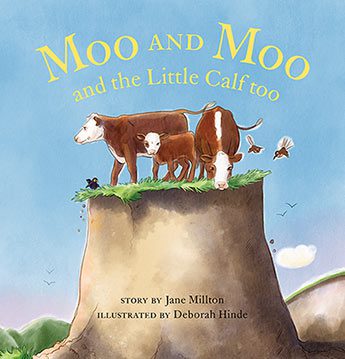
    What a delightful way to read a fun story and introduce realistic concepts along the way. The author has cleverly devised this rhyming text to elaborate on an actual incident which happened in New Zealand in November 2016. Many of us saw on TV, or in the newspapers, the three cows left stranded after an earthquake and landslide which occurred in the middle of the night.

     The story is as gentle as the illustrations and the rhyming text. ”Moo and Moo and the little calf too” were all asleep with the moon high in the sky and the stars twinkling. Suddenly the Clarence Valley began to move under the influence of an earthquake.

     The core of land that the cows were on was separated from the rest of the land, and slid down the valley with the surprised cows standing up until the core came to rest in the valley. However, as daylight made their predicament visible, the cows realized that they were trapped on their platform of earth, and could not get off.

     Later, a helicopter passed by and realized their predicament. The dairy farmer and his friends came with shovels and picks, and made a track that the cows could use to get off the platform. They walked down and followed the men back home to their herd.

     As a picture book this story stands alone with double page spreads of softly drawn illustrations, and blocks of text on each page. What makes it remarkable is the inclusion of information, and the opportunity for discussion.

     Earthquakes, New Zealand and the Richter scale are all referred to at the back of the book, as well as the date and time of the earthquake that stranded the cows. For curious children, this book is a mine of information and many concepts and ideas are presented.

     Even in the illustrations of the mountainous region, and the bay, we see that unstable areas are quite different to old flat land not on the edge of tectonic plates. Congratulations to the author and illustrator, whose work is so complimentary to the story.