Tag: brain

  • Your Brain Is a Lump of Goo

    Your Brain Is a Lump of Goo

    Your Brain is a Lump of Goo is a fantastic way to introduce children to the idea of the brain, what it is and where it is. As a picture book format, the authors have chosen the best way to present information to young people.

     To begin with the brain addresses the reader by saying that it can’t be seen because it is at the back of your eyes, but it is about the size of a pineapple. Like a pineapple it has a hard outer cover and a soft interior, a bit like jelly.

    Then we learn that the brain is made of millions of cells which send signals. Some of these signals are to do with thoughts, sneezing, fart jokes, and learning. There are many things your brain manages without you having to pay attention. It helps you to breathe and reminds your legs how to work.

    Each double page spread contains large illustrations and a small amount of text. The font size is appropriate for early readers. At the back of the book there is another double page spread which goes into more detail about the brain. This is ideal for using as a discussion point and introduces correct terminology for the brain sections.

    The brain is an important topic and is seldom discussed with young children. This book is a fun and fact filled way to inform and delight.

  • Rewording the Brain

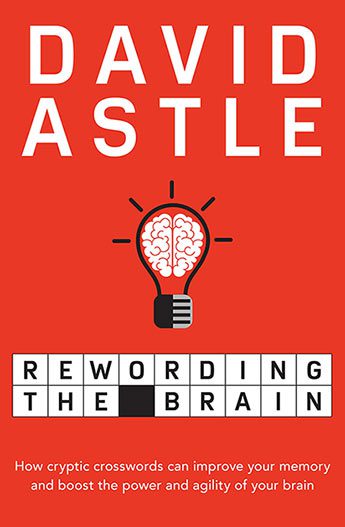
    Rewording the Brain

    Words are as is often stated are wonderful things and have a multitude of uses; from the sublime to the ridiculous, beneficial to the derogatory and come together in endless permutations, which all help keep the wonderfully gymnastic brain supple, limber and in good tone, which is it considered with the progress of modern science, to enable people to live a longer, happier life keeping dementia and other conditions of the mind at bay.

    As the population ages this aspect of ageing is becoming a serious health issue, with the rise of Dementia related conditions on the rise and memory loss becoming more and more apparent. But how to help keep the brain in top order in the modern day of easy everything, including ease of learning, engendered by the very early use of technology is also cause for concern.

    In David Astle’s latest book, Rewording the Brain he looks at the construct of the brain and how it utilises the cryptic in life to ensure mental agility can be maintained, as well as explaining how the wonderfully cryptic, cryptic crossword puzzles came about and their immense benefit to mental health.

    This is all beginning to sound a little dour, to use a wonderfully descriptive word, which it is not, as in Astle’s usual lyrical style, there is also a good dose of levity injected into the text, making it entertaining as well as educational and a serious wake-up call as to the importance of maintaining good, ongoing mental health. Each of the sections is almost a book within itself dealing with specifics of brain health and wellbeing and then toning up the unused sections by getting your brain, puzzle fit.

    The final and third segment is one that has been carefully constructed to help begin this essential course of getting the brain seriously engaged with this new health routine. Now the understanding of cryptic crosswords has become familiar, because the book thus far has been read, it becomes a bit like solving a very complicated crime. The puzzles begin with a relatively simple offering and increase in complexity to offer a challenge to the serious and not so serious word nerd.

    Astle has even been so kind as to provide the solutions to the puzzles for those who simply get lost in the glorious riot of words doing their thing, in the form of a cryptic puzzles.

    David Astle is a master of his craft and in this serious look at brain and mental health, he has presented the case for mental agility clearly and concisely, outlining benefits that doing a crossword a day can bring to ongoing mental health and welfare.

    Are you up for the challenge?


  • Outsmart Sugar How to Retrain your Brain to Kick the Sugar Habit

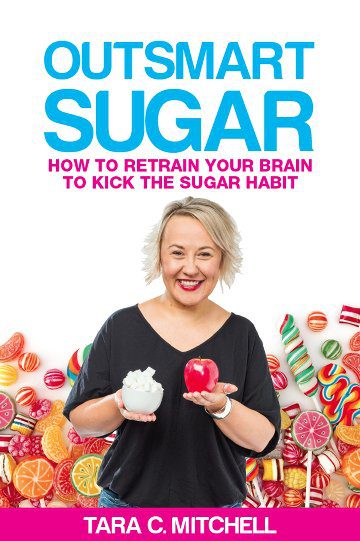
    Outsmart Sugar How to Retrain your Brain to Kick the Sugar Habit

    Sugar, we love it we hate it. We are confronted with facts on a daily basis saying sugar is BAD, BAD BAD, for us. It is in everything we consume. Manufacturers are sneaky as they hide it in nearly everything, sometimes masquerading as long and scientific names on packaging labels. It is snuck into baby food and formula setting up destructive eating habits for a lifetime and in some cases, believe it or not we are told it is not really all that bad for us.

    In today’s world of growing obesity in young children and adults we have to be a little bit honest and begin to ask the question about what it is we are consuming and why we feel the need, almost the compulsion, the obsession in some dire cases, to eat that last half a tub of ice-cream, that final three biscuits in the packet, why the children keep on devouring those ‘healthy’ snacks and biscuits and chocolate seems to be required daily at 3pm!

    Tara C. Mitchel, in her book Outsmart Sugar presents a very strong case for learning to seek out the destructive urges to consume things we all know are truly bad for us, by retraining our brains to  ignore the cravings for sugars in our diets.

    Willpower is a great thing, but won’t power is so much better as won’t power gets you there in the end and will power has a problem with being diverted to another day, tomorrow or later, as by the time you have read your way through this refreshing way of breaking the sugar hold, everyday life will be a celebration of great food, self-esteem because, yes, you did it, and a new slimmer, healthier you.

    Designed as work book to help you with a your process of reprogramming, Mitchell  takes a step by step approach, laced with a good dose of humour, to reprogram your subconscious and learn to recognise the many, many tricks used by manufacturers to get you ‘hooked’ on their products.

    She also presents a very clear and well researched section on what sugar does to your brain and your body, the brainwashing and social conditioning we have unwittingly allowed to influence our choices in the supermarket and which have established many of our eating habits.

    Mitchell also looks at the area of healthy people make better, more informed choices over a wide range of areas, not just within the foodie section of their lives, but also in the world of employment and business which make overall a fascinating and life changing read.

    If you are struggling with cravings, are overweight, worried about what you are consuming or simply want to live a happier, healthier, obesity free life, it might be time to seriously consider the option to “Outsmart Sugar”.

  • Better Brain Food Eat to cheat dementia and cognitive decline

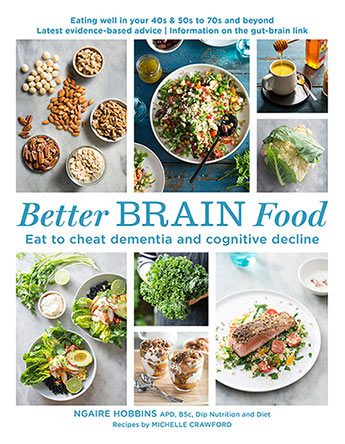
    Better Brain Food Eat to cheat dementia and cognitive decline

    As more information becomes available about preventing dementia and slowing the ageing process, it is necessary for research to be current and pertinent to our lifestyle. These criteria have certainly been met in this book. Not only is it informative, and up to date with latest research, but it is also a pleasure to browse through sections at leisure.

     The Contents shows us that the beginning chapters deal with the Brain, Gut Health, Obesity and Diabetes and Diet plans. We see that brain health is dependent on a myriad “of factors including nutrition.” We know that getting enough sleep, being social, and being physically active are a few of the ways we can care for our brain, but this book deals with the nutrition aspect and so we have a chapter that explains how we can understand the brain, its function and its needs.

     The author explains that the more “connections brain cells make throughout life, the more you amass what is called Cognitive reserve.” The brain uses an enormous amount of our nutrition intake, and uses glucose to fuel its workings. Exercise helps to reduce inflammation in the body, and the muscles need protein to maintain their work load.  There are fascinating studies being undertaken now on brain and gut health, and information on both. Some natural anti-oxidants are listed.

     Part two of the book consists of recipes. The beginning of the chapter deals with pantry essentials and the author looks at spices such as cinnamon and turmeric, cumin and coriander, nuts and seeds and grains. Salt is mentioned, and those foods such as bread, breakfast cereals and prepackaged meals are shown to exceed a healthy limit of salt. The storage and preparation of these foods is shown to be helpful, and we begin to see the recipes such as “Spicy Mixed Seeds,” which make an ideal snack or nibbler.

     Salad dressings, mayonnaise, vegetable stock and pickles to make, are introduced next. This excellent book has something that many lack, and that is, “Cooking for One or Two.” It is easy to increase the amount, but so helpful to have recipes for one person. Next we come to the recipes. I wince when quantities of kale, quinoa and exotic ingredients are required, but no! The first recipes are for Sardines and tomatoes on toast, and Fried eggs; such satisfying, recognisable and easy recipes. There are also pizzas, pancakes, salads, lamb chops and stir fries.

     Not only are the recipes delicious, easy to prepare, and wide ranging to cover every taste, they only need a short preparation time.  The photography and presentation are excellent. The book is set out in such a way that the information is in a compact and easy to read style, while the recipes are spaced out with one recipe per page, and many colourful photographs. It is a beautiful book to browse, but more importantly, it is inspirational in its ideas and support.


  • Brain Briefs: Answers to the Most (and Least) Pressing Questions about Your Mind

    Brain Briefs: Answers to the Most (and Least) Pressing Questions about Your Mind

    There are always a thousand and one things there to be wondered, pondered or marvelled about or over, as we travel along the pathways of our lives. Sometimes the answers are there, but mostly, if they are, they are something that may, or may not be possible, or even probable.

    In this lively look at what really may be going on in the brain, so many of the imponderables in life may be answered. Well probably!

    How many times has a rhetorical question been posed, while seeking to find the solution to a problem; problems such as how to catch out a liar, or does multitasking really work, or does time speed up as we are getting older, are taken out of the closet and given a serious analysis with an entertaining component, in an attempt to answer what may be to many, unanswerable questions.

    Now a thoroughly confusing hypothesis has been presented, settle in to enjoy, mind you in small doses, the revelations about to be forthcoming from this team of Markman and Duke, who really do know what they are talking about as far as the brain is concerned.

    Clever little aphorisms are dotted throughout the book, generally as the summation to the question being discussed, such as chapter 15, where ‘Does time speed up as we get older’, is analysed and is answered, slightly tongue-in-cheek, with ‘time flies when you’re getting older’ which relates to learning cycles, memories and how the two change and combine to create a richness to your days and lives as you look back.

    And then there is the seriously concerning chapter 23: ‘How much of what we see is real’, which opens up many, many doors in the mind and the psyche! This is answered in the short by ‘to see is to assume’ – perhaps you need to read the chapter to really get this one!

    ‘Can delusion be a good thing’, is something that only the deluded may  be able to answer; that will depend on what is behind the delusion at the time, but is based on how you perceive your little corner of the world and how this is chosen to be used – as a motivation or an excuse.

    So many issues, so many answers; by the time you have worked your way through the 40 questions posed, and the 40 sets of research based answers, all coming from a firm basis of the latest research across the fields of psychology, you are sure to have at least some of the answers to the world’s most vexatious questions and have enjoyed discovering just what it is that does indeed tease the brain!

    A thoroughly enjoyable, entertaining and informative collection of bits and pieces of intrigue and interest presented to tantalise the mind!