Tag: boats

  • My Brother Ben

    My Brother Ben

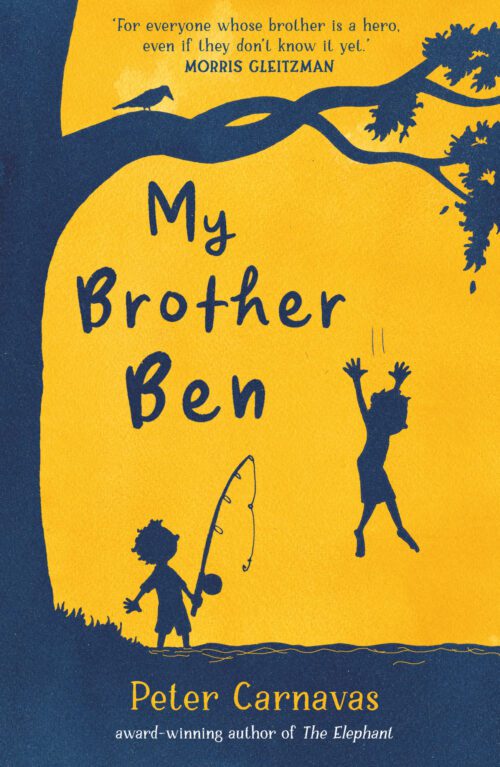
    Beautifully written My Brother Ben from award winning Peter Carnavas is a wonderful, heart-warming story about brotherly love, birds and growing up which is an absolute delight to read from beginning to end.

    Bens brother, Luke, is mad about birds. He can name all the birds in the neighbourhood just by listening to their signature call sign. Finding a dead magpie by the side of the road almost gets him hit by a passing car. Ben comes to his recue, and after the shock wears off, they take the bird home on the basis that it may not be dead at all, which as it turns out, it is not. Maggie then become a well-loved family member.

    Set in the semi-rural area of Deagon, Brisbane, Cabbage Tree Creek to be exact, the two boys lead an idyllic life over the summer holidays, ranging far and wide along the creek. Ben’s overwhelming desire is to own his own boat so they can float down the creek to the Pocket and fish.  Luke’s is to be forever with birds.

    As the story evolves the many conflicts of growing up come into play, with Ben going to high school, another person coming into the neighbourhood, a girl at that, who Ben is friendly with, conflict with his father over his leaving, and his absolute love and passion with birds, becoming the thread that carries the life lessons. To add to the confusing mess, Luke’s beloved Maggie has gone, has not been seen around for weeks and weeks. Luke just hopes she is alright.

    The boys get a chance to try and win a canoe with all the required accessories, in a local competition and set out to see if they can grab this once in a lifetime opportunity. It seems they are up against some serious competition within Bens’ high school friends, but he is convinced that they will win!

    In the attempt to win the prize, brotherly love gets pushed to the very limit, Ben almost drowns when he decides to see if an old wooden boat will still float and the mysterious bird call, heard time and time again by Luke, is finally discovered.

    Funny, witty, and very, very wise My Brother Ben is the prefect read for any pre-teen struggling to work ‘it’ out as they grow up.

  • Go, Go, Pirate Boat

    Go, Go, Pirate Boat

    Perfect for the preschool age group, this new singing storybook from Katarina Charman and Nick Sharratt, Go, Go, Pirate Boat is sung to the tune, or can be sung to the tune of Row, Row, Row Your Boat, which is great fun!

    Of course, Pirates, a life on the ocean wave and buried treasure is a sure recipe for success at any age, and when bold, bright and cheerful looking pirates are added, the adventure is even more fun. Large word format is very helpful for developing readers, and the bold cartoon style graphics are simple and enjoyable.

    The actions these pirates are carrying out could also be used to create the motions of a day on a pirate ship during the singing, such as hoisting the sail, raising the anchor and holding on tight during a storm at sea. There is also a very curious whale who comes to see what all those naughty, noisy, pirates are doing!

    But like all naughty pirates they still have to be home in time for tea, or else they may have to walk the plank.

    From the first page Go, Go Pirate Boat is a riot of fun, activity and storytelling which will captivate and be enjoyed time and time again, all-be-it in a very noisy manner.

  • Amazing Transport

    Amazing Transport

    Trains have been around since the 1500’s when the Germans devised a Wagonway to help move heavy ore and materials around the mines, ships have been even around longer than that, since 8040 BCE which is to date the oldest dug-out discovered in the Netherlands. Cars not so long as they actually began as a pottery wheel in 3500 BCE or thereabouts, when the wheel was invented to allow the making of bowls.

    It seems a little bit incredible that so much of what we take for granted, such as high-speed travel actually began way, way, way back in history as a means to help improve the lifestyle of the people. As time evolved so to has the technology that now allows us to travel into space, fly comfortably to far destinations, drive cars at phenomenal speeds on race tracks and ride bicycles further and over far rougher terrain than ever before.

    History like many things is full of fascination and fact, but when it comes to the history of transport it is even more fascinating than many other areas as we use transport every day of our lives and never give a thought as to where it all began, or how it all began.

    With ever developing technology the era of the driverless cars, electronic vehicles and robotics is once again changing the face of transport pushing the dawn of a new world in transport once again.

    In Amazing Transport Tom Jackson and Chris Mould have created a comic book style of Amazing Transport from its very inception, that will fascinate, educate and enthral anyone, young or old who is into things mechanical, history and the future of technology.

    Each section is crammed with the timeline of the invention beginning with Trains and ending with Submarines. The history of so many of the people involved with the machines of our modern-day world, which had their beginnings so very far back in history makes Amazing Transport a very comprehensive and informative book perfect for your readers, great for with the construction of the chapters jammed with fun pages to add to the enjoyment of discovery.

  • Dunkirk

    Dunkirk

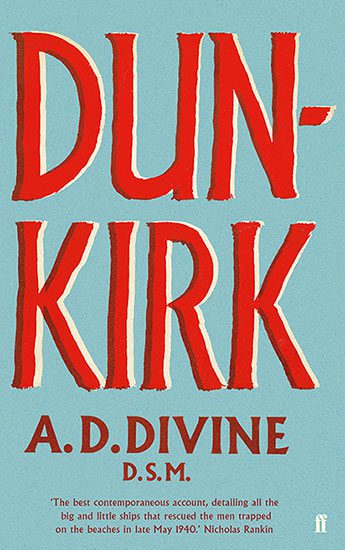
    There was a mass evacuation of 340,000 British, Allied, French and Belgium troops from the beaches of Dunkirk in France, during the days of May 26 to June 4, 1942; an heroic feat by any standard and particularly so when it was carried out by a flotilla of assorted craft, some captained and crewed by amateurs and others by seasoned leisure time sailors, some military craft, basically anything that could float, cross the English channel and return, was a called into service.

    All this was done under repeated attacks by the Germans, from land, air and sea, who thought that they had managed to contain the British Expeditionary Forces (BEF)  into a small area of Dunkirk, with the ocean, that had until now proven to be the one fixed escape route for fleeing armies for centuries, at their back but unable to be used in any tangible way, as to this stage in the invasion of the Low Countries of Europe, the Germans has a far superior force in numbers and equipment, blocking all routes via land and sea.

    In an ironic twist of fate, put into motion by Hitler, who gave the order to have Panzer troops called back from an attack on the Somme-Aisne Line, which in the three days it took for the German chain of Command to change the orders, was enough time to get support for the stranded BEF troops into place.

    AD Devine was one of the men called into service to help in the evacuation. As a war correspondent he had direct experience of war reporting on Operation Dynamo, becoming wounded and latterly receiving a medal. He was amongst a group of journalist who stood on the White Cliffs of Dover in 1940, watching from afar, the shelling of Boulogne. He like many others had done sailing in peace time; through his contacts at the Ministry of Information and the Admiralty he had acquired papers that put him in the navy for 30 days.

    Devine had already begun to look for a small boat that would make it to Dunkirk and back, rapidly getting her ready with the help of another man, setting sail as a member of the flotilla. Little Ann, became stranded on a sandbar and was abandoned. A second vessel, White Wing, was acquired and so began his journey into hell, as he, along with Rear Admiral AH Taylor, the man in charge of operation Dynamo small boat fleet, set out to cross the Channel to organise the evacuation of the last of the troops off Malo-les-Bains.

    From his hospital bed, Devine began compiling the book, Dunkirk, as he feared the history of Dunkirk would only be reflected through the Admiralty logs, kept in a somewhat haphazard manner, due to the situation as it unfolded,  understanding from first-hand experience, the event was so significant that it deserved a far better treatment .

    Churchill, on June 4, 1940,described in a speech to Parliament the evacuation of Dunkirk as, ‘ a colossal military disaster’ as well as ‘a miracle of deliverance, achieved by valour, by perseverance, by perfect discipline, by faultless service, by resource, by skill, by unconquerable fidelity’.  Such was Dunkirk; both a tragedy and a triumph.

    Over the years, Dunkirk as softly merged into the history of the world during World War II, never perhaps receiving full recognition for the valour and bravery of the men and women who were involved in all aspects of the rescue mission; the troops, the sailors and the public and the boat owners who gave everything they could to support such a daring undertaking.

    Released in original format, the wording is formal English which in many ways adds to the overall significance of the book, which is history recorded through the eyes of a man who was there; perhaps some aspects may have been left out, wittingly or otherwise, none-the –less Dunkirk offers to a new generation, the facts behind a war which are not glorious, just basic, raw and in the end words that go down in recorded history, as detailing just another event!