Tag: biography

  • The Hurt

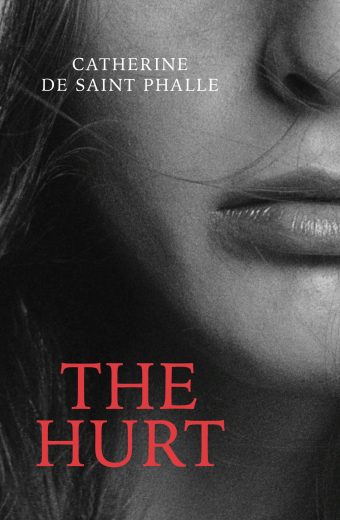
    The Hurt

    Looking back on one’s life as an often-bewildered teenager, memories of childhood, friendships, and passionate young love affaires come to the forefront. Award winning author Catherine de Saint Phalle’s memoir vividly explores her life; her past, present and future. Her thoughts go to her unusual childhood, family, education and her first romantic relationship at the age of eighteen years, when she had little idea of how her life would unfold.

    Set in Paris where the lonely Catherine attends Lycee Victor Duruy. It is here, that she meets Julien, who exposes her to his life, but isn’t really interested in hers.  It has her reflecting on incidents in her life and other friendships. However, this relationship also exposes her to the wonders of this magnificent city.

    The author uses rich details, sensory words, and figurative language to paint an intense picture of her life in Paris. She combines storytelling with deep, artistic descriptions of people, places, and feelings. With her use of metaphors and similes she brings her characters alive; Alexandre, her father, reclusive Poum, her mother, and her friend Malone, the homeless man.

    The Hurt is a story of relationships; sometimes tragic but at times it brings a smile to one’s lips!

  • A Land Rover Named Lucy

    A Land Rover Named Lucy

    Three friends. One Land Rover. A journey that changed everything.

    Lucy the Land Rover was never built to go on an adventure, she was built to be a workhorse, to travel country miles and live a long, retired life rusting away, her best years far behind her, until she was not.

    Purchased by a renowned wildlife artist living in West Africa, Lucy needed to be delivered to her new home. Andrew Edwards agreed to deliver her for his cousin and as a test car driver, also a man who had spent a little time in the military, he along with two mechanically minded friends, decided to drive Lucy to West Africa.

    What started out to be a something straight forward, because let’s face it could possibly go wrong, turned into an adventure none of them foresaw as they confronted breakdowns, Bedouin tribes out for blood, illness, extreme cold, being shot at, and wounded, and miles of bureaucratic red tape, that stretches their friendship to the very limit.

    Told almost in journal format, Andrew looks back on a time in his life during the 1980’s when the world was a vastly different place, where life could be a very fragile thing, where people with little still gave to try and save a life.

    Illness eventually saw the trio parting ways, with Andrew left in an African hospital, barely alive facing the very real fact that he may not survive. He was eventually evacuated to Britain, arriving in such an emaciated state his family did not recognise him.

    A Land Rover Named Lucy is a journey into far more than an adventure, it is a masterclass in just what the human spirit can endure told with wit, realism and even all these many years later, a very real sense of adventure.

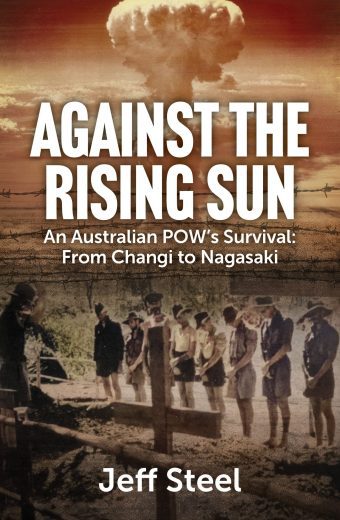
  • Against the Rising Sun

    Against the Rising Sun

    An Australian POW’s Survival: From Changi to Nagasaki

    Volunteer Australian soldier Don Graham, part of the greatest military disaster in the British Empire’s history, like many returned soldiers, rarely talked about his wartime experience.  It has been left to others like Jeff Steel, successful Australian author of military history to ensure that this important time in Australia’s past is not lost to future generations.

    On 22nd March 1941, aged 19 years, Melbourne born Don Graham joined the Australian armed forces; too young to qualify for an overseas posting. Mysteriously, his date of birth was pushed back to 1920, so on the 2nd of November 1941, signalman Don Graham boarded the medium-sized vessel Zealander and headed for Singapore.  He was to fight valiantly as part of the ill-fated Australian 8th Division, firstly in Malaya and then to retreat to Singapore, where he courageously took part in street fighting.

    Taken captive, he was marched off initially to the notorious Changi prison and later to Japan, where he became part of the slave labour contingent to work in the Kawasaki shipyard in Kobe. Despite the brutal treatment, lack of food and being surrounded by death, Don with his magical card tricks endeavored to remain brave and to encourage his mates to be positive about their future.  When Kobe was obliterated by an American air raid, he became one of 300 men to be sent of a coalmine at Yoshikuma: a certain death trap.

    Readers will find this eye-opening detailed account of Don Graham’s ordeal in World War Two, both inspiring and confronting. Inspiring; despite imaginable horror, the human spirit survived.  Confronting; the details of the atrocities perpetrated by the Japanese on their captives is beyond comprehension.

    Definitely a must-read book not only for those with an interest in the war in the Pacific but also for those who want to obtain a greater understanding of Australia’s participation in this war; the excellent ‘Select Bibliography’ will help readers to further their understanding of this period in Australia’s history. 

  • Ferryman

    Ferryman

    The life and deathwork of Ephraim Finch

    Award winning author Katia Ariel’s book Ferryman is not only a biography of the remarkable Ephraim Finch, who worked in Melbourne’s Cheva Kadisha for 30 years (25 years as its director), but also a cultural history of the Jewish community in that city. She has crafted a touching and warm evaluation of this modest ferryman, while at the same time highlighting his love of learning, his extraordinary humanity and his ability to give of himself unconditionally. 

    Ephraim Finch started out life as Geoff, son of a working-class Anglo-Australian butcher in Sydney and then started working on construction sites; he and his beloved wife Cas in their late 20s discovered Judaism and converted to Orthodox Judaism.  In his role as ferryman, this empathetic community figure buried over ten thousand individuals with unbelievable dignity and respect; he not only took care of their bodies so beautifully, but he also preserved their legacy. He worked hard to ensure that people were woven into their history and buried alongside their own.

    It is very evident that the author has written this heartfelt account of a most beloved man with passion and dedication; fact checking against his detailed journals and with families where possible. She has successfully used stories and anecdotes to not only illustrate Ephraim Finch’s character but also to give the reader insight into the rituals around Jewish burials.

    Although the detailed ‘List of Sources’ will allow readers to further their understanding of this wonderful ageing Orthodox Jew, who is little known outside the Jewish community, a glossary of the Hebrew terms used would be useful to non-Jewish readers.

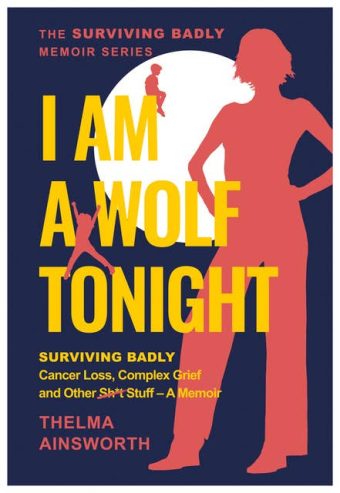
  • I Am A Wolf Tonight

    I Am A Wolf Tonight

    Thelma Ainsworth is like most people; she grew up, studied hard, faced life’s challenges as best she could and eventually married. As a Lawyer in the Royal Air Force she enjoyed her work as a prosecutor and spending time with her friends but realised time and her biological clock, was ticking.

    She met and eventually married, after a somewhat challenging courtship, to use an old fashioned word, Jonathan Ainsworth; she also married his parents and the lifestyle they and Jonathan had developed over many years, which proved as time went on, to be distressing, confrontational and challenging.

    I Am A Wolf Tonight is her story of life with Jonathan and finding a way through the chaos that eventually was their married life together. She shares with candour the distress caused by a domineering mother in law, the lack of love and comfort from Jonathan, the difficult births of both their son’s and the lack of empathy shown to her during a severe and debilitating time of post-natal depression.

    When Jonathan, a research Doctor and Physician was diagnosed with untreatable and fast moving pancreatic cancer she was devastated, inconsolable and in complete shock. In a rare moment of truth and intimacy Jonathan thanked her for showing him why intimacy was so important in a relationship.

    Jonathan passed away far sooner than expected, leaving Thelma to cope with everything that came next. His funeral, his unpleasant and non-supportive family, her desperate distress and two little boys who had just lost their father.

    Thelma Ainsworth has, with truth and candour, written a brilliant memoir of life, family, friends and what happens when it all goes horribly wrong, which will resonate with anyone facing similar challenges.

    I Am A Wolf Tonight is the first book in the Surviving Badly Memoir series which concludes with Thelma facing up to her future as a widow, a mother and sole income earner for her little family.

    Book two will continue her journey as she takes the first tentative steps into a completely different lifestyle she feels ill equipped to undertake, but is determined to do it, fear and all!

    In writing this memoir she wants to tell her story, not because she feels any more special than anyone else, but to tell her story, her way, to finally find her voice! In doing so she reaches out to others travelling a similar pathway, to encourage them to find their voice, to find their audience and to tell their story.

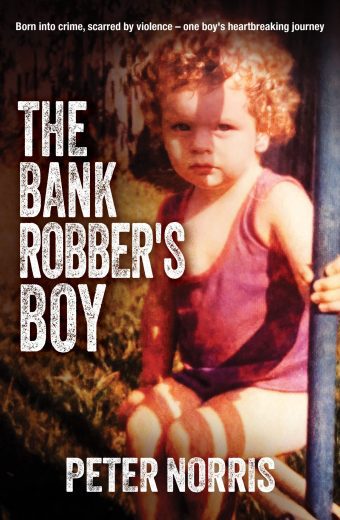
  • The Bank Robber’s Boy

    The Bank Robber’s Boy

    From a young age, Peter Norris was subjected to constant change in his life. He lived in what was a dysfunctional family, with a father who would appear and disappear for varying lengths of time.

    He was groomed to burgle houses, lived life on the run and loved his Dad. As the youngest of four children he had no idea his Dad was the notorious Bank Robber, Clarence ‘Clarry’ Norris, who managed with skill and aplomb at times, to acquire millions and crowned it off by being the first man to break out of Sydney’s Long Bay Jail.

    To Peter he was just Dad.

    The Bank Robber’s Boy tells the story of Peter Norris’s remarkable journey through the challenges of growing up constantly on the move, the love for and of his father, the Welfare system and the love of excellent foster parents who helped and encouraged him to change his life.

    Not written to laud his father, but to share what is a remarkable life, Norris looks at the love that binds, the love that was never in doubt and the time when, as a young teen he had to make the heartbreaking decision to say No to his father.

    Over his tumultuous younger life, he had held down various jobs, succeeding, even as a young boy to be motivated, successful at what he was doing, eventually attending La Trobe University and graduating with a degree in Tourism and Hospitality.

    Today he reaches out as a foster parent to many children, heads up the multi-million-dollar Club Cowara and is a motivational speaker who uses his journey to inspire others.

    Many older Australians will remember vividly the pathway Clarrie Norris carved across Australia as a bank robber and escapee; that his son, once dabbling in the field of crime as a young boy, made the hardest decision of his life at age 13, not to go on the run with his father, is one that needed to be told and one that can only inspire.

  • Bee Miles

    Bee Miles

    Australia’s famous bohemian rebel, and the untold story behind the legend

    What an amazing story Rose Ellis has told. Bee Miles, or Beatrice as she was christened, lived an amazing life, very full and rich and entirely on her own terms. This cost her dearly, as her father, dismayed by her ebullient nature, had her committed to an asylum several times. Rather than compromise, Bee spent her time in the asylum writing and seeking an early release.

    Bee’s background was one of wealth and privilege. She was born in 1902 in Sydney, the fourth of six children. She excelled in piano and schoolwork. Her father influenced her thinking in the early days. He was anti-conscription and anti-Churchill.

    These ideas, when presented in essays at school, were rejected and disputed hotly by her teachers. From that time on, it seems that Bee learned to cope with opposition and followed her own path.

    This led her to be arrested more than 300 times; she had been in prison all over the country and also been a patient in seven psychiatric hospitals. Mostly an agreeable and happy person, Bee was known and acknowledged by most people. Her chief love was to experience speed and she would hang onto the back of trams and cars to get a buzz.

    The story of this amazing lady is set in the early 1900’s and life in Sydney was so different then. The author has outlined political and social norms for that time in such detail that one is transported to Macquarie Street and other places Bee frequented. She chose to be homeless in later life and would quote Shakespeare for a fee. She had her ashes scattered on the family tomb at Rookwood Cemetery.

    Beatrice ‘Bee” Miles is one of Australia’s legends.

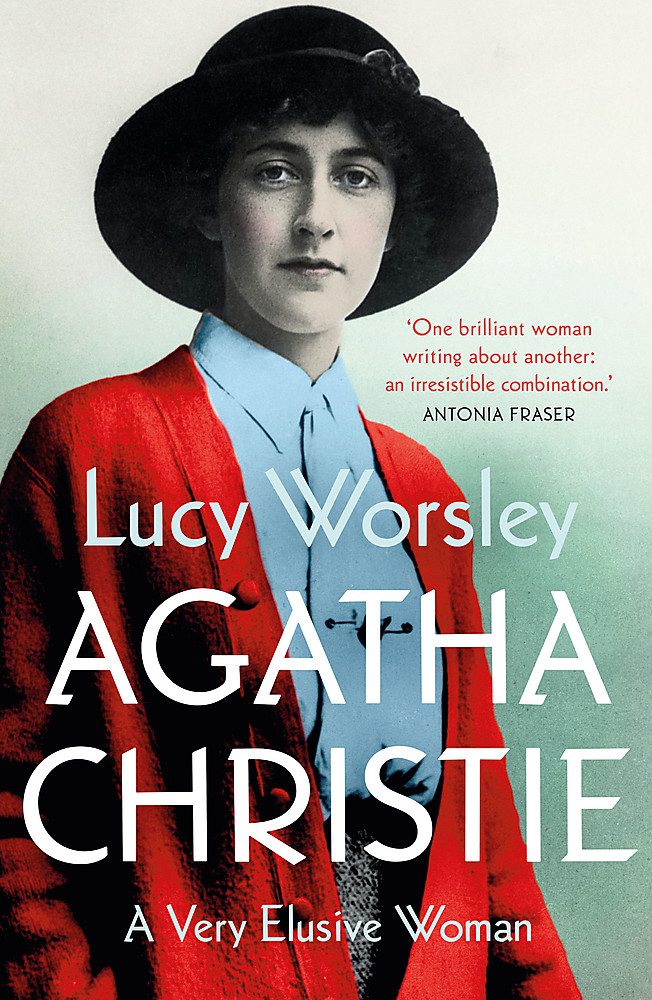
  • AGATHA CHRISTIE: A very Illusive Woman.

    AGATHA CHRISTIE: A very Illusive Woman.

    Agatha Christie, the Queen of Crime, led a very full fascinating life; wife, mother, amateur archaeologist and prolific author. Despite there being at least a dozen books devoted to Agatha Christie in the past twenty years, by drawing on the subject’s letters and personal records which have rarely before been uncovered and analysed, journalist and historian Lucy Worsley’s book ‘Agatha Christie A Very Elusive Woman’ is a fresh and new perspective on this remarkable writer.

    This well written and research biography adds a different dimension by identifying the real-life people, places, and phrases which Christie has incorporated into her fiction. The author’s descriptions of Christie’s day-to-day life allows the reader to grasp an excellent understanding of the context in which her novels are written.

    Although her subject’s gift for dialogue and for manipulating social stereotypes was formidable, Worsley doesn’t shy away from discussing Christie’s limitations, prejudices, and the deteriorating of the quality of her work as she approached her senior years.   

    By thoroughly examining Christie’s records, the author is able to explore the events of her subject’s sensational disappearance in 1926 and to identify the inaccuracies and the untruths surrounding the eleven days in which Christie was missing.

    Lucy Worsley’s latest in-depth examination of the life of this famous female is both interesting and intriguing; in fact an utterly enjoyable read. By putting Agatha Christie’s life and work in an historical context, the author gives the reader a deeper appreciation for her subject’s books.

    The author’s source listing at the back of the book will be of great assistance for those readers wishing to further explore Agatha Christie’s astonishing life.

  • Come Alive

    Come Alive

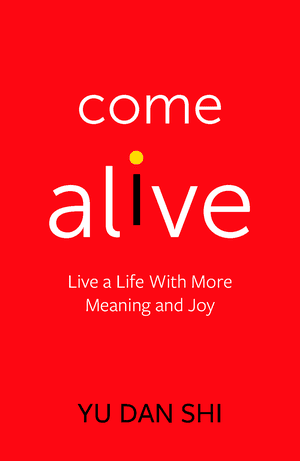
    Come Alive is a very topical book with subject material aimed directly at the high achiever from Yu Dan Shi, herself a victim of being a driven high achiever, who has faced her personal crisis, discovered a way through it and emerged, still a high achiever, but now a very different person to the younger, less accepting person, far more driven person she was once.

    Born into a family in China during the Cultural Revolution, female children were considered not worthy of schooling, many being taught to barely read and write.

    Her parents though were driven by the desire to one day move out of the situation they found themselves in, that of abject poverty, and have a far better life. Yu Dan was fortunate that her family believed strongly in education. She started school at 4 years old, studied industriously, graduating from University at the age of 17 years.

    Once again, she was fortunate to be able to leave China in pursuit of a career in the western world, a doorway that was only available for a few short years. Being driven by her parent’s belief in her, her own desire to work hard, earn money and give them a better life, saw her striving ever harder to succeed, to be the best.

    Eventually, after she had ticked off so many of the items on her tick list of things she must achieve, she was forced to slow down, learn a painful lesson and begin to take stock of a life that had somehow, failed to bring her the joy she realised was missing from her life; that essential ingredient that would and did make all the different as to how she was to restructure her life.

    There is immense sadness throughout this deeply personal story from Yu Dan as she paints a very real picture of life at the top of the Corporate ladder, the immense pressure placed upon people who work at this level, are high achievers and eventually face very real burn-out in their business and personal lives, paying a very high price for failing to take a step back and reassess.

    A change of direction after a serious health scare helped provided a clarity that had been missing from her life. Eventually, and after a long struggle with her personal demons, she discovered an enriching way to happiness and meaning as a highly respected and sought-after business mentor and executive coach. In Come Alive she shares the four proven and researched principles, as well as the practical steps to take on change, to be able to face the fear and do it anyway.

    Care less is the two-word phrase she uses to sum it all up, which translates to stop caring about what everyone else wants or thinks and start caring about what matters to you as you begin to make sustainable changes in your life.

    At the end of each chapter there is a Reflection that is most useful, even to simply use in your daily life a marker for the changes you have made on your journey to working smarter, being happier and enjoying far better, far happier, far more productive life as you Come Alive.
  • Kissed By A Deer

    Kissed By A Deer

    Living the bohemian lifestyle was beginning to wear a little thin and when her father passed away, Margie Gibb found herself facing a dilemma in her life. To continue or to change direction; she choose to  set out to travel the world and follow, what turned out to be a lifestyle that challenged her ideas, ideals and the very essence of who she thought she was as a person.

    Moving away from Australia to America, which in the 1970’s was considered the doorway to a very different culture and lifestyle, was the first step. While there Gibb studied the sacred art of the mandala and the traditions of the Indigenous Indian peoples. She eventually found herself heading into India. Settling in Dharamsala she worked as children’s carer and music teacher at the Tibetan women’s handicraft co-operative and that is when her life directing really began to change.

    Meeting Tenzin, a masseuse in the town, she falls in love but that love is ill-fated as she discovers she is just one of the many women in his life. In spite of this the relationship remains as a constant for more than six years. Yonten, a former monk becomes her friend and also has a massive impact on her life from the spiritual perspective.

    Essentially this is a story of self-discovery commencing in 1970 when life was there for the taking, eastern religion was high on the agenda for those seeking enlightenment and travel was a new and readily accessible option.

    To travel to India, Tibet and China was something that was almost considered essential when learning about eastern religion, traditional lifestyle and working as a volunteer in small communities was something ‘one did’ on the pathway to enlightenment.

    Margie Gibb is just one of the many but in telling her story, in what could almost be considered a diarised account of her daily life, gives real insight into what was involved and perhaps still is today when you choose to walk the pathway of ‘finding out who you are’.

    Political references give a very different perspective to the persecution suffered by the Tibetan peoples, a fresh look is offered into life in a third world country and the love and compassion shown by the people she lived and worked with, as they cared for her in times of ill health and distress, warms the heart.

    It is a journey of learning, of finding wisdom, of reflecting on life in the ‘60’s and ‘70’s, of rebuilding and seeking out the truth as Gibb, along with a generation of  young people, established  the pathway to a massive shift in societies values that are still with us today.