Tag: bicycle

  • Zoe, Max and the Bicycle Bus

    Zoe, Max and the Bicycle Bus

    2020 deserves a book like Zoe, Max and the Bicycle Bus for young readers. It is a verse novel that is delightful to read and music to the ears. The verse is positive, hopeful, and about friendly interesting kids. Steven Herrick has written many award-winning books which acknowledge problems and issues, but also promote cooperation, resilience, and kindness. How refreshing!

    The story revolves around a group of children who go to the same school. They each begin the book with a page or two of verse about themselves which allows the reader too instantly “Know” the character, their thoughts, and feelings.

    Each child comes from a vastly different background and is nervous about starting a new year in school.  They have a wonderful teacher who listens and is attentive to their needs. She rides a bike to school. There is a sticker on her bike that says, “Save the Earth, Ride a Bike.” Almost all the children in the class ride a bike to school and have chosen bike riding as a special activity for Friday’s.

    There is a problem though. The bike lanes in their area are not safe and, in some places, not marked at all. The children have the intention of encouraging others to ride to school but must address the issue of safety. Each child gives this problem consideration, and collectively a group come up with a solution.

    May Steven Herrick write many more wonderful stories about children, friendship, the environment, and a positive future!

    “The sun is shining

    and today feels like an adventure,

    only one I can go on

    whenever I want

    because I have a bicycle.”
  • Greta Zargo and the Amoeba Monsters from the Middle of the Earth

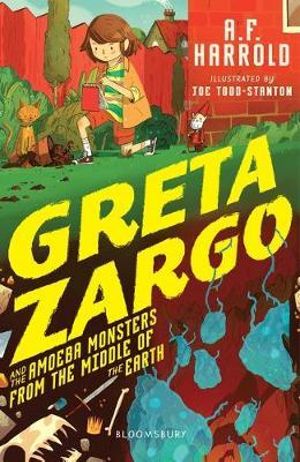
    Greta Zargo and the Amoeba Monsters from the Middle of the Earth

    This is the second Greta Zarbo story and looks to be just as exciting and dangerous as the first. The author has not spared his imagination, and we see the story unravel in the same unpredictable and amazing way that the first one did. This story does not involve robots from outer space but does include a quick trip to Mars.

    Greta, an orphan, has been left a house and a fortune by her deceased parents. She moved into the house, under the supervision of her Aunt who lives next door. Aunt Tabitha is an inventor and is quite often involved in unusual activities and with her talent for amazing inventions, she is quite unreliable. However, Greta is a very resourceful girl, and has a part time job as a journalist. This allows her to snoop and peep and pry whenever she can.

    There are several issues in this story. The first involves an electric spade that Aunt has invented. The trouble is it just keeps on digging and has released some amoebic monsters from the centre of the earth. These blobs begin surrounding and digesting family pets, and then the neighbours. The second problem is the disappearance of Aunt Tabitha. She was supposed to be hosting “The Twelfth Annual Festival of New Stuff, TAFoNS for short, but has vanished. Many inventors are dismayed by Tabitha’s absence, but Greta realises that there must be a serious problem to keep her Aunt away.

    With the intelligence, resilience, and her trusty bike, Greta sets out to solve the issue of her missing Aunt and the problem of the amoebic monsters. We meet many unusual characters along our heroine’s journey. There is Brigadier Ryefoot-fforward and PC Delinquent who was helping with the mysteries.

    The story is written with great imagination and humour. It has many witty and clever names and places to keep the reader amused. The story moves at a good pace and defies predictability.

  • The Amazing Story of the Man Who Cycled from India to Europe for Love

    The Amazing Story of the Man Who Cycled from India to Europe for Love

    “The word caste is derived from the Portuguese casta meaning race, breed, or ancestry. Historically, there were four levels of caste. At the top, the Brahmin (intellectuals), then the Kshatriya (warriors), followed by the Vaishya (traders) and finally the Shudra (servants). Some groups of people were banished from the system, and were referred to as untouchables, and they are socially excluded in some places still.” This is the strongest message to come from this love story. The injustice and wickedness that transpires when people are discriminated against from birth, is shown to be something that blights a person’s lifetime.

     Per has written his story, which is the epitome of struggle and faith and belief, to survive and prosper. As a child, PK, as he was called, lived a happy and secure life, not understanding until much later that he was an Untouchable. When he went to school, he was made to sit on the verandah, and told never to touch anyone else at school. It was the same at the temple, and in the village. However, on the day PK was born, a fortune teller foretold that he would marry a white woman, who was from far away, and owned a forest. The lad, as he grew to manhood, clung to this dream or prophecy.

     PK went to Art School, but through lack of money, had to sleep on the streets. He found drawing portraits of tourists profitable, and gained a fine reputation. Indira Ghandi, who wanted the caste system abolished, invited him to come to the palace and draw her likeness.

     A Swedish girl, Lotta, was travelling through India and came across PK.  They began to talk, and met several times, developing a firm friendship, which soon blossomed into love. Even though PK’s father “married them,” Lotta had to return to Sweden, leaving a devastated PK behind.  His resolve and determination were incredible, as he struggled to plan and pursue his future, and just where in the world that might take him.

     The book is an intense, factual and understated look at the life of one man in a caste system.  It is a move towards educating people about ancient traditions that are maintained in our modern world.