Tag: bees

  • Urban Beekeeping

    Urban Beekeeping

    The city as a hive

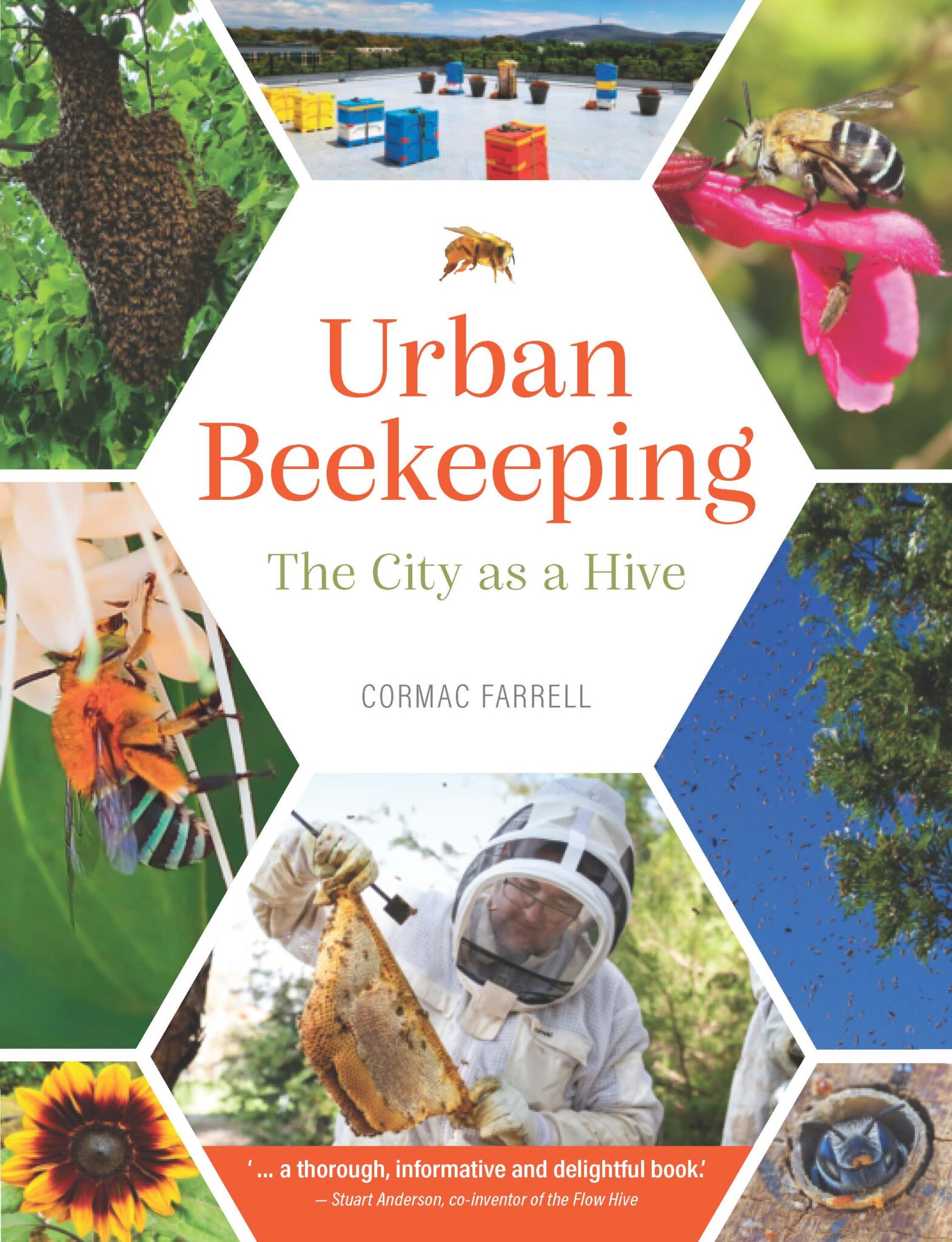
    Urban Beekeeping is a beautiful book in every way. Visually it has colourful and detailed photographs on the front cover as well as on most pages. The idea of bee keeping in a busy city is quite fascinating and hopeful. The written word is delightful, sprinkled with humour and explanations that are informative and fascinating.

    The author begins the book by explaining that he had a phone call from his partner saying that she had been swarmed by bees as she was wearing a yellow dress. While this was good news for Cormac, his partner was less than impressed. For the beekeeper though it meant he could establish a new hive, and this is where his thoughts turned to the building where he worked. It stood in the centre of Canberra. First, to convince his boss that this was a great idea!

    The following chapters teach us about the different varieties of bees, where to keep an apiary, and how to keep it healthy. There is also information about “Swarm catching for fun and profit.” The chapter on how to attract bees to your garden, and how to prepare homes for them is quite explicit, citing the plants, soil and water needed to attract bees.

    There is also detailed information about how to set up a hive and how to sustain and maintain it. For more serious bee keeping, there is also a segment on “Creating a systemic science-based breeding program.” The chapter on the extraction of honey and bottling it has photographs to show the steps.

    Urban Beekeeping is a delight to read because of the sincerity and passion that Cormac has for bees and the planet. His enthusiasm is infectious and hopefully will inspire those who may wish to learn more about bees. An index and references make this a valuable research tool.

  • Buzz: A book of happiness for bee lovers

    Buzz: A book of happiness for bee lovers

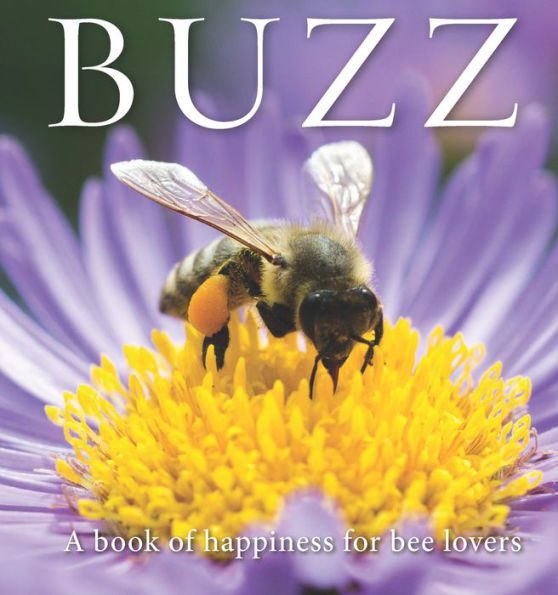
    I believe Buzz: a book of happiness for bee lovers could be called a book of happiness for all. It has the most wonderful photography, and colourful pages. Alongside each beautiful photo is a quote. Some are from Mathematicians, Philosophers, Conservationists, Poets and of course Winnie-the-Pooh.

    The introduction to this attractive book tells us that historically Bees have been interwoven in our lives. In Egypt they were part of the language, Hindu Gods are associated with Bees and there are references in the Bible and Quran.

    Ancient peoples admired the industry of the bee, but now awareness is gathering about the threats to the survival of this species. Pollution, pesticides and many modern-day gardens destroy rather than encourage the bee.

    Because there is such a paucity of books about Bees the author has decided to design this beautifully photographed book. So we have, “And the bumble bees kept bumbling away among the flowers…” by C.G.Leland. “The only reason for being a bee that I know of is to make honey. And the only reason for making honey is so that I can eat it”….Winnie- the Pooh.

    Pappus of Alexandria looks at bees differently, he says” Bees…by virtue of a certain geometrical forethought…know that the hexagon is greater than the square and the triangle, and will hold more honey for the same expenditure of material.”

    Buzz: a book of happiness for bee lovers is a coffee table book to be read and re read, looked at and lingered over.

  • Butterfly Wishes 2: Tiger Streak’s Tale

    Butterfly Wishes 2: Tiger Streak’s Tale

    Following on from the first book in this lovely series, Tiger Streaks Tale tells the story of another New Bloom who has fallen under a curse and if help does not arrive very quickly, in the form of a human child who badly needs a wish granted, Tiger Streak will lose her magic forever.

    Addie and Clara are beginning to settle into their new home with the help of the beautiful, magic butterflies Sky Dance and Shimer Leaf. They have also met their new neighbour Morgan, who is in trouble with her brother for painting his new soccer ball with a very funny face.

    Sky Dance and Shimmer Leaf call out to Addie and Clara that their help is needed once again, to help another New Bloom who is in serious trouble: her name is Tiger Wing and somehow she thinks she  is a bee, hanging out with another bee and making very strange sounding buzzing sounds.

    Of course the girls rush off to help and have wonderful, but very scary time, trying to rescue Tiger Wing, While they are doing so they make friends with the bee called Kirby, who is really trying to help Tiger Wing and protect her from a swarm of bees sent out to capture her before the sun sets.

    Morgan is the chosen one this time to help in the rescue and have one wish granted in return.

    Once again a lovely, enjoyable adventure that has been beautifully written by Jennifer Castle and illustrated by Tracey Bishop, to appeal to young readers who really do love a little bit of magic and a whole lot of adventure.

  • The Bee Friendly Garden

    The Bee Friendly Garden

    Well, thank you Doug Purdie, and that is meant in the nicest of ways, for writing this book and making me take an entire new look at the plans for the new garden designed to be constructed this Spring.

    After reading just the first few pages the realisation of what was needed was not a patch of lawn, sleepers and gravel but new, water wise, native garden filled with flowering plants that attract bees, will look wonderful, and once established, be  seriously water wise. If selected carefully for the area, the garden will look beautiful all year round.

    And so plan B was created, the yard now looks like an excavation site and the new garden is underway. Once the spring weather settles down, the plants will go in and with good fortune will be established to withstand the summer heat.

    As you read further into the book you realise just how important creating a beautiful, bee friendly garden is becoming. Bees were everywhere during our childhood; you could not walk on the grass during spring when the clover was flowering for fear of being stung. Now you are struggling to find the clover let alone the bees. So what to do is the major question as this is not something that is just prevalent to your area, but nation-wide and indeed world-wide. Bees are fast disappearing as we rapidly destroy their environment.

    Like most major environmental changes that are happening through the world, the magnitude of the event can be paralysing, but as Purdie says over and over again, we can each do a little and by doing a little, a lot will happen.

    In this beautifully presented book he takes us on an educated journey, not just into establishing best practice gardens, but into a world of colour and delight which can easily be achieved wherever you live. If all you have is a small Juliette balcony or a large acreage, he has advice, tips and planting that can be used to get the best results both from an aesthetic perspective as well as encouraging the bees back into your ‘back yard’.

    Over half the book is devoted to species of plants both native and exotic, insects you need in your garden, herbs that are both colourful, useful and taste delicious.  Coupled with serious information on the best way to establish your Bee friendly garden, there are glorious pictures to simply enjoy as you sit and plan your new garden, plot, pot or in some cases ‘olive oil’ tin of summer herbs or flowers.

    A lovely section on Bee Hotels is both educational and encourages a little quirkiness in your new Bee friendly garden.

    The final segment, the Appendix, is one that all gardeners should take note of, as it is on Pest Control Recipes which will take care of the unwanted critters in the garden, protect and encourage the most desired and keep your flowers, vegies, natives and herbs Bee friendly as well as environmentally friendly.

    Thank you Doug Purdie!


  • More Than Honey

    More Than Honey

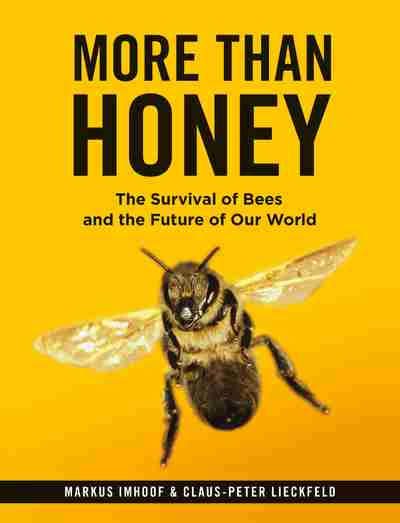
    “If 70 percent of all cattle or 30 percent of all chickens were to die annually, states of emergency would be declared everywhere. The death of bees is at least that dramatic and with even more far-reaching consequences.” More Than Honey

    There has been much research carried out on the plight of our little fuzzy, busy Bees worldwide and the findings are alarming, to put it mildly; the bee populations of the world are dying, not slowly, but rapidly and when you start to read, even just a little, it is perfectly understandable. Actually it is horrifying!

    We, by our fiddling with natural order of things are committing a slow form of suicide by killing off the bees. Over exaggeration you may think or say, but once you have taken a read of More Than Honey, you will perfectly understand the damage, trauma and destruction we are creating.

    Although much of the data gathered relates to America and Europe it translates to other food bowl producers such as Australia, New Zealand and Asia and is a telling piece of work by Imhoof & Lieckfeld. They describe the Bee as an intellectual addition to this world; one that has immense capabilities and definitely does far more than produces honey. This information makes fascinating and astonishing reading.

    The truth of it is that without Bees we would be a hungry race of people living in a desert region with little or no food. Certainly not the food we have become accustomed to eating on a daily basis.

    That we owe our wellbeing to this highly evolved, talented little creature is a humbling though but sadly not one we, as this so enlightened race, bother to spend time considering. Interesting, is it not! The problem being the way we have allowed food to be grown to feed the masses raises many, many issues with genetic modification being only one of the many.

    Transportation of masses of bee colonies from one place to another to pollinate mass orchards, crops and the like is another, with many Bee’s dyeing on the way is one that many are not aware of strangely enough, as it is a matter which, unless you are involved, causes the end user little concern.

    But, and it is a big but, unless we begin to start taking note of how out demands, and ever increasing demands for foods, is beginning to seriously affect our ability to be able exist on this world we, the human, enlightened, educated peoples will eventually be no longer.

    What we, as a modern society are doing to this magnificent little Bee is unforgivable. But there is hope as, although agriculturally, bees are in decline, there appears to be a renaissance happening within the cities, as more and more people within the urban environment begin to keep hives for fresh honey and to help pollinate their small plot of land. While this will help a little, preserving various species of bee, it will not overwhelmingly solve the problem. But what to do is the question of which, at this time, there is no one, specific, quick fix answer.

    The answer lies in Corporations facing up to the effect and damage their methods of mass production of foods, the chemical usage and over stressing of bees has created, and a concerted effort made by all peoples to fix that which is most definitely, broken.

    Unrealistic you say: But consider the very real, very close alternatives.

    In a quote attributed to Einstein he states that ‘humankind cannot survive without bees’ and he also says that ‘we cannot solve our problems with the same level of thinking that created them’.

    The final question there to be asked as posed by Imhoof & Lieckfeld in this work and the documentary of the same name is ‘where do we, as a civilization go to from here, if we will not listen, will not observe and keep on blindly charging down the same pothole ridden pathway, failing to fix up the potholes’?

    Makes you wonder, does it not!