Tag: battle

  • The Battle of the Bismarck Sea

    The Battle of the Bismarck Sea

    The Battle of the Bismarck Sea is Michael Veitch’s tenth book relating to pilots in World War Two. His writing is very well researched and clearly written. Even though there are many complexities within this book, they are dealt with separately until they are interwoven so the reader can easily follow the events. This is a great skill which involves the reader in the unfolding of an episode.

    Readers are also exposed to many stories retold from diaries and journals. A General arrived on a landing strip in New Guinea to find a shirtless man driving a bulldozer. The General approached him to enquire what he was doing. The driver replied that he was building up the soil around an unexploded bomb! There are many such stories with an index of the names of people mentioned at the back of the book. This makes it quite a personal experience.

    Michael Veitch plots the build up to the battle in the Bismarck Sea with great clarity and precision. He is able to give points of view and discussions from the Australian, American and Japanese perspectives. This gives us a well rounded picture of planning, mistakes and decisions that were made. The consequences of this planning would have a vital outcome for Australia.

    Never straying from the factual information that he has gathered, Veitch notes the bravery of the men in all aspects of the battle, recounting the horrors that must be the outcomes from such a battle. For Australia, this battle was “One of the most significant times in our history.”

  • The Battles for Kokoda Plateau: Three weeks of hell defending the gateway to the Owen Stanleys

    The Battles for Kokoda Plateau: Three weeks of hell defending the gateway to the Owen Stanleys

    Kokoda is a name known to many Australians as a place of great courage; of acts of selfless bravery, mud, brutality and now, more than almost 65 years after the end of the Second World War in the Pacific, Kokoda is a place of pilgrimage for many: a place to remember the sacrifice made by many young men as they were sent to do the almost impossible, forge a pathway across the Owen Stanley Ranges, sufficient to carry troops, ammunition and supplies to set up a forward base to defend the Kokoda airstrip from Japanese forces.

    Although the distance was not great the terrain was inhospitable, at the best a series of native tracks between villages, at the worst a quagmire of mud, rain, leaches and swamps. Small European settlements were located at various points; Plantations in some instances, Missions in others.

    Young men, some from the embattled Lark force, many others raw recruits facing battle for the first time, formed up as a formidable force to firstly carve a pathway through the jungle, men as young as 18 years old, plucked from their everyday lives, facing a challenge that was overwhelming, but needed to be complete if at all possible.

    Before the trail was complete, the Japanese Imperial Forces landed on the northern coast of Papua in 1942. The convoy bought with them a massive amount of equipment, down to thousands of bicycles, nothing left to chance.

    Over the three weeks this engagement was carried out, there was a secondary group of people made up of Australian soldiers, nurses, missionaries and downed US airmen trying to find their way to safety of the Australian lines. Sadly, theirs is a story of immense betrayal, with few surviving.

    David Cameron has gathered together the story of the Battle for the Kokoda Plateau, using  Military records and the treasured diaries of families, to weave a story of immense bravery, foolhardiness, tragedy and betrayal, against the horrific reality of the invasion and brutality of the Japanese troops who considered the capture of Port Moresby was the key to winning the war in the Pacific.

    The Kokoda legend is well known, and now the background of the many men and women who built the track, gave their lives and wrote history have been given a voice, and will long remain a lasting reminder of the reality, the tragedy that was ‘The Battles for Kokoda Plateau’.

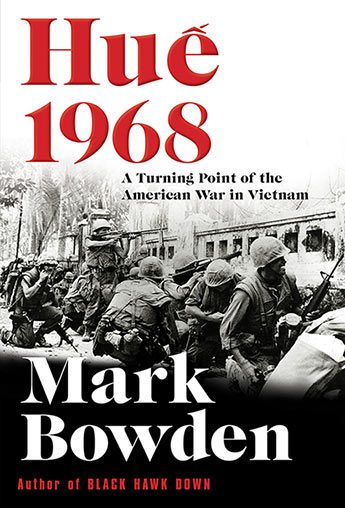
  • Hue 1968 A Turning Point of the American War in Vietnam

    Hue 1968 A Turning Point of the American War in Vietnam

    The Vietnam War seems so long ago but the long term effects of this war have, like many before, leaves a lasting legacy. Vietnam was a war that almost fifty years on is still a platform for conflict, regret, damaged lives and rebirth.

    Hue was a major battle that redefined so very much, for not only the American forces fighting what many considered a senseless war, but the turning point in the way the American public viewed their civic leaders, Presidents and leaders of the Military Services. The American age of innocence was over.

    In 1968 more than half a million American troops were engaged in combat in Vietnam but the war appeared to be at a stalemate. The American Generals refused to accept that it was time to begin withdrawing American forces and announced another ‘phase’ in the war against the spread of Communism.

    The pointers were there that things were not going according to plan but it was not until, the North Vietnamese launched a series of well-planned strategic attacks, now considered be part military intervention and part popular uprising across Vietnam, with the major coup the fall of the cultural capital of Hue falling into North Vietnam hands, that caused the most ferocious and deadly fighting of the ten year long war. In this battle that raged for more than twenty four days more than 10,000 people lost their lives, both civilians and soldiers. This battle was considered the most deadly since World War 11.

    Mark Bowden has spent many years researching the fine details of the horror and pointlessness of Vietnam, speaking with veterans, re-reading newspaper and press articles written at the time, visiting Vietnam and speaking with children and some of the survivors of Hue, as well as researching many of the records now available to the public.

    It is noted in this account of what could be considered the beginning of the end of the American engagement in Vietnam, that Bowden has presented a very clear picture of not only the Battle of Hue, but the double standards, wilful blindness, self-aggrandisement and poor strategies that finally, after seven long years after Hue, much needless waste of lives on both sides, saw the American withdrawal of troops.

    What did the war in Vietnam achieve is still, after so many years, open to debate. Communism changed to dictatorship, Vietnam settled into what is today a thriving country of people who live within the confines of system that while not perfect, is flawed as are so many countries political systems but continues on in its own style and culture.

    Well documented this is a read that while massive, is clearly and carefully written, presenting recent history through the long lens of time, in a manner that does go a long way to a better understanding of Vietnam and a war that changed so very much politically, in not only Vietnam but also America.

    Mark Bowden is the author of Black Hawk Down and Killing Pablo.