Tag: babies

  • These Little Feet

    These Little Feet

    Love, hope and pure joy exude from this story, These Little Feet. It is the desires of new parents who look at their newborn child and imagine the life he or she may have. The story lends itself to being read to the youngest child, who would be touched and shown hands, feet, eyes, and a mouth. It is a celebration of all that is wonderful about a new life being shared.

    The rhyming text is perfect for a bedtime story and the repetition of words creates a soporific effect. The author uses the figures of a mother, a grandmother, a father, and people from different cultures to show the love for their newborn baby. They imagine the places the baby’s feet will travel, the things their hands will hold, the visions their eyes will see and the things they will hear.

    The author has cleverly shown the body parts being touched by a parent and induces the copying of that movement for the reader. The montage of photos on the last page shows the different phases of growth of a child who is surrounded by loving family and friends. While the text is simple rhyme, the illustrations add colour and meaning.

    These Little Feet is a wonderful book for anyone to read.

  • Finding Eadie

    Finding Eadie

    Alice Cotton’s tiny baby daughter, Eadie is secretly given away by her grandmother; Alice is devastated.  Her desperate quest to be reunited with her missing daughter Eadie, takes her from police stations to the offices of child welfare oraganisations and finally to the dangerous places used by the baby farmers to sell their illegally acquired babies.  Alice uses her position as the rising star at Partridge Press to expose the horrors of baby farming and to find her tiny daughter.

    Intertwined with Alice’s search for her daughter, readers are given an insight into the publishing world of 1940’s where paper was in short supply but books were in high demand. Books were not only popular with civilians but also the troops, as they were seen as a distraction from the grim realities of war and its depravations. The author has included a list of popular books from this era.

    This well researched historical love story is set in London during World War II, where the Victorian criminal practice of baby farming was still well and truly alive; the war having delayed 1939 Adoption of Children Act. For readers wishing to further research the practice of baby farming, the author has included a comprehensive list of sources and references.

    Not only readers of historical novels, but also those who enjoy an enthralling mystery with a happy ending, will enjoy this page turning book.

  • Isla’s Family Tree

    Isla’s Family Tree

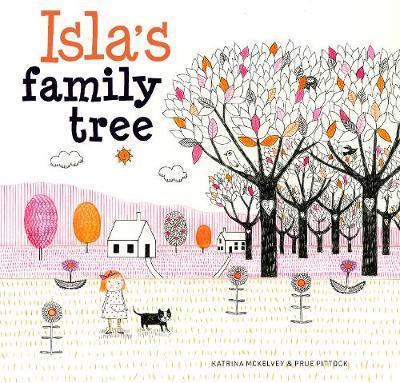
    Isla’s Family Tree is a quirky little story about getting ready for the addition of a new baby in a home where the number one child is the centre of attention.

    Isla is not at all sure this new baby is the right thing at all to have in the house, as she feels it or as it turns out they, are going to disrupt life as she has always known it: she is not happy, not happy at all.

    Mum and Dad tried everything until one day Mum asks Isla to come and help her create a family tree, one where Grandma and Grandpa are the trunk and all the other people who make up Isla’s family, become the leaves. Isla is given two brand new leaves which she needs to place on their particular limb.

    Slowly she begins to understand families are made up of all sorts of people which is fine, until she comes to her branch and decides there is simply no room there for anyone else, let alone twins. That is simply too, too much.

    The very real angst of a small child having to make room in their life for another child, has  been captured perfectly by Katrina McKelvey and Prue Pittock, in the story of one little girl who is none too happy about her family changing; one little girl with a very fertile imagination and very definite ideas which last until she finally gets to meet the new arrivals, who slowly enchant her with their winsome ways.

    Prue Pittock’s illustrations are simple, line style coloured drawings which capture clearly the sense of upset felt by Isla and the many, many ideas she manages to creates to off load this troublesome baby, which turns out to be babies, that are funny, all to real and most enchanting.

    Woven into the storyline is the delicately delivered conceptual structure that families are made up of a variety of people and there are no rule as what or who make up a family, twin babies included!

  • Mother of Pearl

    Mother of Pearl

    Mother of Pearl is a sensitive work where the subject matter has been very carefully selected, the research comprehensive, the emotion woven throughout all too real, as it presents the world of hope, despair, depression, longing and in many cases destruction, that is an integral component of the IVF journey so many couples face, in the overwhelming desire to hold a child of their own in their arms.

    Angela Savage has woven the lives of three women together in this compelling story of surrogacy, refusing to take a middle ground with this very topical subject, encouraging discussion, but resolutely leaving the judgement of right or wrong suspended.

    Meg has faced seven long, savage years of IVF, which has resulted in a change of career, a new beginning, a worn-down husband still very much in love with Meg, but a woman who is still, against all odds, hoping that one day she will hold her own child in her arms.

    Anna her sister, an Aid worker has returned to Australia after a very different life in South East Asia. She is settling into her new life, but carrying scars, mourning a lost love and trying to understand a little of what Meg has gone through. Anna’s friends Willem and Steven, with their baby daughter Isabella, arrive to enjoy lunch with Anna, a lunch that sees Meg joining them, and a doorway opening into a yet undiscovered pathway to parenthood.

    Mudka, or Mod, a young Thai mother living Sisaket, with her mother, son and sister, abandoned by her gambler husband, also with secrets of her own, is offered a chance to make amends for her past failings, as well as earn some much-needed money for her family. She agrees to become a surrogate mother.

    As the three women lives bind together, the pathway of surrogacy is revealed through the eyes and emotions of the people prepared to travel this very challenging, expensive road in the desperately determined, overwhelming desire to become parents.

    Mother of Pearl is a powerful story of surrogacy based in Thailand before the rules changed dramatically, and raises very ethical considerations of parenting, responsibility and legality as not just Meg, Anna and Mod’s story is told, but an insight is given into the lives of other young Thai women who have been led into the world of surrogacy for foreigners!

    A novel which will certainly be cause for debate in Book Clubs and other social mediums.

  • Marge and the Pirate Baby

    Marge and the Pirate Baby

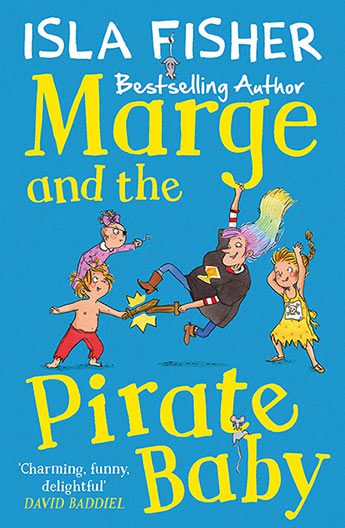
    Marge is the babysitter that most children would love to have. She is small, has rainbow hair, and has amazing ways of planning fun and games. Her two charges, Jemima and Jake love to have Marge to babysit, but they fear she may have met her match when she has to look after their cousin, baby Zara. Marge is totally unfazed by Zara and insists that pirates love babies and that they all should become pirates and behave accordingly. When there is a loud noise, followed by a putrid smell, code brown is put into operation.  Everyone cooperates.

     This is the second book for children that Isla Fisher has written. It is filled with fun, adventure and imagination, as well as lots of big words. The book contains three stories, Marge the Pirate Nanny, Marge and the Stolen Treasure, and Marge and the Wacky Wedding. Each story involves the children being away from parental control, and needing to manage their own behaviour and issues, as well as baby Zara’s. Marge is never at a loss to follow mum’s rules, even though she has to assure Jake that sun cream also repels lions and tigers.

     The illustrations are frequently scattered throughout the stories, and add to the humour. The sight of Nanny Marge doing a bomb in the local swimming pool is fun. The text is a good size with varying sizes according to the situation. When Zara cries, the WAA-OOOH can almost be heard. The language is well chosen, and Marge has the children spellbound when she tells them “I haven’t been this hot since I galloped across the Arabian Desert on my black stallion.”

     For emerging readers these would be wonderful stories.  There is a comfortable resolution to problems, the house is always spotless when Mum comes home, and the children love the ideas that Marge brings to them. She has rules, but always makes sure that there is no need to break them.