Tag: Austen

  • The Austen Girls

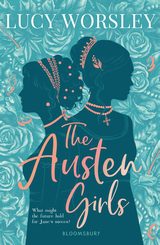
    The Austen Girls

    As many of you know Jane Austen was a writer of wonderful fiction stories about life in the Georgian era, but more specifically the Regency period, writing about ordinary people and the society in which they lived. Her more well-known novels are Pride and Prejudice and Sense and Sensibility amongst others.

    But what of Jane Austen and her wider family of nieces and brothers, and the life she and they lived, when the main purpose from birth for all girls, was to marry well. Lucy Worsley in her latest historic novel The Austen Girls brings the world of the Regency marriage ‘mart’ alive through the eyes and emotions of Aunt Jane’s nieces Anna and Fanny.

    Anna has always been told she must marry well. She has the looks and the breeding but her father is a farmer, whereas her cousin Fanny has both the breeding and the money but also has to marry well, but there is not as much pressure to succeed and succeed well.

    As the girls look forward to their first local Ball with great excitement, they begin to wonder what the night and their future holds in store for them.  Sadly, the Ball does not go well for them which sets off a chain of unprecedented events which will see Anna returning to the farm in anger and despair, leaving Fanny deeply hurt and upset.

    Fanny begins to question why Aunt Jane, who lives with them, but often goes to London, has never married and where she gets her wealth from, as it obviously does not come from her father, Jane’s brother. It is not until tragedy strikes, with the local parson being arrested for thieving that the other life of Aunt Jane becomes very real, as she and Fanny set out to try and get Dominic Drummer released from prison.

    The Austen Girls holds every element of romantic fiction, Regency style, between the pages and under Lucy Worsley’s skilled hands comes vibrantly to life, creating a work of fiction Jane Austen would consider as really rather excellent.
     

  • The Clergyman’s Wife

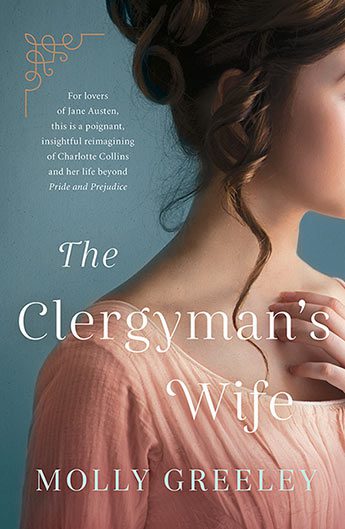
    The Clergyman’s Wife

    Ahhh, it is a marvellous thing to be reintroduced to the characters of Jane Austin through the medium of The Clergyman’s Wife by Molly Greeley. This is the story of Elizabeth’s friend Charlotte, with the main characters from Pride and Prejudice making an appearance, but not playing a major part in this tale.

    Charlotte tells her story in a gentle but compelling way, with much reflection and thoughtfulness. Because her story is told in the first person, we are confronted with the most intimate thoughts and feelings of a young woman whom society guided into life choices.

    Mr William Collins, the obsequious parson who offered for Lizzie and Jane Bennett, and was refused, offers for the hand of Charlotte. She has to weigh up the pros and cons of such a marriage. It will give her security and a position of responsibility as a married woman.

    She is a thoughtful and practical woman who knows that her life as a spinster will be one of hardship. She would have to live with her brother or family member, as an extra, in a household. The intense man William, who has proposed to Charlotte, is a well- meaning man, who would always be kind, but never really an intimate friend.

    The decision is made to marry the Clergyman, and Charlotte begins to keep her own house and learn the role of a parson’s wife. She helps with the kitchen duties of preserving, and begins to learn about the needy people in the village. She begins to visit them and give them a few supplies. as well as her company.

    Her relationship with her husband has only changed in a few ways. At night, “she feels his weight upon her.” After a few years, she gives birth to a daughter, Louisa. As she meets more people in the village and begins to think of her daughter’s life, Charlotte realises that other people have more depth in their relationships.

    A local farmer comes to the Clergyman’s garden to plant some roses. An easy friendship begins between Charlotte and Mr Travis, the farmer. She becomes aware of the humour they share, and how he responds so naturally to Louisa. In rather melancholy reflections, Charlotte sees her sister falling in love, and the exchanged looks and smiles between Mr Darcy and Elizabeth. As many women in that time would come to realize, love has many depths.

    While rather a sad reflection of the times, the story is a pleasure to read. We are re- introduced to the Bennett family, and see that Lizzie has a baby and Jane is happily married to Mr Bingley. Lady Catherine de Bourgh, the overbearing family matriarch, is still as meddlesome as ever. However, this is Charlotte’s story and the author has done a grand job to continue Jane Austen’s work

  • The Jane Austen Diet: Austen’s Secrets to Food, Health, and Incandescent Happiness

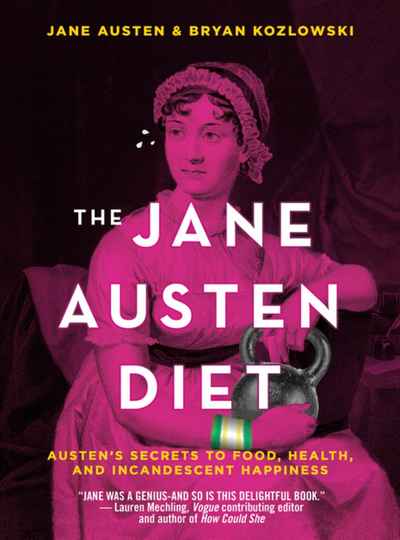
    The Jane Austen Diet: Austen’s Secrets to Food, Health, and Incandescent Happiness

    ‘Jane Austen was an English novelist known primarily for her six major novels, which interpret, critique and comment upon the British landed gentry at the end of the 18th century. Austen’s plots often explore the dependence of women on marriage in the pursuit of favourable social standing and economic security’. Wikipedia.

    Born in 1775 at Steventon, Hampshire Jane Austen was the second daughter and the seventh of eight children born to the Reverend George Austin, a scholarly man and his wife Cassandra. She rose to fame as a novelist whose works are now considered as classics, portraying the middle-class life of 19th century England, defining the manners of the time and the very ordinary people who made up the very essence of society.

    Imagine then the surprise of novelist Bryan Kozlowski, a lover of Austen’s works and a certified diet junkie, when reading Austen while facing a mid-life crisis and amassing a pile of the latest diet magazines, to discover that throughout all of Austen’s classic works, she was very cleverly setting down the rules for a healthy way of living, achieving a ‘bloom’, maintaining a healthy weight and exercise regime.

    So many of her characters were women who refused to be place in the societal mould created for them by men, women who were strong, vital, voiced their opinions often in a strong voice and even in a world which was vastly different to today, were concerned about health, society, marriage and the world around them.

    Kozlowski has woven seamlessly the secrets of the past into the madness of the diet culture now, as he combines the lessons and health tips touted throughout the pages of her books, referencing them to the modern-day practises of gym junkies and fad diets. He has walked his talk and discovered that yes, Austen’s way of viewing healthy living worked. She became his ‘health guru’ for the next two years.

    Having used the word ‘health’ more than 100 times, over her literary works, which is a massive total, along with of course the requisite walks around the park, to the shop, or simple outdoor outings with sisters of friends, Austen certainly appreciated the simple and healthy benefits of fresh air, fresh food and exercise; everything in moderation.

    Witty, and a refreshing change to read about health and fitness tips that are as relevant now as then, cost nothing other than the price of healthy food, and will almost secure that bloom of good health and a healthy body, which even in Austen’s day could come in many shapes and sizes.

    At times the work becomes somewhat fragmented, but perseverance wins the day, although some of the recipes listed may, in todays world take some achieving, but at the basis of both Austen’s works and Kozlowski’s ‘manifesto’ lie the secrets to good health and happiness, which despite modern marketing attempts to make us believe otherwise, are simple, extremely cost effective and guess what, really do work!