Tag: anxiety

  • Everything Anxiety Ever Told You Is a Lie

    Everything Anxiety Ever Told You Is a Lie

    Dr Toni Lindsay’s ‘Everything Anxiety Ever Told You is a Lie (*Well, almost everything)’ is an easily digestible curiously enjoyable self-help book considering the somewhat undesirable topic.

    You can certainly tell from the cover, the text and images contained in the book that it may be intended for a younger audience (12-15, early teens). That being said there is most definitely no sacrifice of substance despite catering to a younger age bracket and as a young adult I thoroughly enjoyed the read.

    It is also rather refreshing to read a self-help book written by someone in the medical* field that doesn’t feel the compulsive need to get their point across by using nothing but drab medical/scientific jargon.

    Dr Toni’s approach feels more personal and endearing and despite the authors more informal approach, she still manages to do a fabulous job at dissecting anxiety; but in a way that’s less logistical, more in the vein of understanding, acceptance and getting comfortable with your own personal “anxiety guy” (if you know, you know).

    Sprinkled throughout the book were these practical yet thought-provoking activities (suitable for all ages!), each one expanding both my knowledge and appreciation of my own experiences with anxiety.

    These activities helped affirm that even though I (and many others) live with anxiety it is nowhere near the ‘be all end all’ we think it is, and like many other things, with the use of specially tailored tools and accommodations, we can manage it, even in the really difficult times (especially then).

    On top of these wonderful activities, Dr Toni also involves the use of playful images, diagrams and other things such as lists and relevant real life examples to further help with the reader’s examination of their own daily struggles with this, at (most) times, irritating mental illness.

    I really appreciate Dr Toni’s nuanced way of navigating everyday anxious issues, and the authors ability to navigate difficult topics in a simpler way, that helps make it more penetrable for younger readers.

    This book takes readers on a thrilling journey of self-discovery and assessment; reassurance infused within every page, by constantly reiterating that anxiety looks different for everyone. There are countless ways to get to know YOUR anxiety better, with tools to help manage those anxious moments when they pop up, however frequent or infrequent. There is no doubt that these skills take time (and a heck of a lot of effort), but this book has some fabulous, easy and accessible resources to test/try out to help mitigate the more anxious times in life. Definitely worth the read!

    *clinical and health psychologist

  • Your Name is Not Anxious

    Your Name is Not Anxious

    A very personal guide to putting anxiety in its place

    Stephanie Dowrick is a well-known and trusted author. She is referred to by professional people, as well as those seeking answers to mental health issues.  In Your Name Is Not Anxious she shows us how tame our fears and anxieties, rather than fight them.  Stephanie’s’ focus on these issues becomes personal, as she watches a member of her family suffer with anxiety issues.

    The wonderful news is that this is not a book to grind your way through, but it is set out in chunks of text.  The reader may choose which parts are appropriate for their needs at the time.  There is a section on “Emergency Measures.”  One would refer to this section if a person’s anxiety level were high or a panic attack were imminent.  Moreover, there are chapters such as “Talk to Yourself like a friend.” Many of us would benefit from reading chapters as effective as this chapter.

    Interestingly, the author quotes the Principal of a Steiner School who believes that a “School System that avoids competition and comparison, helps young people to have real confidence in their ability to learn”.  They foster the attitude that learning is a joy in itself.  Challenges are set out for these children, without results and ranking.” There is much information which Parents and Educators may take from these chapters.

    As with the best professional and self-help books, the information is set out simply and with a view to answering any questions or concerns about anxiety.  There is an index which covers any issues that the reader may wish to explore more fully.  This topic needs this clear and helpful guide to address this crippling aspect of our society. Stephanie Dowrick has provided this.

  • The Loudest Guest

    The Loudest Guest

    Dr Amy Silver presents a rather interesting discussion when she takes a look at fear; fear that drives us and fear that cripples us as we journey across our life canvas.

    In The Loudest Guest she looks at the thoughts,  the drivers behind those thoughts and how that simple little word fear, controls so much of what we do, how it saps confidence, retards progress and generally becomes more often than we would like, the controlling voice in the mind when presented with fresh challenges or change.

    It is far too easy to spend too much time overthinking everything and in doing so creating fear; a voice of self-doubt which often becomes the most unwanted noise in your mind, which is vastly different to the very real emotion of fear, which protects and warns when danger, real danger, is present.

    She offers in a very comfortable, easy to read style, a comprehensive understanding of the crippling effect of fear, and the accompanying emotion of anxiety, with some very practical solutions to calming that fear, rebuilding self-confidence and re-establishing firm control over that very loud guest in your mind.

    Guest is the operative word in so many ways; fear is a guest, one that is more often than not unintentional, and one that can also be shown the door with some simple, but effective strategies which will when practised and understood, lead to a far more relaxed and confident future.

    The Loudest Guest is a book for everyone. Flicking back through the pages, a small section in italics caught my attention. It is a quote from Marianne Williams in her reflection of fear and love: Our deepest fear is not that we are inadequate: Our deepest fear is that we are powerful beyond measure. The final lines are: We ask ourselves, who am I to be brilliant, gorgeous, talented and fabulous? Actually, who are you not to be?

    These words capture the very essence of Amy Silvers book as she reaches out to help everyone become the person that is stepping into their bright new, positive, powerful future, free from The Loudest Guest.

  • How to Talk About Climate Change in a Way That Makes a Difference

    How to Talk About Climate Change in a Way That Makes a Difference

    Climate change has been being discussed by communities, scientist and politicians since 1970 with the result that many people have become overwhelmed with climate anxiety or the notion we are heading for a massive climate disaster when global warming reaches tipping point.

    There have been the deniers, the corrupt scientists, blatant disbelief, politicians who are more concerned with their next election results and climate activists all touting their platform, which has had the effect of people turning a deaf ear to the very real truth; that climate change is here to stay and that something real and serious needs to be undertaken by the Governments and people of the world to effect change.

    Over the summer of 2019 to 2020 Australia burned in some of the most terrifying bush fires ever to occur in modern or recorded times; swaths of bush were burned to irreparable levels, flora and fauna gone forever, with so few species surviving the carnage. The world looked on in horror as did the people of Australia.

    Climate change became something that could no longer be denied. The rallies across Australia became something that could not easily be dismissed; when the students, young and old took to the streets it became a serious ah-ha moment for many. Rebecca Huntley was one of these people who took stock of her lifestyle choices, but took her new perspective into the workplace to try and understand the real issues behind climate change and the resultant anxiety that has all but caused everyday people to become detached.

    As she followed the thread of the past thirty years she came to the conclusion that the best way to create an antidote to climate anxiety was through change; change of the psychology in the way we go about talking about climate change, presenting the facts without the drama and how best to reach those who have simply turned off, are doing a little but could do more or are simply confused buy all the hyper babble.

    Some surprising information came to light, in her year of looking closely at climate change, resulting in the belief that the best way to work through the fear and inertia was by talking about climate change. Climate change scientist Katherine Heyhoe considered talking the most important thing to fight climate change. Greta Thunberg talked and then walked her talk right into the United Nations. Young women, still in high school spoke with passion at rallies across Australia and the world, and people listened.

    How to talk about climate change in a way that makes a difference, tells a story that makes a massive difference leading to a better understanding of where we as a society stand, how best to manage anxiety relating to climate change, offering acceptance that it is real and happening now, not in some time in the future and what we, the everyday person can do to make a difference.

    How to talk about climate change in a way that makes a difference should be consider as essential reading for anyone who is interested in or wanting to further understand climate change and how they can make a difference by beginning a conversation that leads to real climate change and a renewed hope for the future.


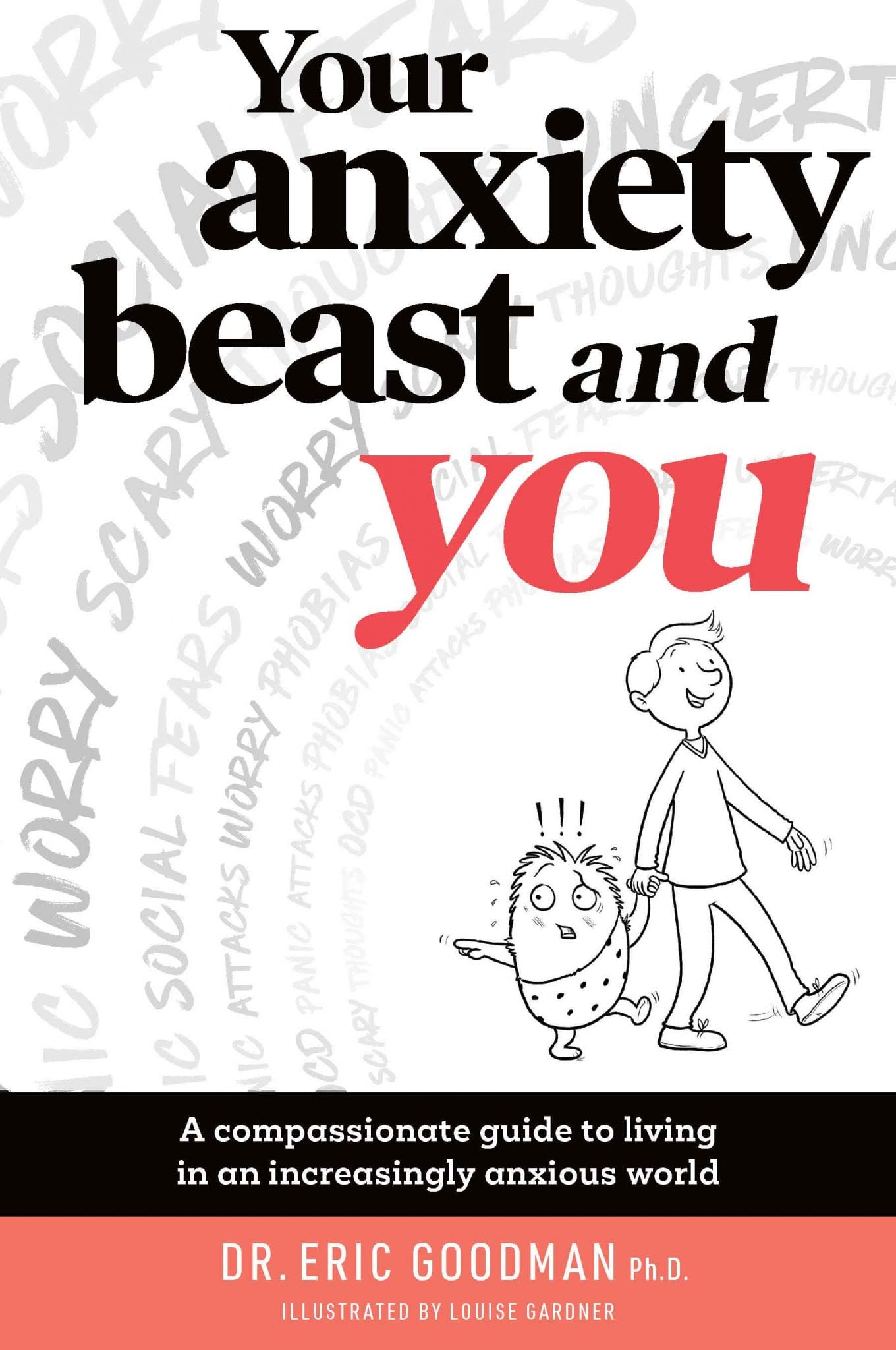
  • Your Anxiety Beast and You

    Your Anxiety Beast and You

    Dr Eric Goodman has a theory that he feels may help sufferers of anxiety. For many years people have thought of excessive anxiety as something to be angry about and they see their affliction as a beast. He suggests that people who suffer from anxiety look at their problem in a different way.

    If we consider that this emotion can protect us at times, we could think of anxiety as a kind, younger version of us, or someone we love, being overzealous. In fact, he feels that if we love our anxiety and can tell it, “Thanks for trying to help, but just back off now,” we will be less stressed.

    This is quite a novel notion, and this book is geared to working through many misconceptions about anxiety. The Doctor reminds us that Society condemns anxiety, and yet causes most of it. Our fears stem from our ancestors who needed their constant awareness to survive. We no longer live in these times and so have to be able to convince our friend that we are OK.

    There are some pages which invite the reader to practice skills they will need to cope. For example, there are columns which explain what your beast is saying to you, and how to manage that message. The author believes your anxiety beast is teachable and with training will become manageable.

    Well explained, this concept and the instructions are easy to follow with the book able to be used at specific points or read through. The theory is reinforcing the feelings of self-worth, and confidence which is helpful in itself. Even for smaller issues, speaking with your beast as a young and careful junior can have a calming effect.

  • The Age of Anxiety  A Novel

    The Age of Anxiety A Novel

    Pete Townshend, one of the founder members of the rock group The Who, has created what he likes to term as a torturous novel in The Age of Anxiety, destined to be eventually, he hopes, an Opera, and to this end, the narrative certainly has all it takes to be seriously considered as a ‘rock-style work’ for the stage.

    Life, death, mystique, murder, drugs, love, hope, music and more music, with an eventual finale tying up only some of the many loose ends, while all the time paving the way for a sequel, is the perfect mix for a grand opera, based in the hard living world of ‘destruction set to music’ (sic).

    But what to make of this work, which took many years to complete, is going to depend on how the many characters are received, as the plot twists and turns in a somewhat similar style to Townshend’s own life, with the plot line obviously influenced by his life as not just a rock legend and immensely talented musician, but of a man in pursuit of spirituality.

    Louise Doxtader is the main character, a man turning sixty-seven, a man who is writing a book; a book he feels driven to write about his life as he tries desperately to find some sort of balance, some sort of reasoning for his past, his future and everything in between.

    In some aspects it is that of a detective novel with Doxtader trying to discover who, what, why, where and when the various events happened, the bearing this has had on his life, his family and close friends, and what would be the eventual outcome.

    Fascinating, but definitely a read that takes time, as the many twists and turns take some assimilation, with the plot such that is all too easy to lose track of the various subplots, which embellish the life of Doxtader, his journey and his eventual acceptance of his life, as undertaken to that time.

    As he said in the beginning ‘After you have heard my story, you will be able to make up your own mind’, which happens to be true. But what of Sybil, the psychic woman who rents the room to Doxtader while he is writing his memoir; who is she and what is her real role in what has befallen Louie Doxtader and his family.

    Operatic to the final note, err word, rather!

  • Relief from Anxiety and Panic: by changing how you breathe (BreatheAbility for Health)

    Relief from Anxiety and Panic: by changing how you breathe (BreatheAbility for Health)

    In today’s world of mayhem and what appears to be madness, there are many self-help books that can and do help make a difference to how people cope with the stress of modern life. Sometimes the solutions are simple but for others the reality is far greater than a quick fix, or changing a perspective.

    Tess Graham has, over several decades of working with people, helped more than 6000 people take charge of their lives; people who have already tried many methods of attempting to find a happy pathway to conquering their stress and anxiety, with hugely successful results.

    Dedicating her life to understanding the optimal effect of breathing on the psychology of the body and mind, she speaks directly to people who have difficulty with attaining a healthy and healing night’s sleep due to anxiety, sleep apnoea or snoring.

    Her previous book Relief from Snoring and Sleep Apnoea, has helped many quickly and easily on their pathway to a good night’s sleep. She now addresses the very real issue of anxiety and the benefits of correct breathing techniques in ‘Relief from Anxiety and Panic’, to help calm and settle anxiety with understanding, insight, knowledge by using breath and breathing to great effect.

    Relief from Anxiety and Panic is designed to be used as a workbook. Clearly worded, it is very comprehensive, presenting the psychology of breathing in a clear, easy to understand style, as well as the techniques that can be used in conjunction with other aspects of healing to better understand anxiety, the immense value of breathing correctly and the massive benefits that it can bring to not only attaining a healthier lifestyle, but one that will also be free from the crippling effects of anxiety and panic.

    This simple and effective the workbook, needs to be filled in as you progress through the book, as your previous notes are used as reference points as breath techniques are learned or relearned, which offers a pathway forward. There is also the reminder that there may be times when Professional help is required; when retraining in breathing via a Breathing Educator could be of significant help as new skills are learned which will definitely make a vast difference for a fuller and richer quality of life.

  • Social Courage: Coping and thriving with the reality of social anxiety

    Social Courage: Coping and thriving with the reality of social anxiety

    Dreading that next work function, social encounter or gathering where small talk is the order of the day and anxiety is your best and long-lasting buddy at these events. Relax, help is at hand by beginning to understand a that social anxiety is something which is a normal factor in being human and is something most people have, have had to face and accept, even those who appear to be amongst the more extroverted of peoples.

    What is social anxiety and why does it cause so much genuine distress in people’s lives? The simplest of answers is that according to Dr Eric Goodman in his book Social Courage, social anxiety is not a lot more than ‘brain noise’, that social anxiety is normal. One thing it is definitely not is a disease, even though it may have what many consider as a debilitating effect on their lives, their goals and their ambitions.

    In this very gentle introduction to this very normal component of being human, Goodman presents a simple, effective and well structed self help course offering understanding, information and, techniques to help you break what may be a stranglehold on your life.

    The information is formed and based in years of research, practice with his patients with well documented success stories, case studies of changed lives, fresh pathways forward, all based in understanding and interestingly, acceptance.

    Self-awareness, catastrophising, personalising, should, should nots, phobias, are just some of the many very human traits and learned factors that add to social anxiety, which can all be dealt with by using a logical approach to the problem; a logic that often needs to be learned or relearned to begin to cope with ‘brain noise’.

    Each of the sections comes with a workbook or sheets that need to be completed, but at each step, it is reinforced that the pathway can be left at any time, it is up to the journeyman how they use the information provided.

    Godman accepts that the road to change is often very hard, full of falls and regression but is encouraging about returning to the task, accepting that is ok to get side tracked, to accept this very human trait, but to keep pushing ahead to achieve your goals.

    His final words are those of wonderful encouragement, where he says that the courage to be human lies in recognising that you are forever destined to be and feel imperfect; that is being human. Perfection is impossible. By accepting that by doing the best you can and seeing that, this is good enough.