Tag: agriculture

  • Working with Nature Saving and Using the World’s Wild Places

    Working with Nature Saving and Using the World’s Wild Places

    Even if you know very little about conservation and the environment, which would be hard to believe in today’s world, Jeremey Purseglove, in his latest book Working with Nature has created a surprisingly interesting and informative book spelling out just what is happening and why some sort of brakes need to be applied to what appears to be reckless devastation of the world’s forests, oceans, rivers and plains, before there is very little left to be concerned about.

    Purseglove has spent his life working as an environmentalist in the water industry and speaks from a platform of firsthand knowledge in regard to the blatant and careless use of natural resources. He now, through his own consultancy, works with other engineers to create practical developments of wetlands, forests and flower rich meadows, to ensure that there is something left for the future.

    Using his travels and work-based knowledge gained from extensive experience worldwide, and although this book tends to focus on the Northern hemisphere, the basics are the same. Regardless of where the situation occurs which requires land to be ‘developed’ for agricultural purposes, that should the careless and destructive practices continue occurring, nature in its inevitability will overpower and when it does, nothing but devastation will result.

    Campaigning with passion, he clearly explains that moderation can be applied to development with better results, and offers solutions that are insightful, workable and environmentally sound. In many ways this is a style of biography, in others a massive shout out to seeking a better, more environmental way forward for agriculture and natural resource usage.

    With the devastation taking place in Australia due to unprecedented fires, Greta Thunberg and the youth of the world campaigning vigorously for better environmental practices, to ensure there is still something left of the natural world for their generation and the generations to come, it is very hard to ignore the destruction of Mother Earth which been taking place openly on a global scale.

    Working With Nature speaks out loud and clear, offering practical solutions to what can now be classed as devastation on a major scale. The solutions offered should be considered as profoundly important.

     

  • Cowspiracy: The Sustainability Secret

    Cowspiracy: The Sustainability Secret

    This is a bit like the chicken and the egg; pardon the pun, and which came first, the documentary or the book or perhaps both. Andersen and Kuhn set out to film a documentary based on environmental issues, namely the effect of agriculture on this planet and by doing so, uncovered many more unpalatable truths which very easily could have seen them both locked up for many years.

    A bit strong you many well think, for a ‘doco’ on agriculture! How dangerous could it be to travel about asking a few questions about how the food we so readily consume in increasing large amounts is produced; as it turns out, it can be very dangerous indeed, especially in the United States where this research was a carried out.

    The project started out in a harmless manner with Andersen seeing the film produced by Al Gore – An Inconvenient Truth- where he talks about the fact that the earth, our earth is in peril of global warming and the effects, on not just the planet but also the people. That this man, a leading political figure, could come out with this information meant there must be some credibility to this thing called Global Warming. Many, many people took this to heart, making radical changes in their lives to help save the planet.

    But it was not until Andersen and Kuhn began to take a really deep look into just what else may be contributing to the slow destruction of our world, taking them both to places they never thought they would venture and meeting people who, while kind of believing what they are doing in the way of food production, was ‘best practice’ far as environmental issues were concerned, to say otherwise was not a good business move.

    The more horrifying the statistics uncovered about animal agriculture, which goes right down to how eggs are produced, the further they dug, contacting one large Global Environmental Protection group after another to try and find out what was being done to prevent the destruction caused by animal agriculture.

    What was going on that big companies were becoming hostile to the enquires; this then begged the question, what was the driving factor behind the need to produce more and more food for an ever increasing, more sickly, rapidly burgeoning population world-wide, with dwindling resources, that called for constant stonewalling from these groups?

    After you have read the book, which by the way will horrify you and make you ill to the stomach in each of the chapters from 1 to 9, with hope being held out in chapters 10 and 11, or watched the documentary, you will certainly have much to contemplate about what you choose to eat and where you gather that food.

    There are many points raised that are unpalatable, confrontational and sickening but alternatively, the strongest point is that we as consumers need to be more responsible, need to be better informed as to how our food is produced, have a far better understanding of and enquiring further, as to the environment and issues surrounding food production on all levels.

    We as the people of the world can make a  difference, can make a change, by simply understanding more about our world, making some small, significant and changes in what we eat, and how that will affect our health and our environment.


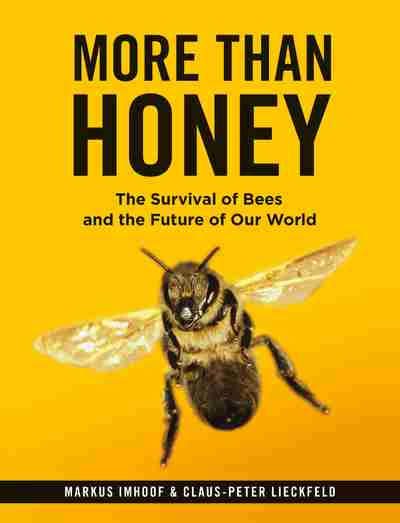
  • More Than Honey

    More Than Honey

    “If 70 percent of all cattle or 30 percent of all chickens were to die annually, states of emergency would be declared everywhere. The death of bees is at least that dramatic and with even more far-reaching consequences.” More Than Honey

    There has been much research carried out on the plight of our little fuzzy, busy Bees worldwide and the findings are alarming, to put it mildly; the bee populations of the world are dying, not slowly, but rapidly and when you start to read, even just a little, it is perfectly understandable. Actually it is horrifying!

    We, by our fiddling with natural order of things are committing a slow form of suicide by killing off the bees. Over exaggeration you may think or say, but once you have taken a read of More Than Honey, you will perfectly understand the damage, trauma and destruction we are creating.

    Although much of the data gathered relates to America and Europe it translates to other food bowl producers such as Australia, New Zealand and Asia and is a telling piece of work by Imhoof & Lieckfeld. They describe the Bee as an intellectual addition to this world; one that has immense capabilities and definitely does far more than produces honey. This information makes fascinating and astonishing reading.

    The truth of it is that without Bees we would be a hungry race of people living in a desert region with little or no food. Certainly not the food we have become accustomed to eating on a daily basis.

    That we owe our wellbeing to this highly evolved, talented little creature is a humbling though but sadly not one we, as this so enlightened race, bother to spend time considering. Interesting, is it not! The problem being the way we have allowed food to be grown to feed the masses raises many, many issues with genetic modification being only one of the many.

    Transportation of masses of bee colonies from one place to another to pollinate mass orchards, crops and the like is another, with many Bee’s dyeing on the way is one that many are not aware of strangely enough, as it is a matter which, unless you are involved, causes the end user little concern.

    But, and it is a big but, unless we begin to start taking note of how out demands, and ever increasing demands for foods, is beginning to seriously affect our ability to be able exist on this world we, the human, enlightened, educated peoples will eventually be no longer.

    What we, as a modern society are doing to this magnificent little Bee is unforgivable. But there is hope as, although agriculturally, bees are in decline, there appears to be a renaissance happening within the cities, as more and more people within the urban environment begin to keep hives for fresh honey and to help pollinate their small plot of land. While this will help a little, preserving various species of bee, it will not overwhelmingly solve the problem. But what to do is the question of which, at this time, there is no one, specific, quick fix answer.

    The answer lies in Corporations facing up to the effect and damage their methods of mass production of foods, the chemical usage and over stressing of bees has created, and a concerted effort made by all peoples to fix that which is most definitely, broken.

    Unrealistic you say: But consider the very real, very close alternatives.

    In a quote attributed to Einstein he states that ‘humankind cannot survive without bees’ and he also says that ‘we cannot solve our problems with the same level of thinking that created them’.

    The final question there to be asked as posed by Imhoof & Lieckfeld in this work and the documentary of the same name is ‘where do we, as a civilization go to from here, if we will not listen, will not observe and keep on blindly charging down the same pothole ridden pathway, failing to fix up the potholes’?

    Makes you wonder, does it not!