Category: Science

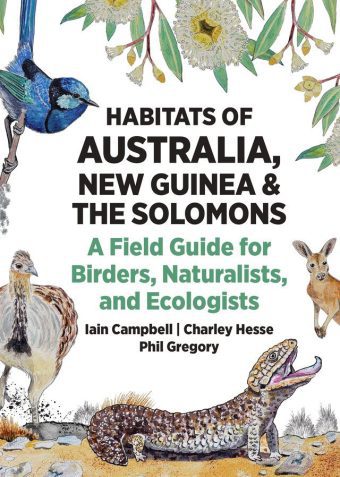
  • Habitats of Australia, New Guinea, and the Solomons

    Habitats of Australia, New Guinea, and the Solomons

    A Field Guide for Birders, Naturalists, and Ecologists

    “Habitats” is a meticulously researched field guide to the many areas in Australia New Guinea and the Solomons. The variety of regions in our country affords great scope for varied wildlife. Our eco systems are not understood by many, especially those in power who make decisions about these areas; this book is the first in a series about global Habitats of the World. The aim is to inform botanists, ecologists, and conservationists about eco systems and the wildlife around them.

    The chapters contain the following information. An explanation about what makes the habitat distinctive, a comparison of similar habitats around the world and Australia. Information about the birds in these areas, and plant size and life are discussed. There are range maps and descriptions of what makes a habitat distinctive and its basic ecology. Descriptions of animals, conservation in the region, and where to find the best areas to view distinct habitats are included.

    Information about the use of fire by the First Nations People and how it changed the landscape is discussed. Many ecological communities have been highlighted in detail. An explanation of Habitat terminology is given to help the reader, and abbreviations used in the book are clarified.

    The photographs are clear and colourful, acting as a visual description of birds and eco systems.

    Habitats is a book for the dedicated birder or ecologist. It is detailed, descriptive and hugely informative. Notes, bibliography, and an index complete this detailed reference book.
  • Fuji: A Mountain in the Making

    Fuji: A Mountain in the Making

    (Studies of the Weatherhead East Asian Institute) 

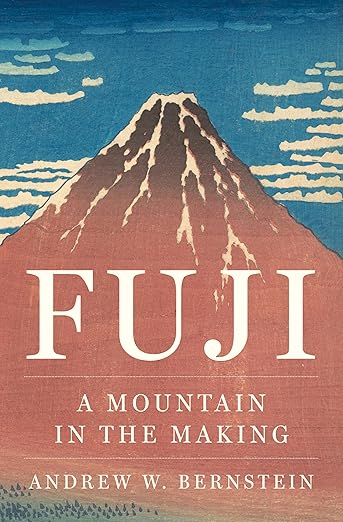
                Mount Fuji is one of the most recognisable mountains in the world. Part of the “Ring of Fire” that circles the Pacific, it is a symbol of Japan and enmeshed in that country’s culture and folklore. The author has told a story which begins with the violent beginnings of this mountain, to the fact that it is now a world heritage site. Andrew Bernstein describes this book as a “Biography of a mountain, with a particular focus on its relationship with humans.”

    Fuji is found on the largest island in Japan, and the nation is situated on the convergence of Tectonic Plates. Here we learn about the geological formation of the mountain. It has emerged over many thousands of years from two earlier eruptions in different periods. Many springs have percolated through the layers of lava to sustain life for people who first discovered and settled in this area.

    The following chapters describe religious deities and customs and worship which have occurred around this mountain. Many famous ancient paintings depict the awesome peak, and poets have composed poetry to its beauty. Andrew has written an intensely detailed account of the history of the mountain but included how people interacted with it in every era. It was believed to be the home of a Shinto deity.

    There are many photographs and maps to enlarge the understanding of this wonderful area and many references.  This is a comprehensive look at Fuji, its history and that of the people living around it.

  • The Queen’s Atlas: Saxton’s Elizabethan Masterpiece

    The Queen’s Atlas: Saxton’s Elizabethan Masterpiece

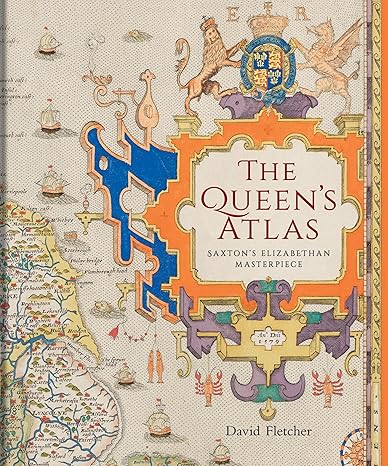
    The Queen’s Atlas is a book of great beauty. The maps are wonderfully reproduced in colour, and the many documents and pictures all contribute to an extraordinary historical story about a man of whom most of us have never heard. It is a treasure.

    Christopher Saxton was often referred to as the “Father of British Cartography.” He was born around 1542. His birthdate is not specific as he was not from the elevated levels of society. He spent his early years in Yorkshire and came from a farming family.

    In later years he was apprenticed to a surveyor named Rudd, who surveyed and checked local information, ‘in keeping with Renaissance Scientific ideals.’ Rudd was emphatic that he must view all sites and travel himself rather than listen to the accounts of others.

    Saxton took over the surveying and mapping of England at a time of change. In the 16th Century map making was becoming essential and concern for scale and accuracy demanded.

    There was a practical use of maps for defence, and intelligence gathering, as well as being used for propaganda and patriotism. In the 1570s cartography was recognised as an important tool for the country, and Gerard Mercator introduced his project.

    In 1573 Saxton received a commission from Queen Elizabeth 1st to conduct a National Survey. He chose to conduct the survey by County, making a series of medium scale maps showing settlements, and major landscape features. The chapters continue to discuss ‘The Scientific and Intellectual background, surveying techniques and texts, and surveying instruments.’

    This fascinating look at the maps of Saxton’s and the context of the politics of the times will engage readers completely. A wonderful historical book.

  • AI Demystified

    AI Demystified

    Whether you like it or not AI or Artificial Intelligence is here to stay and is without a doubt rapidly changing the way the world operates. Is it safe, is it ethical and to a large degree what is it, other than ChatGPT and an automated reply to an online query?

    Antonio Weiss, an expert in the field of AI has written a game changing book AI Demystified that goes into detail about the new kid on the block, Artificial Intelligence, writing in a style that is extremely easy to understand. Although the focus is on Business use of this latest form of technology, he makes the subject matter readable for anyone who is interested in understanding what the future holds for not just business but everyone.

    Not altogether a new concept, AI has been around since the 1950’s in a very small way, but since the 2000’s has steadily increased in development to the point where we, as the general public, have subtly been contributing to the  advancement of Generative AI  through various means such as log ins verifying whether you are a Human and much more.

    In this well constructed step by step guide he looks the reasons why business needs to adopt this technology, the benefits and believed negative impacts on Companies and staffing as well as the future scope of this still rapidly changing ‘frontier’ of science.

    Along with the history of AI development, he looks at the underpinning aspects of ethics, legislation, misuse and abuse but states that as this field is fast developing,  should you be considering installing  AI within your business in the very near future,  considered research needs to be undertaken before choosing the right form of AI for your Business.

    AI Demystified is helpful, technical in a relatable format, delivers a working knowledge that literally demystifies what is still considered a bewildering science and is an essential read for any Business Manager, Company Executive or anyone trying to either find their way through the technology that is Generative AI and the impact it will have on just on not just business but the world in which we live.

  • Cosmic Bullsh*t: A Guide to the Galaxy’s Worst Life Hacks

    Cosmic Bullsh*t: A Guide to the Galaxy’s Worst Life Hacks

    In this very quirky take on all things cosmic, Chris Ferrie peels back the many layers of mystique that has built over many years relating to such things as the cosmos, Martians, little green men and even the sacred art of astrology.

    In Cosmic Bullsh*t he uses wit and knowledge, because amongst many other things, he is a Physicist and lectures on Quantum Physics as well as a very popular author of children’s books, which make him well qualified to debunk all the wonders of the universe that perhaps, are not wonders at all, just figments of people’s imagination.

    If you are someone who is emotionally attached to all of the body/mind/soul beliefs, love little green men and delight in being amazed by the many incomprehensible things in life, this is not for you but if you enjoy a fact based romp through science, really want to know what is behind so many of life’s so called mysteries, get settled in for a most enjoyable voyage into Cosmic Bullsh*t.

  • How to Run a Planet

    How to Run a Planet

    A map and compass in troubled times for global changemakers and leaders.

    John Holman Phd is a Philosopher and change maker who believes that even in these time of world crisis, where climate change is making a serious impact on how we live our lives and World Governments are mired in materialism, there is still a way forward to having a world that works in harmony; a planet that evolves as it should with fair and equal governance.

    Is he delusional, you may well ask, but no, he is not, because all things are possible in this world, there just needs to be a massive shift in Global Consciousness: idealism and materialism need to be removed and governments need to unite for the greater good, not just of the planet but the people.

    Philosophically speaking this should be able to be achieved through the conscious creating of policy, of better understanding of global issues, by looking at what he terms ‘the big picture’ as the world lurches forward in a manner that is not at all conducive to longevity; of the planet or the people.

    Billed as a book that policy makers, social activists and anyone who is interested in the evolution of our planet, How To Run A Planet should be considered as essential reading, as Holman presents a far wiser, well-considered pathway forward; one that seems like an impossible goal, but one that could if achieved, broker something that many have desired over centuries, world peace and harmony with our environment.

    Is How To Run A Planet worth the read, most definitely!

  • The Best Australian Science Writing 2024

    The Best Australian Science Writing 2024

    This book is eagerly awaited by many science enthusiasts and those who wish to keep up date with current thinking. It is a readily accessible path for people, as the writers present their topic with clarity and readability. The range of topics is incredibly wide and cover issues such as the long tail of Covid, and also the changing aspects of Science itself.

    The Foreword “FIRST PEOPLE AND STEM,” by Corey Tutt, brings to the reader’s attention the contribution to STEM, (Science, Technology, Engineering and Maths) by the first Australians. He discusses the sophisticated understandings they had relating to their environment, astronomy, land management and more. That these people are not acknowledged, and their perspectives not widely known, should be addressed.

    The introduction mentions the honour that Jackson and Carl felt when reading the submissions for this year’s book. The topics they chose deal with issues such as Leatherback turtles, A House built of slime, AI, and drugs. Food chemists also are mentioned as tastes of simple things such as chips take on new flavours.

    It is privilege to be able to keep up with the latest in Scientific thinking in such an affordable and easy way.The Best Australian Science Writing 2024

  • Climate, Psychology, and Change: Reimagining Psychotherapy in an Era of Global Disruption and Climate Anxiety 

    Climate, Psychology, and Change: Reimagining Psychotherapy in an Era of Global Disruption and Climate Anxiety 

    Climate, Psychology and Change is a series of articles from a range of professionals working within the fields of Psychology, Psychotherapy and Counselling, written to encourage conversations at all levels about the effect Climate Change is having on the wider population.

    Having noted in their independent professional capacity the slow change within their patients regarding the reasons for seeking their services, they began to wonder how wide spread this change was; was it insular to an area or was there a global spread of the concern noted in regard to the effect of Climate Change.  

    People were not as concerned on the deeply personal levels as they had been previously and were becoming more distressed and anxious in regard to what is now a recognised, as well as a visual fact, that of a changing climate, a changing world.

    There was also a growing concern within the profession that many of the ‘Counsellors’ were not prepared to talk with their patients about their deep concerns, their stress, distress and anxiety in regard to what now has been named a Climate and Ecological Emergency or CEE.

    How to go about rectifying this situation and reaching out to support individuals in need, was of massive interest. A discussion group was formulated to discuss in an open forum, the topic of ‘the role of psychotherapy in a time when the familiar is dying’. This produced an open discussion, which in turn led to the creation of this ‘ground breaking’ book, Climate, Psychology and Change.

    The topics for conversation and deliberation are wide spread, make fascinating reading and most definitely give rise to further discussion. Each piece also opens the door into how we as humans, deliberate on things that cause change; how we as a species have a thread that connects us to ancient times, which then causes change to be disturbing.

    Each of the dialogues are best read individually rather than in continuum, to absorb the throughs and finding of the twenty-eight contributors whom collectively, offer deep insights into the way forward with gentle but firm insight and direction.