Category: Literature

  • Making Picture Books

    Making Picture Books

    This small book, Making Picture Books is a treasure for anyone wanting to create a picture book. It is also very interesting for readers to unpack the process of making a picture book, either for teaching purposes or for sharing ideas with young readers, or for guidance for budding authors.

    Libby Gleeson generously gives her time and thoughts on this subject, along with other authors who contributed to this book, giving it a serious and wide-ranging feel. We learn that a Picture Book is a story told in words and pictures. The balance between the illustrations and the words to successfully convey the meaning is crucial.

    The author begins by telling us that “there are no rules.” The early chapters deal with Writing the story. How to get ideas, and what different authors do to make sure they have a collection of ideas at the ready.  

    In “Getting Started”, Libby asks many questions to make the audience think through their process. Things such as “What is this story about, Who are my characters, who is telling this story, where is it set?” There are more questions for the budding author to contemplate but the sense of being able to answer these questions and begin to write is strong.

    “After the first draft”; asks us to look at plot, structure, language and characters for a start. It is a great way of going back to analyse your work and assess its precision. When this is completed, there is advice given on finding a publisher and an illustrator, and how best to work with them. Making Picture Books is a marvellous and generous little book, easily read and referenced, with practical up to date, local advice.

  • Postscript

    Postscript

    Life, Love and Loss in Australian Letters 

    It’s a rare occasion when a letter appears in our letterbox; according to Australia Post only three percent of their business relates to letter mail, most of that is official mail. A personal letter or card is generally gratefully received as it lifts the receivers’ spirit; it indicates that someone has given them thought and dedicated time to put these thoughts on paper. Some express love while others update the reader about recent family events; all are individual but relatable.

    Spanning over 200 years, the National Library of Australia holds millions of letters in its collection; until now many have never been seen. Publisher Lauren Smith and her NLA team have carefully selected the best letters; those that give the reader a sense of how much they have in common with the writer. Some are written by famous authors such as Jane Austin while others are by lesser-known individuals, such as John Wing whose suggestion about the departure of athletes at the 1956 Melbourne Olympic is still practiced today.

    Each chapter provides the reader with the selected letter, the background of its writer and of the responder; Lauren Smith had invited contemporary Australian writers to compose new letters in response to the chosen ones; a postscript with a modern twist. This combination of original and new letter engages the readers and may even inspire them to drop a letter in the post to a loved one.

    Hopefully, this collection will lead to the rediscovery of the lost art of letter writing.

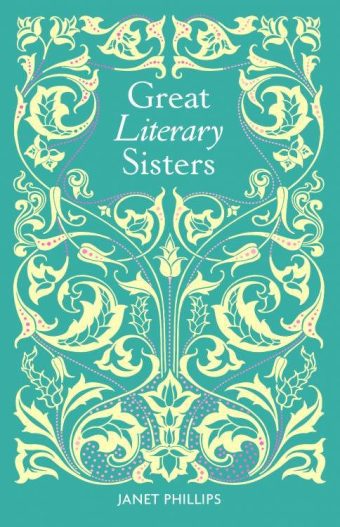
  • Great Literary Sisters

    Great Literary Sisters

    Great Literary Sisters is a small book that holds marvellous essays looking at relationships between sisters in Literature. The fictional sisters chosen here are those whose psychological attachment is examined along with their chosen paths in life.

    The author, Janet Phillips,  has placed the novels into five categories “exploring sibling rivalry, sisters who show redoubtable courage and perseverance in the domestic sphere, sisters who support and sometimes betray each other in affairs of the heart, those whose relationship is coloured by issues of mental health, and those who fiercely protect each other.” This makes us read familiar stories at a new level.

    Under the heading “Growing up,” we begin with the sisters in the story, Little Women. There is a great deal to examine here as each of the women has such a unique personality. They have their own visions of their future lives, and each is quite different. However, their fierce loyalty to each other is undeniable. The Railway Children, Sisters by Accident, and Catcher in the Rye are the other books examined under this heading.

    Heroes At Home, is the heading for Little Dorrit, and Middlemarch. Several other books similar to these are examined under headings, Poverty and Riches, and Hidden Lives.

    Affairs Of the Heart, sees Sense and Sensibility, Pride and Prejudice, and Half of a Yellow sun analysed. Other divisions are, Affairs of The Heart, Trauma, and To the Rescue. Books discussed under each of these headings show diverse behaviours and attitudes that one may not be completely aware of when reading through the story.

    For each analysis, a part of the story and relevant discussions help to emphasize the point that Janet is making. This is an excellent way to further look at books one is familiar with, and to rouse curiosity about books one has not read.

    Great Literary Sisters is a valuable resource for those who enjoy true depth in a story.

  • Journey to the End of Time

    Journey to the End of Time

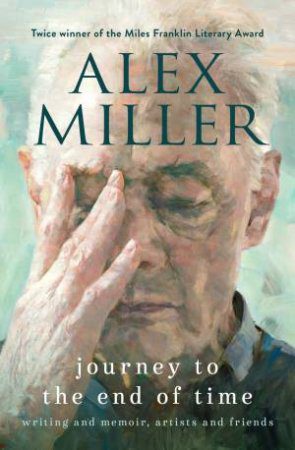
    Alex Miller is indeed an extraordinary storyteller and writer. Each of the short stories in Journey To The End Of Time show an intimate side of him while exploring the society and events around at the time. He shows an understanding of his own spiritual journey and thus can easily examine and explain things that have happened in his life with a clarity.

    The ease with which the author engages the reader makes this book a special tool for learning and expanding thoughts. Nicholas Birns said that “Alex’s writing is deceptively plain, with complex ideas and emotions carried in the simplest prose.” This novel forms a companion volume to “The Simplest Words,” and “A Kind of Confession,” the three volumes produce a narrative of Alex’s writing life.

    Alex published his first novel at the age of fifty-two. His life experiences absorbed and pooled combine to present readable and relatable tales. His first story is told from his memories as a seven-year-old, watching his father leave home in his army uniform. It was during World War two and in the simplest way Alex “Lay with his chin on the windowsill watching his father return to his regiment.”  It was now the boy realised that his prayers to God may not be able to get through as the roof of the bunker was above them, and above that was a dense layer of cloud.

    Included in this book are essays, journal entries, poetry and stories of Art and Artists, Writers, and Storytellers, and works of fiction. The author is content to discuss his innermost thoughts, which shine through his writing in the most understated way.

    Alex Miller is hailed as Australia’s great writer, who has won many awards for his books. What an honour it is to read this work and share for a brief time, his thoughts.

  • The Little Book of Dragons

    The Little Book of Dragons

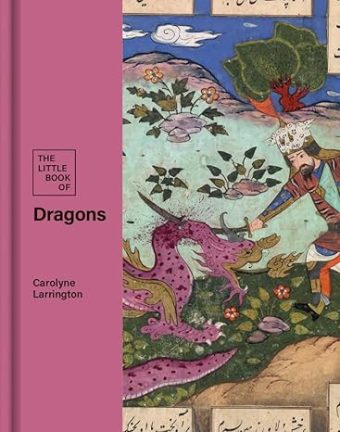
    What an absolute delight The Little Book of Dragons and is an absolute delight for all those older children and adults who have always had a soft spot for a good dragon story. Carolyne Larrington is an Emeritus Professor of Medieval European Literature at the University of Oxford. She is very well read and researched on this topic and has divided her information into chapters such as “Dragons of the Ancient World, Water Dragons and Dragons from around the world.”

    In the introduction, the author describes the dragon as a “Fearsome monster.” Some dragons have fire, some spit poison or crush beasts in their coils. Dragons are well armoured, and any hero must find their weak spot. Some dragons guard gold; some are wise and some just a nuisance.

    Dragons are reptilian in body, often very large and may have wings. The winged variety usually spit fire. Some dragons creep across the countryside and may be called “Worms or “Lindworms.”  There may also be dragons in rivers and oceans where they threaten ships. They may have multiple heads such as the seven headed dragon in the Book of Revelations and sometimes may have horns. Some dragons may be humans who have been enchanted.

    No one can be sure where the amazing number of dragon tales from around the world originated. They have no relevance to dinosaurs who were of a much earlier time. In Northern Europe the dragon moved from a symbol of evil to a symbol of the devil. In East Asia, dragons are viewed as wise and kindly creatures bringing fertility to the land and having power over water.

    There are more stories about dragons in Britain and female saints and dragons. So many fascinating stories and tales are presented here. The addition to the text is a set of marvellous reproductions of ancient manuscripts showing dragons in various forms. There is an ancient artwork showing a dragon head on a Viking boat, and King Vortigen confronting the red and white dragons. This is such a special and captivating book!

  • GREAT WRITERS & THE CATS WHO OWNED THEM

    GREAT WRITERS & THE CATS WHO OWNED THEM

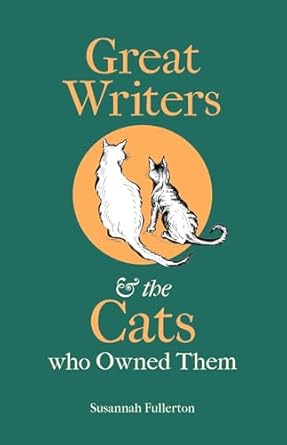
    Who could resist such a wonderful title as Great Writers and the Cats Who Owned Them! The author suggests that cats and writers have bonded together for comfort, companionship, inspiration and possibly warmth, for many generations. She has also included fun features showing cats in libraries, bookshops and hotels. Some of the authors mentioned here are Horace Walpole, Alexander Dumas, Charles Dickens, Mark Twain and Doris Lessing.

    Great Writers and the Cats Who Owned Them begins with a story set in the ninth century when an Irish Monk neglected his work of writing Holy Words and instead wrote a poem to his beloved white cat. Susannah then goes on to describe the qualities which make cats such special animals. She notes that they are soft, provide an alarm clock for feeding, and are intelligent and inscrutable, but wrapped in a soft package. “Dame Edith Sitwell prized the fact that her cats never said anything foolish.”

    Some of the extraordinary facts we learn about the relationships in this book begin with Dr Johnson’s cat. He fed “Hodge” with oysters!

    In the 1760’s a small book was published in London. It was titled “The life and adventures of a cat.” The author, William Guthrie wrote about a male cat named Tom. To this day male cats are known as Tom Cats. The Tom and Jerry cartoons were said to have been inspired from this story. Mark Twain was quoted as saying,” If man could be crossed with the cat it would improve man, but it would deteriorate the cat.”

    Daffy the third was with Lucy Montgomery as she wrote the story, “Ann of Green Gables.” She had always been a lonely child, growing up in a strict home with cats her constant companions. Cats seemed to bring Lucy peace and tranquillity and a sense of connectedness that was essential for her wellbeing.

    There are so many fascinating stories in this book, but also historical references showing how cats were not always well treated. They were often burned with their “witch” owners. Today, cats have a place in many homes and thankfully their treatment is usually wonderful.

  • Alice’s Oxford

    Alice’s Oxford

    People and Places that Inspired Wonderland

    Professor Hunt introduces Alice’s Oxford by telling the reader how the stories told to Alice by Charles Dodgson evolved into the most treasured tales, Alice in Wonderland and Through the Looking Glass.

    Dodgson, (Lewis Carroll), was keen to keep his professional life quite separate from that of his life as an author. He treasured his memories of Alice and the time they spent together and spent seven years writing stories while intimately involved in the day-to-day life in Oxford. Parts of Oxford that both Alice and Charles would have known are little changed today.

     This book shows us that the two stories told are quite different.” Wonderland, although it was densely layered as it developed from a personal gift to a published book has an air of spontaneity”.. ….. Alice is more contrived.

     There is also much conjecture about why Charles chose John Tenniel as the illustrator. John was a leading satirical artist of the day. His skill increased the complexity of the texts, but he found Charles difficult and demanding to work with.

    Further chapters in this book look at the history and layout of Oxford with a map showing a section of streets and buildings included in the stories. From there, different places are shown and their inclusion into the stories discussed.

    In the Ashmolean Museum there is a painting showing a nightmarish wood. This is thought to be the basis of the wood in the Looking Glass. The famous marmalade in the eyes of those who lived in Oxford was Coopers. The recipe for the jam was given to the Coopers by Alice’s mother. Alice found some when she was falling down the hole.

    The notes, further reading, picture credits and index of people and places, makes this a very detailed and complete work. There are many hours of discoveries to be found in this small treasure.

  • Bookish Words & their Surprising Stories

    Bookish Words & their Surprising Stories

    If you are a lover of words, their origins and meanings, this small book with a big title, is for you. David Crystal is a professor of linguistics at Bangor University. The anthology that he has compiled shows the way words have shaped our writing and reading over the centuries.

    He tells the story behind these 100 words and idioms, and uncovers many surprises relating to how meanings have changed. Each entry shows the stages of influence and linguistic origins, and the development is traced over time.

     When Romeo first kisses Juliet, she says “You kiss by the’ book.”  She means he kisses expertly as if following a set of instructions. Today, we refer to things that have been done in a specific way as “By the Book.”  Someone who never does things by the book is considered a free spirit.

     Deadline. This word was used as a boundary line. Prisoners risked being shot if they crossed the boundary line. It was first used in the mid 1800’s to mean motionless, such as a fishing line.

    At the end of the fascinating wander through words and idioms, there is a section on further reading which mentions other books and authors who collect words and their usages. Following that there is an index of the words examined.

    Bookish Words & Their Surprising Meanings is a meticulously detailed compilation.

  • Story and Structure: A Complete Guide

    Story and Structure: A Complete Guide

    Leon Conrad has spent a life time researching story, or stories, teaching, lecturing and tutoring in the art of story creation, analysis and restructure and also in pursuit of the answer to the time old question, where do stories come from.

    In the Preface Conrad explains much about the motivation behind his journey, why he has applied the mathematical principle created by Prof George Spencer Brown to literary (Story) analysis and how it makes the breakdown of any story ‘visually intuitive, easy to understand and extraordinarily powerful’.

    After you negotiate the first chapter which is somewhat daunting, as it lays out the six primary symbols used in breaking down the context of Story, you are carefully lead into the absorbing journey relating to the creation of a story, what causes a story to evolve and how, using the positive and negative environment to create a flow, a story arrives in all its captivating glory.

    Story and Structure: A Complete Guide is a pilgrimage through the world of words formed into cautionary tales, academic writing, enriching and thought provoking poetry and riddles, all of which tell a story in long or short form.

    Over 18 distinct story structures, several of which are familiar tales told in childhood, others are more complex such as West African dilemma tales and the intricately crafted Ki-Sho-Ten-Ketsu, Conrad applies the six symbols to clearly illustrate the ebb and flow, positive and negative of the storyline.

    As the chapters unfold it is very easy to become absorbed into what is a Masterclass in writing, which when understood and applied, has been proven to improve the writing style of all forms of story; storytelling and story creation.

    A very comprehensive end section, beginning with the very short Epilogue, leads into the four Appendix further discussing various area of construction and analysis which concludes this exemplary book.

    For anyone studying literature of any classification, considering writing a book or has written a book Story and Structure: A Complete Guide is a MUST have book of reference.