Category: Science Fiction

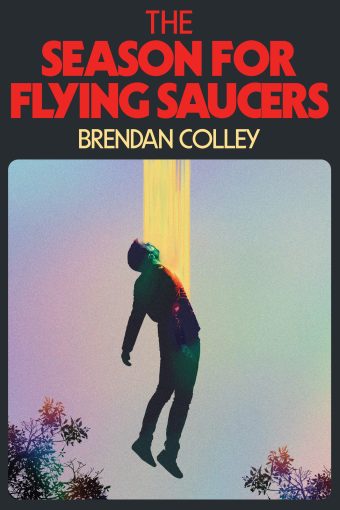
  • The Season for Flying Saucers

    The Season for Flying Saucers

    Between 12th February and 14th April 1976 there were at least nine separate occasions of sightings of UFO’s  in Maydena, a small Tasmanian locally, which were reported to the Tasmanian UFO investigation Centre. Award winning author Brendan Colley was inspired by these events to create his second novel ‘The Season for Flying Saucers’ an interesting but strange narrative.  

    Noah Grey, unemployed cook and known by some as the UFO poet, has bought his family home from which his father had been abducted by aliens twelve years ago. Not long after his return to his family home his father returns unexpectedly. When within weeks, his sister, Martha and mother join him there a tense domestic situation is created.

    Meanwhile, the locals ‘stalk’ the house, taking a great interest in its inhabitants, as the residents are convinced that something supernatural is imminent. Is this location attracting the lights from the scout crafts? Is there a mothership circling? Will something happen before the summer is over? How does Martha use her telepathic magic in her job as dog groomer?

    By relating the story from the main characters’ point of view, readers are given a fascinating insight into the dysfunctional Grey family and their special gifts. Sci- Fi readers will no doubt find this an intriguing read, while those unfamiliar with this genre will at times be totally confused and struggle to fully appreciate the nuances of the storyline. 
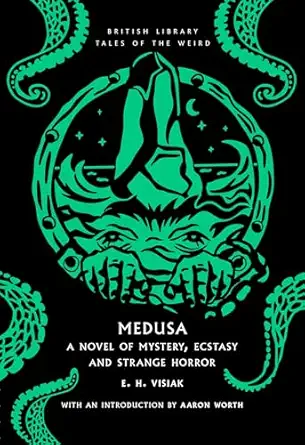
  • Medusa: A Novel of Mystery, Ecstasy and Strange Horror 

    Medusa: A Novel of Mystery, Ecstasy and Strange Horror 

    British Library Publishing have chosen to release a series of Crime Mysteries which were first published between the 1890, s to the 1960’s.( This book was first published in 1929.) They feel there are many aspects of these stories which will fascinate modern readers. They acknowledge that the language used, stereotyping and attitudes may not match publishing standard of today. However, this is an opportunity for the public to read some of the rare books in their collection, and to look back into the time the story is told.

    The story begins with the main character, Will Harvell, who was born at sea. His father was a ship’s captain, and his mother followed him on his travels. When he was eight years old, Will’s ship was wrecked in a storm, and he survived but his parents drowned. He was discovered by a Spanish Priest, who cared for him until he was able to place him on a ship bound for England.

    Will was reunited with his fiercely religious grandparents and lived with them for some time. Eventually he was sent to a school, however he ran away from there and was looked after by a mariner. His life after this is one of learning quickly, staying out of trouble and always being alert. He is taken on board a ship, and quickly learns his trade.

    The writing in this book is detailed, “But you need not have made such haste,” said he. It suits the period and the story well and engages the reader.  One is transported to such a time where people had stories to tell, and marvelous tales to translate. This is a rare opportunity to delve into stories and author from the past.

    E. H. Visiak was the pen name of the British writer and critic Edward Harold Physick, an expert on Milton and celebrated Edwardian poet best known for Buccaneer Ballads (1910) and a handful of strange short stories. His novel Medusa (1929) is heralded as an important contribution to weird fiction.

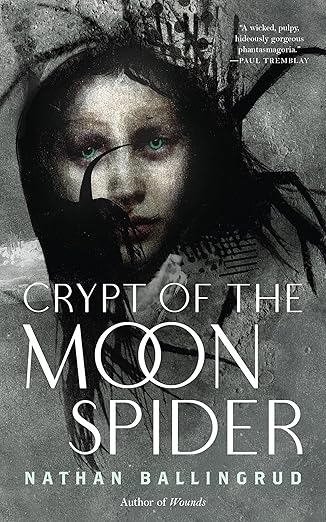
  • Crypt of the Moon Spider

    Crypt of the Moon Spider

    The Lunar Gothic Trilogy, 1

    The Crypt of the Moon Spider is both a compact and impactful piece of science fiction that leaves a lasting and frankly haunting impression on readers. Readers will  have heard the phrase: “a quick and easy read.” — The Crypt of the Moon Spider manages one of the two…

    Whilst Ballingrud achieves the “quick” element of the equation, he, in no way, makes his content easy on the reader. Though this novella is undoubtedly a difficult read, it is not for the reasons one would suspect. The language is used succinctly and beautifully, considering the premise (not an adjective wasted), making it easy to follow along.

    Where the difficulty comes into play is the ensuing story. A story that starts off tame, with a mere palpable undercurrent of melancholy, that rapidly escalates into a traumatic 8-legged train wreck.

    Ballingrud presents a creative yet warped perspective on the treatment of mentally ill individuals, providing an equally bleak alternative to the torturous reality experienced by patients in the 1920s. Though this book is science fiction, much of this novella rings true for those with any knowledge of the history of mental health institutions.

     The importance of upholding traditional values whilst discarding of ‘broken’ family members. Prioritising mental wellness whilst maltreating patients. A complete disregard of personhood and furthering individuals from their humanity in the hopes of ‘curing’ them. A uniquely cruel combination that would surely take a toll on even the strongest of minds.

    Ballingrud manages to explore these themes brilliantly over a brief period of time whist appreciating the nuances that come with having a human mind, “The mind is very complicated. It is like a labyrinth. It can even deceive itself.”

    This fantastic piece of literature takes the individual on a chilling journey that rewards them with a climax of cosmic vengeance. It is a thought provoking, intense and truly bizarre read; however, certainly not for the faint hearted.

    The Crypt of the Moon Spider is an unsolicited review.