Category: Poetry

  • The Kind Company of Others

    The Kind Company of Others

    [et_pb_section admin_label=”section”] [et_pb_row admin_label=”row”] [et_pb_column type=”4_4″][et_pb_text admin_label=”Text”]

    Ahhhhh! How wonderful it is to find the third poetry book written by Alexander McCall Smith. In this collection, The Kind Company of Others, we read about themes of love, culture and friendship. He looks at the past, with a view of showing how the present has evolved and how we might learn for the future.

    There is an underlying sadness in some of the poems. Sadness for lost times and people, and for lessons not learned. Yet the book is labelled optimistic. There is also an enormous passion for the country he loves so much, and his heart is on display as he describes it.

     At the beginning of each new subject, the author writes a short article explaining his thoughts on the topic he has chosen to write about. The first poems are “On love and friendship,” He explains that in the Tang Dynasty poems were all written about friendship, not love or lovers. Love is compared to “An unexpected guest,” and “Does not come empty handed.”

    Other topics discussed in this book are, “As time goes by, Place: where we are when we are where we are, Planets, Poems from a time in Botswana, and Incidental.. Contentment on an Edinburgh Hill.

    Another topic is Ekphrastic Poems. These deal with poems which have been inspired by a piece of art. For example, Keats poem “Ode to a Grecian urn.” Here Alexander talks about the depth of understanding in a piece of art. Does it really show the passion or inspiration behind the object?

    To conclude this inciteful book, Alexander writes about, Remembering.

     “For hope, Like a great shining sun,

    Illuminates our quite ordinary lives,

    Relieves the burdened mind of guilt:

    [/et_pb_text][/et_pb_column] [/et_pb_row] [/et_pb_section]
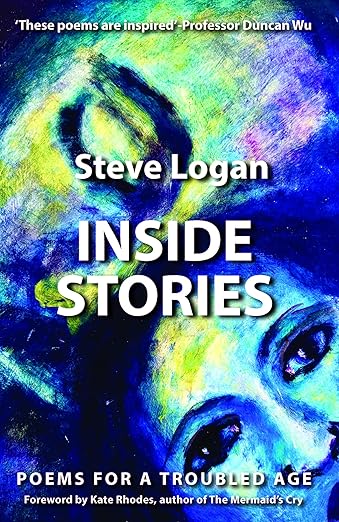
  • Inside Stories: Poems for a Troubled Age

    Inside Stories: Poems for a Troubled Age

    Poetry can capture glimpses of a soul within, a sliver of time, a thing of fleeting beauty or as it is in so many cases, the sharing of emotion, of thoughts, of people, of life lived through a wide variety of emotions.

    In his work as a Psychotherapist, Welsh poet Steve Logan truly sees the history behind the emotion that shapes everyone into who they are and who they become which is reflected in his complex prose. Inside Stories tell tales of people he has known, still does know; a passing parade, a panoply of emotion there to be viewed, understood and absorbed.

    Written in a style that flows, presented on the page in a square format, as if attempting to place these moments in a box to be sealed for all time,  the words are at times confusing in their placement as thoughts so often come to the surface before the clearer, more linear meaning of the words becomes apparent.

    Each piece is written in memory of someone dear now immortalised in brief, ragged beauty that captivates and encourages the reader to reflect on the many layers that have been captured in that one small, significant moment that reflects the passing of years, troubled times, change that never arrives.

    Is this collection comfortable, definitely not, rather it is a collection which if carefully read, is in its clarity, darkly beautiful. 

  • Other Lovers

    Other Lovers

    Natalia Rachel combines heart felt, emotional poetry with enlightening prose as she places love, or what may pass for love under the microscope as viewed by the modern generation.

    In this heartbreaking, but all too real novel she, through the life of Lena and her friends explores what it means to understand real love when it finally comes knocking at your door; is a combination of sex and love or love and sex or is it something different altogether.

    Divorced after a twenty-year marriage, living in Singapore and healing after a long illness, mother of two Lena is facing the reality of being single, free and available. On-line dating seems to be the way into a new love affair or a way to meet eligible men, but is it, as all she seems to get is needy men who are just like her, looking for a new direction.

    The sex is great, the angst is terrible, disillusionment is overpowering and love seems to be further away than it has ever been. She draws on the love and care of her friends, all women who are facing their own challenges, using the freedom of their lifestyles to cope with the stress of modern life, to help her understand where she is in her life.

    Natalia Rachel draws on her own life experience which comes through in the captivating poetry which begins each chapter before it is unpacked in the almost separate life of Lena as she tries desperately to understand her life, her desires and her way forward.

    Lena eventually discovers the one singular thing that is vitally important, that perhaps to find true love, you first need to understand yourself: a sobering thought in a world that bombards with almost impossible standards encapsulated within limited boundaries.

    Emotional and in many ways cathartic, Other Lovers offers a refreshing look at the tumultuous, dependant, destructive world of on-line dating and the reality that to find the emotional stability you are looking for, you must begin with you!

    Other Lovers could be considered as therapy between the pages of life through the medium of deep, enriching poetry.

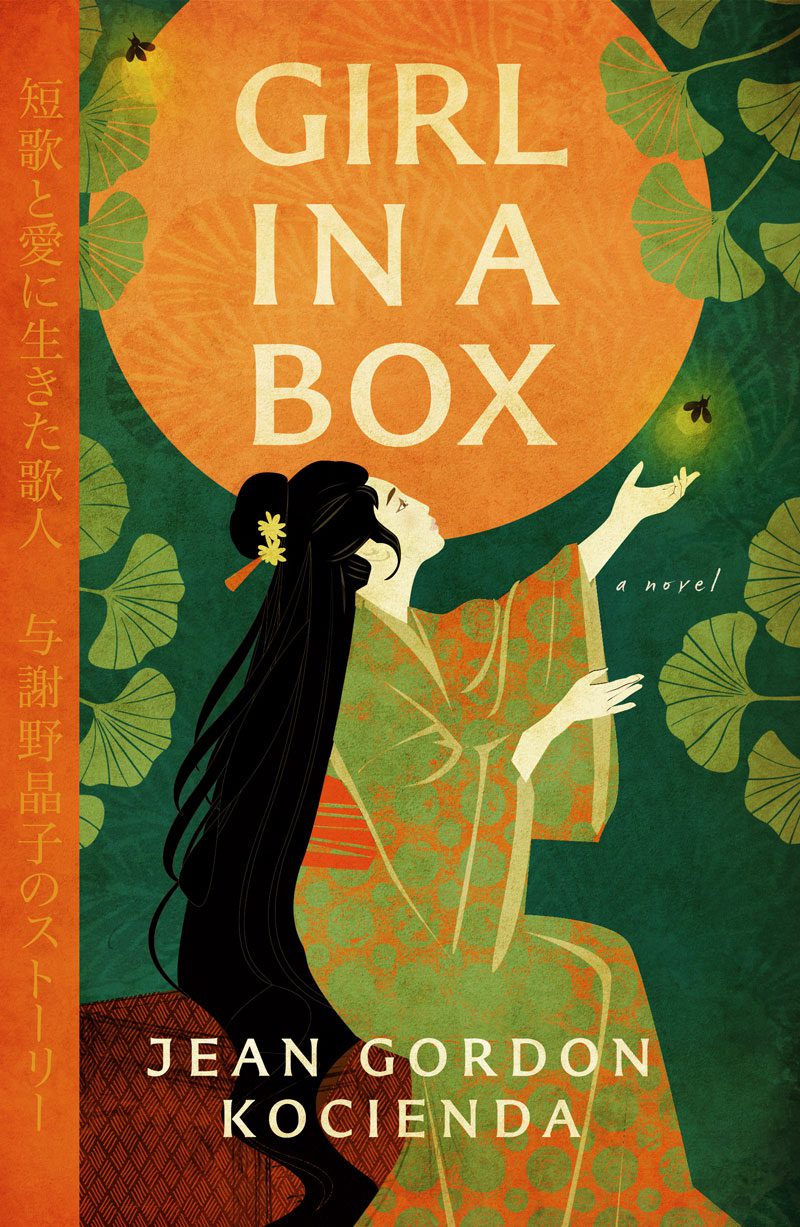
  • Girl In A Box

    Girl In A Box

    She was in a box, a box that was her life. She dreamed of breaking out, becoming somebody, living a different life, not the same as her mothers, fathers and stepsister, but one she made on her own, one filled with poetry, vibrant, vital and exciting.

    Yosano Akiko (Ho Sho) saw the world, her world through the eyes of a poet, a dreamer, that of someone who could make a difference and be respected as a woman.

    Set in Japan in the early twentieth century Girl in a Box captures the life of so many talented young women of the time, raised within strict guidelines, raised to be married to the best suitor, become mothers and work hard, a time when Japan was at the very edges of ‘ the suffragette era’, a time when the Emperor was opening Japan up to the Western world though poetry, art and travel.

    Akiko meets the charismatic Tekkan, a poet some few years older, at a poetry reading event, attended by defying her parents, which becomes a regular weekly pattern in her life; one that breaths life and love into her dreams of one day becoming a poet of note.

    She commits the ‘crime’ of fleeing from her family to live with Tekkan which begins a life of poverty, deep love, jealousy, travel, tragedy, fame and eventually acceptance. She follows Tekkan to France at the end of the Belle Époque era where she lauded as a celebrity for her captivating Haiku poetry and writing.

     Returning to Tokyo she resumes her life as a mother, poet, and writer, always struggling to earn enough money to feed, clothe and house her ever-growing family before good fortune arrives at their door.

    Giving birth to thirteen children, eleven of whom survived, children whom while a part of her life, were almost additional, she was work focused, needing to be ‘useful’ in her marriage. She became the first woman to translate the epic Life of Genji into modern Japanese while carving out a career in literary circles that saw her reach Celebrity status.

     After the death of her beloved Tekkan in 1935, Akiko now a much older woman looking back on her life, is faced with some raw truths, that life is lived in a box, that of your own making no matter how many times you choose to try and break out of that box.

    Based on the life of Yosano Akiko (Ho Sho) 1878-1942, Jean Gordon Kocienda has woven an elegant transition of life which in so many ways reflects the life of women down through the ages, using each year of her life as a milestone. Each year is introduced with poetry of Akiko as she tells her story, before broadening out in her later years as she has time to reflect, to regret and time still to try and make amends to the daughter she believes she wronged so badly.

    Kocienda has handled the passing of time with care, as she captures the heartbeat of a woman, a nation, and many of her literary friends as they begin to break away from the tradition that has bound them so tightly.

    The Girl on a Box is a story that deserves to be read at a gentle pace to be able to carefully absorb the storyline, to understand the woman who made a difference, the  woman who faced the same challenges as the modern woman as she balanced her life from child to lover, mother, wife, poet, writer and eventually lecturer.

    Who was she: was a Japanese author, poet, feminist, pacifist, and social reformer, active in the late Meiji era as well as the Taishō and early Shōwa eras of Japan.] She is one of the most noted, and most controversial, post-classical female poets of Japan. Wikipedia

  • Tubelines: The Poetry of Motion

    Tubelines: The Poetry of Motion

    For anyone who loves trains, watching them, traveling on them, and looking at the world pass by with a sense of careless abandon Tubelines: the poetry of motion is a must read as it sings to the heart of those who simply love trains.

    Looking back down the years to the days of childhood, trains and their destination stations have always had a special place in our hearts. They are places of change; a small encapsulation of life at that time layered in timeless magic, the smells and energy there for a fleeting moment, remaining always in the memory.

    Kestral Gaian’s Introduction sets the scene for what is a thoroughly enjoyable anthology of poetry in homage to the many who travel on trains, have travelled on trains and who have inspired the sections of verse that make up Tubelines.

    Divided into journey segments she casts a keen eye on the people who travel; the man in his slippers, the chance to simply sit and ponder what if anything is original, the scent of soap not forgotten, and the many who travel with their eyes downcast, never looking up, separating themselves from the world for a short journey through time.

    Each piece is an absolute delight often filled with light laughter at people, never harmful simply accepting, particularly those who are curious as she writes on a crowed train, words that will create a picture of a ‘strange sight’ on the Bakerloo line; that of writer capturing that perfect moment in time filled with awe and amazement.

    Finally, the journey comes to an end, or the passenger changes trains to take another line their destination unknown to the watcher: who are they, where are they going, this tiny world created for such a short time, drawing to a conclusion but not a close as the journey continues, just in another format.

    Delightful, funny, and quirky Tubelines captures with a rare skill the very essence of humanity gathered together and yet separate as they take a journey in a metal capsule pulled by powerful locomotives along the train tracks known quaintly as life.

    Highly recommended and a most enjoyable read for those who enjoy looking at life through a variety of lenses and appreciating the diversity of the person next to you, opposite you or standing, hanging onto the strap, ahead of you.

  • Southsightedness

    Southsightedness

    Poetry in all its formats is deeply immersive, but very mood driven, no matter what the subject that has caught the eye of the poet; emotion, environment, people, moods and pretty well most everything in between.

    Southsightedness is Gregory Day’s latest release of intimate and vibrant poetry created over the past twenty years, many of the of the pieces used as the catalyst for his novels, two of which were short listed for the prestigious Myles Franklin awards.

    But back to the anthology that is waiting to be explored, an anthology that explores so much of the modern world, written in modern terminology that provokes, creates thought and touches at times, the very essence of who we are as people on this earth.

    One of the more delicate pieces is the short but powerful Southsightedness, a reflection on change, how we see what is there and yet not there, contrasting elements of nature.

    In the introduction Little Marsh, Gregory Day sums up succinctly the art that is poetry in all its forms when he says, ‘Moments come and go like sunshowers, shining with passing light, proving that we do have the desire to share and remember.’ Poetry captures these ever fleeting moments by recording them for as long as the ink on the paper lasts!

    Sister Light details a gentle yearning for a beloved sister to return once again to share the beauty of the wetland; the bird song freely given, the river trees standing sentinel over the river flats, the light dawning slowly over the land, which happens to be just one of the pieces that would be considered as a favourite piece to return to often.

    The stanza, sonnets, lyrical connectedness, and standard formats along with free verse are mixed with complex emotions and yet when time is taken to absorb the words, piece by piece, the complete and complex work is emotionally sensitive, raw at times and in many instances, carries within the words a subtle essence of loss for the natural world around us.

    Gregory Day’s poetry is intriguing, intricate and not always enjoyable and as with all anthology’s no matter the driving emotions, is one that needs to be enjoyed piece by piece, supped slowly and reflected upon at leisure.

  • Haiku – Pocket Edition

    Haiku – Pocket Edition

    This delightful Pocket Edition illustrated anthology of Haiku follows on from the original book, released earlier in 2024, bound and presented in the traditional Japanese style.

    Hart Larrabee has taken four masters of the art of Haiku poetry, translated their works and presented them in a beautiful format once again, allowing the spare, elegant words to be able to be read anywhere, anytime.

    This formal style of Japanese poetry goes back to Renga, which dates back to the medieval period (1185-1600) and was a form of Court poetry. Settled times allowed a lighter form of the poetry to emerge known as Haikai which was able to be enjoyed by people of all walks of life.

    Hokku was the next style to be developed which has slowly ebbed into the modern world as a form of poetry, Haiku, that is written and enjoyed by many, but a form of poetry that must still adhere to the traditional format, that of no more than seventeen words, set out in the 5-7-5 pattern.

    Each of the chosen Masters, Matsuo Basho (1644-1690, Yosa Busin (1716-1784)0, Kobayashi Issa (1763-1828) and Masaoka Shiki (1867-1902), works have been carefully selected to bring into the world of today the ever changing landscape of poetry.

    Their words are presented in Japanese then translated to English, the traditional characters lining the e edge the page. Elegant pictures and sketches add an additional layer of beauty to the carefully chosen words to make the Pocket Edition of Haiku one of charm and grace.

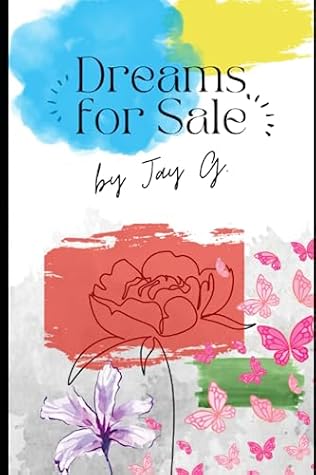
  • Dreams for Sale

    Dreams for Sale

    In the preface of the anthology, Dreams For Sale, Jay G says the poetry has been stripped bare from its first writing, sanitised in a manner of speaking, as it was mainly written under the influence of drugs and always in a different country.

    The style of writing is spare, the wording sharp, clean and driven as each piece is revealed: the ramblings of a man who is hiding from life, or the words of a man who is striving to make sense of life!

    The title Dreams For Sale is a phrase that offers his inner vision to those who care to take the time to look, so see each piece as a dream, a wish, a hope that things change, that by being in the moment, all-be-it an hallucinogenic moment, the many issues of life are laid bare, clear and untrammelled.

    This is not comfortable poetry, quite the opposite; the words on the page are confrontational, opening doors to worlds that do exist just not to everyman, which leaves a sense of disturbance after the reading.

    Those who enjoy eclectic poetry, who live on the edge and see the world though many and varied lenses will relate to the work, others will be offered a choice as they turn the page.

  • Caught in a Hazy Dream

    Caught in a Hazy Dream

    Contemporary Tanka Poetry

    Tanka and Haiga combined make a memorable and beautiful essay in short form poetry moving comfortably between seasons, emotions and lazy dreams of delicate gossamer.

    Caught in a Hazy Dream from Tiffany Mackay captures fleeting moments forever with gentle wording, which can be read as singular pieces or over several pieces to gain an impression of seasons changing, dreams forming then slipping soundlessly into the ether.

    One hundred small but perfect poems capture many of life’s special moments, some as simple as a smoke filled sky or a misty morning overlooking a lake, to the astounding beauty of a towering maple trees, to introspective moments which we all, at some time in our life journey, contemplate.

    Tiffany Mackay was facing change in her life, passing through a period of introspection which offered her the time to sit and observe; to be able to watch nature at work, the changing seasons and the often unnoticed emotions captured in the fragmentation of time.

    Over this time she has, in delicate strokes, used the time old form of Tanka poetry to create what she considered as often spontaneous moments of inspiration.

    The journey through Caught in a Hazy Dream is one of comfort, as each piece has been carefully wrapped in delicate washes of colour, following the traditional Japanese art form of Haiga which makes the perfect pairing. It is her hope, that the words reach out and invite all who indulge in the moment to pause, allow nature to touch and transport you to a place of refreshing energy,

    Contemporary, timeless and a collection to be returned to time and time again, Caught in a Hazy Dream is pure elixir for the soul.